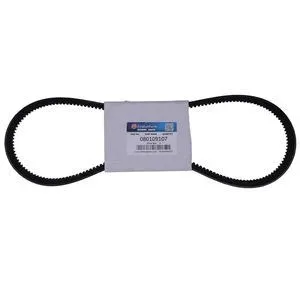
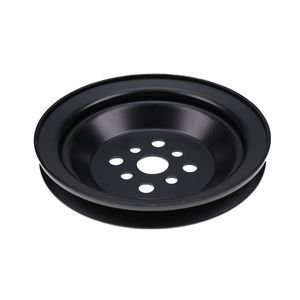
Matched Belt Drive Sets — V-Belt 9001A-96003 supplied with verified cross-reference against Toyota 4Y engine serial variants to prevent front-end misalignment during reassembly.
Technical Specifications
| Parameter |
Value |
| Part Number |
9001A-96003 |
| Product Type |
V-Belt |
| Cross-Reference |
9001A-96003 (reference only), 9001A96003 (reference only) |
| Machine Fitment |
Toyota 7FG15, 7FG20, 7FG23, 7FG25, 7FG30, 7FGJ35, 7FGK30, 7FGN30, 8FG15–8FG30 series, 02-7FG30, 02-7FGJ35, 02-7FGK30, 40-7FG15 through 42-7FGN25, 7FGCSU20, 7FGCU15–7FGCU32, 7FGU15–7FGU32, 8FG18B–8FG30B, 8FGCSU20, 8FGCU15–8FGCU32, 8FGU15–8FGU32, FGZN20–FGZN30, 30-8FG10 through 32-8FGN30 |
| Engine Compatibility |
Toyota 4Y engine |
| Material |
EPDM rubber compound with high-tensile polyester cord reinforcement |
| Profile |
Trapezoidal (standard A-section) |
| Dimensional Tolerance |
±0.3 mm across length and cross-section |
| Heat Resistance |
Up to 120°C |
| Testing |
Static tension testing at 10% elongation; dynamic load performance-tested |
| Condition |
New Aftermarket |
| Warranty |
3–12 months against manufacturing defects |
| MOQ |
1 piece |
| Standards |
ISO 9001, ISO 4184 |
Application Suitability
| Engine System |
Related Components |
| Cooling fan drive |
Fan pulley, tensioner assembly, front cover gasket |
| Hydraulic pump drive |
Pump mounting bracket, pulley bearings, drive belt |
| Accessory drive (alternator) |
Alternator bracket, adjusting bolt, idler pulley |
| Front-end timing cover |
Timing cover seal, crankshaft front seal, cover bolts |
Why Belt Drive Failures Persist After V-Belt Replacement
The belt is rarely the root cause — worn tensioners and misaligned pulleys destroy new belts within weeks.
Rebuild shops often receive a forklift with a shredded V-Belt for Toyota 4Y engine rebuild, swap it out, and send the machine back to work. Within a short period, the replacement belt shows the same cracking, glazing, or edge wear. The actual fault usually sits in the tensioner spring or a pulley bearing that has developed play. [NEED_CITE: belt drive system diagnostic procedures for industrial engines] Replacing the belt alone without inspecting the full drive path means the underlying misalignment continues to load the new component unevenly. I have watched engines in desert heat come back with belt failures multiple times before someone finally checked the pulley runout.

The Belt Drive System Context on Toyota 4Y Engines
This V-Belt sits at the front of the Toyota 4Y engine, transmitting crankshaft torque to the cooling fan and, on many forklift variants, the hydraulic pump. The belt drive system on these engines is compact, with limited clearance between the radiator and the block, meaning any deviation in belt tracking creates rapid edge wear. When scheduling a V-Belt for Toyota 4Y engine rebuild, the tensioner and all driven pulleys should be evaluated as a single subsystem rather than individual wear items.
Engine Serial Variants and Bracket Differences
Across the 7FG and 8FG forklift families, the Toyota 4Y engine was produced in several build configurations. Front accessory brackets changed between early and late serial ranges, altering pulley spacing by small but consequential margins. A belt that seats correctly on one variant may sit slightly high or low in the groove on another, accelerating wear at the cord line. [NEED_CITE: engine serial variant identification for Toyota industrial engines] This is why confirming the engine serial number — not just the forklift model — remains essential before finalizing the belt drive order.
EPDM Compound and Thermal Loading in Enclosed Bays
The EPDM rubber compound resists heat degradation up to 120°C, which matters because forklift engine bays run hot, especially in Middle Eastern and Southeast Asian operating environments where ambient temperatures already push cooling systems to their limits. The polyester cord reinforcement carries the tensile load without stretching under continuous duty. The ±0.3 mm dimensional tolerance across length and cross-section means the belt seats properly in standard A-section grooves without requiring on-site adjustment. Static tension testing at 10% elongation confirms the belt holds its profile under load, and dynamic load performance-testing validates behaviour under real torque transmission conditions. [NEED_CITE: EPDM belt performance standards for industrial drive applications]
The Hidden Cost of Ignoring System-Level Faults
Ordering only the belt when the tensioner spring has lost pressure or a pulley bearing has developed radial play leads to repeat failures that compound downtime. Each re-entry into the engine bay means draining coolant, removing guards, and resetting timing references. The cumulative labour across several return visits far outweighs the cost of replacing matched components together. [NEED_CITE: repeat failure analysis in belt-driven accessory systems] Forklift fleets operating on continuous shifts see this pattern clearly — machines that go back to work with unresolved drive faults end up back in the shop before the next scheduled service.
Why Procurement Through This Channel Works
Selected belt drive lines are produced in our own facility, while sourced supply comes from ISO-certified manufacturing partners — both carry identical QC standards and warranty terms. The eight-category product range means the V-Belt can ship alongside tensioner assemblies, gaskets, and seals under one account. Minimum order is one piece, so a single emergency replacement is never blocked by quantity thresholds. Part identification works from the number, the machine model, a photograph of the worn belt, or a nameplate image. Cross-reference verification covers superseded and alternate numbers, catching mismatches before dispatch. Samples are available for fitment confirmation before committing to bulk supply across a mixed fleet.
Documentation & Verification
- Commercial invoice listing V-Belt 9001A-96003 with HS code for customs clearance
- Compatibility sheet mapping part number to specific Toyota 4Y engine serial ranges (reference only)
- Dimensional inspection record confirming ±0.3 mm tolerance on length and cross-section
- Warranty terms covering manufacturing defects for 3–12 months from delivery
- Packing photographs showing sealed retail packaging with part identification labels
- Static and dynamic load test certificates available per shipment batch
Installation & Rebuild Sequence
- Inspect fan pulley and tensioner bearing for radial play before fitting the new V-Belt
- Verify belt sits flush in all pulley grooves with no visible riding high or low
- Apply specified tension per Toyota 4Y service manual and re-check after initial run-in
- Run engine at idle for initial warm-up cycle and observe belt tracking stability
- Re-tension after the first operating shift as EPDM compound seats into groove profiles
Request a System-Matched Quote
Provide the forklift model designation, engine serial number, and any prior rebuild history so we can confirm the correct belt drive variant. If the nameplate is worn or painted over, send a photograph of the front cover and pulley arrangement for identification.
Frequently Asked Questions
Q: What other belt drive components should I inspect when replacing this V-Belt?
A: Check the tensioner spring for loss of pressure, all pulley bearings for radial play, and the fan pulley for groove wear. On Toyota 4Y engines, the front crankshaft seal should also be inspected since it sits behind the main drive pulley. Replacing the belt without addressing worn adjacent components leads to repeat failures.
Q: Does the same belt part number apply across all Toyota 4Y engine serial variants?
A: The cross-reference 9001A-96003 (reference only) covers a wide range, but front accessory brackets changed across production runs. Pulley spacing and groove alignment can differ between early and late serial ranges. Confirm your engine serial number to ensure the belt seats correctly without tracking issues.
Q: How do I confirm fitment for my specific forklift model?
A: Provide the forklift model (e.g., 42-7FG20 or 32-8FGF25) along with the engine serial number. We cross-reference against build records and can supply a sample for physical fitment verification before you commit to bulk orders across a mixed fleet.
Q: What causes repeated belt failure even after replacement?
A: Misaligned pulleys, a weakened tensioner spring, or a bearing with developing play will load the new belt unevenly. In hot environments, inadequate cooling airflow also accelerates EPDM degradation. Address the system fault rather than only the failed belt to prevent recurring downtime.
Q: Can I order the belt together with the tensioner and pulleys as a set?
A: Yes. We supply belt drive components as matched sets so all wear items arrive together under one consignment. This prevents split shipments and ensures every component in the drive path is replaced simultaneously during the rebuild.