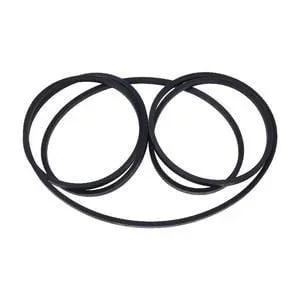
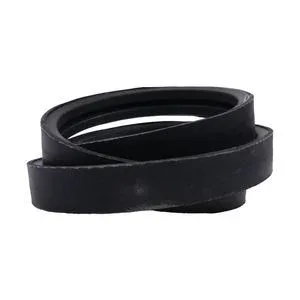
Matched Set Dispatch — This 54" Deck V-Belt engine system replacement ships alongside tensioners, idlers, and spindle bearings so the full drive system arrives together.
Technical Specifications
| Parameter |
Value |
| Part Number |
130-0843 |
| Product Type |
Belt |
| Cross-Reference |
130-0843, 1300843, 130-0843-SL, 1300843SL, 130-0843P, 1300843P (reference only) |
| Machine Fitment |
Toro TimeCutter 74740, 74741, 74768, 74778, 74793, 75754, 75756, 75757; Exmark Quest E-Series QTE708GEM54100, S-Series QZS708GEM54200, QZS735GKC54200 |
| Material |
High-tensile synthetic rubber compound with polyester-cord reinforcement |
| Effective Length |
54-inch |
| Profile |
Standard A-section |
| Operating Temperature |
–20°C to +80°C |
| Condition |
New Aftermarket |
| Warranty |
3–12 months against manufacturing defects |
| MOQ |
1 piece |
| Certification |
ISO 9001 |
Application Suitability
| Engine System |
Related Components |
| Deck drive power transmission |
Belt tensioner assembly, idler pulleys, spindle bearings |
| Engine-to-deck torque transfer |
Drive pulleys, clutch mechanism, belt guards |
| High-RPM mowing operations |
PTO engagement system, deck leveling hardware |
| Commercial zero-turn fleet maintenance |
Deck belt routing guides, pulley alignment shims |
Why Repeat Belt Failures Keep Sending the Mower Back to the Bench
The belt itself is rarely the root cause.
I have seen too many commercial mowers come back with shredded belts just weeks after a fresh installation. The technician swaps the belt, fires the machine, and calls it done. But a 54" Deck V-Belt engine system replacement that fails prematurely is almost always telling you something about the surrounding system — a worn tensioner that can no longer hold spec, a pulley groove that has opened up from abrasion, or a spindle bearing that is introducing lateral runout into the belt path. These conditions destroy new belts on a predictable timeline, and no amount of belt quality compensates for them [NEED_CITE: belt drive system alignment and tension diagnostics for commercial turf equipment]. The machine goes back on the lift, the engine gets pulled again for access, and the real cost multiplies well beyond the part itself.

What the Drive System Actually Demands from This Belt
The mower deck drive system transfers engine output to two or three spindle assemblies through a single belt routing path, meaning this 54" Deck V-Belt engine system replacement carries the full torque load of the cutting deck. The belt must seat fully into the pulley grooves, maintain consistent friction along the sidewalls, and resist stretching under sustained high-RPM operation. When any component in that path — tensioner, idler, or spindle — falls outside tolerance, the belt absorbs the mismatch as heat and sidewall abrasion.
The Pattern Behind the Second Failure
A replacement belt that lasts a few seasons confirms the system was healthy when it went on. A replacement belt that shreds in two weeks confirms something in the system was already broken before the old belt came off. I have seen tensioner springs lose enough force that the belt slips under load, generating heat that degrades the rubber compound from the inside out. Pulley grooves worn beyond the A-section profile allow the belt to bottom out, shifting the friction contact from the sidewalls to the groove floor where the geometry is wrong [NEED_CITE: V-belt pulley groove wear limits and belt seating standards]. These are not belt problems. They are system problems that the belt reveals.
Reading the Specifications That Matter
The polyester-cord reinforcement in this belt resists elongation across extended operating cycles. In belt drive systems, even minor stretch changes the effective tension at the pulleys, reducing grip and increasing slip. The synthetic rubber compound is formulated to resist ozone and UV degradation, which is relevant for machines stored outdoors between cuts. The A-section profile and 54-inch effective length must match the original pulley groove geometry precisely — a belt that sits too high or too deep in the groove will generate uneven sidewall loading and fail ahead of schedule. The stated operating temperature range of –20°C to +80°C covers the heat buildup that occurs during sustained commercial mowing in warm climates.
The Cost Nobody Charges For
When a mower returns to the shop because the new belt failed, the visible cost is a replacement part. The hidden cost is the labor to remove the deck again, inspect the full drive path, and install another belt. For a landscaping fleet running multiple machines through a season, repeated premature failures compound into significant lost billable hours and erode client confidence [NEED_CITE: unplanned downtime cost impact on commercial landscaping operations]. The pattern is avoidable. Systematic inspection of the tensioner, idlers, and spindle bearings before installing a new belt addresses the conditions that destroy belts in the first place.
What We Actually Do Differently
Our own production lines and qualified sourced supply carry identical quality control and warranty terms, so a belt from either source performs to the same standard. Eight product categories under one account mean the replacement belt, tensioner, idler pulley, and spindle bearing all ship on one consignment. We start from one piece — there is no minimum blocking an emergency single-belt order. Our technical team verifies machine model and serial range against cross-reference tables that include superseded and alternate numbers. Sample units are available for fitment confirmation before any bulk commitment, and batch-level dimensional records ship with the order.
Documentation & Verification
- Commercial invoice and packing list referencing 130-0843 and matched components
- Part compatibility sheet listing Toro TimeCutter and Exmark Quest variants (reference only)
- Dimensional check on belt length and A-section profile before dispatch
- Warranty terms covering manufacturing defects for 3–12 months
- Packing photographs showing belt condition at point of dispatch
- HS code and customs documentation support for international shipment
Installation & Rebuild Sequence
- Inspect pulley grooves for wear beyond A-section limits before routing the new belt
- Verify tensioner spring force and idler bearing play against service manual specifications
- Route the 130-0843 following the original belt path diagram for the specific deck model
- Confirm belt seating depth in all pulleys — the belt should not bottom out or ride high
- Run the deck at idle for initial break-in, then check tension and alignment under load
- Re-check belt tracking after the first operating cycle and adjust tensioner if needed
Before You Request a Quote
Send us the machine model and serial number, along with any history of repeat belt failures on that unit. If the tensioner or pulleys have been replaced before, let us know the dates and part numbers used. We will confirm fitment across Toro TimeCutter and Exmark Quest variants and advise on which adjacent components should be inspected or replaced alongside the belt.
Frequently Asked Questions
Q: What other components should be inspected when replacing a deck belt that failed prematurely?
A: Check the tensioner assembly for spring force and arm play, inspect all idler pulley bearings for lateral and radial movement, and examine each spindle bearing for runout. Worn pulley grooves that have opened beyond the A-section profile will also cause early belt failure. These components must be addressed before installing a replacement belt.
Q: How do I confirm this belt fits my specific Toro or Exmark model variant?
A: Provide the full machine model number and serial range. Several Toro TimeCutter and Exmark Quest variants share the 54-inch deck platform but differ in belt routing and tensioner configuration. We cross-reference your serial number against fitment records to confirm the 130-0843 is correct for your specific machine build.
Q: What causes repeated belt failures even after replacement with correct-specification parts?
A: Repeat failures typically trace to unresolved system issues — a weakened tensioner spring, worn pulley grooves, misaligned spindle bearings, or debris trapped in the belt path. The belt absorbs these conditions as heat and sidewall damage. Inspecting the full drive system before installation addresses the root cause rather than replacing only the failed component.
Q: Can I request a sample unit to verify fitment before committing to a bulk order?
A: Yes. A single sample belt ships for fitment verification on your machine before any volume commitment. Confirm the A-section profile seats correctly in your pulleys and the 54-inch length matches your routing path. Once confirmed, the bulk order ships to the same specification as the approved sample.
Q: Are the cross-reference numbers 130-0843, 1300843, and 130-0843-SL interchangeable for the same application?
A: These numbers reference the same belt application across different listing formats and supplier catalogs. All are provided for identification purposes. We verify each cross-reference against machine model and serial range to confirm fitment, ensuring the correct part ships regardless of which reference number initiated the inquiry.