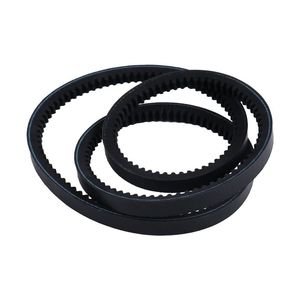
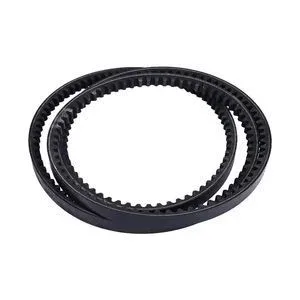
System-Matched V-Belt — Chloroprene compound with polyester cord reinforcement verified against drill press engine serial variants before dispatch.
Technical Specifications
| Parameter |
Value |
| Part Number |
113.21371 |
| Cross-Reference |
11321371 (reference only) |
| Product Type |
Belt |
| Machine Fitment |
Sears Craftsman 15 1/2" Drill Press |
| Material |
Chloroprene rubber compound with high-tensile polyester cord reinforcement |
| Profile |
A-section |
| Length Tolerance |
±0.3 mm on effective length |
| Testing |
50,000+ flex cycles |
| Condition |
New Aftermarket |
| Warranty |
3–12 months against manufacturing defects |
| Standards |
ISO 9001, ISO 4184 |
Application Suitability
| Engine System |
Related Components |
| Belt drive – power transmission |
Pulleys (motor and spindle), tensioner assembly, mounting hardware |
| Accessory drive – auxiliary equipment |
Secondary belts for multi-speed configurations, guard fasteners |
| Scheduled maintenance overhaul |
Complete drive belt set, tensioner bearings, pulley alignment shims |
Why Repeated V-Belt Replacements Fail to Solve the Root Problem
A snapped belt is the symptom; the failed tensioner or worn pulley groove is the cause.
In machine shops running drill presses through repetitive cycles, a V-Belt engine rebuild replacement often fails within weeks when only the belt is swapped. The pulley grooves develop a polished surface that reduces friction, and the tensioner spring loses preload over time. Replacing the belt without inspecting these adjacent components means the new V-Belt engine rebuild replacement absorbs the same misalignment and slippage that destroyed the previous one [NEED_CITE: mechanical drive system root cause analysis for industrial belt failure].
The Belt Drive System as a Linked Wear Chain
This V-Belt operates within a belt drive system where every component shares the same rotational load path. The A-section profile must seat fully into the pulley groove walls — if the grooves are worn beyond tolerance, the belt rides lower, reducing contact area and generating excess heat. The polyester cord reinforcement maintains dimensional stability under continuous tension, but it cannot compensate for a pulley that no longer grips. Inspecting the entire drive train before installing this V-Belt engine rebuild replacement prevents a cycle of recurring failures.
Matching Profile Geometry and Effective Length to Your Drill Press Variant
Sears Craftsman 15 1/2" drill presses were produced across several build years, and the belt drive configuration varies by serial range. Some units use a single A-section belt while multi-speed models require matched sets. Confirming the effective length and center distance against your specific pulley spacing ensures the replacement belt reaches proper tension without overloading the motor bearings. Requesting a cross-reference check against your serial number avoids receiving a belt that is dimensionally correct in profile but wrong in length [NEED_CITE: drill press belt drive variant identification by serial range].

How Chloroprene and Polyester Cord Handle Machine Shop Conditions
The chloroprene rubber compound resists oil mist and moderate heat — both common in fabrication environments where coolant spray and spindle friction elevate ambient temperature around the drive housing. Standard natural rubber belts degrade under these conditions, developing surface cracks that propagate into cord separation. The polyester cord reinforcement inside this belt resists elongation under sustained load, maintaining the ±0.3 mm effective length tolerance that keeps RPM transfer consistent between motor and spindle. A belt that stretches beyond this tolerance causes the spindle to run below rated speed under cutting load, producing poor surface finish on workpieces.
The Real Cost of Skipping System-Level Inspection
When a workshop replaces only the belt without checking pulley alignment and tensioner preload, the new belt typically shows edge wear within the first several hundred operating hours. Edge wear accelerates cord exposure, leading to sudden failure mid-operation — often while the drill press is under load on a critical job. The downtime cost extends beyond the belt itself: the workpiece may be scrapped, the spindle bearings may absorb shock damage from sudden load loss, and the machine remains offline while the correct diagnosis is finally made [NEED_CITE: industrial equipment downtime cost from incomplete drive system maintenance].
Sourcing This V-Belt With Verified System Compatibility
Our Guangzhou facility produces selected belt drive components and sources the remainder from qualified ISO-certified partners, with both channels carrying identical warranty terms. The 113.21371 belt is verified against drill press serial variants before dispatch, not just listed against a generic model name. Orders start from a single piece, so a workshop can replace one failed belt immediately while ordering a matched set for scheduled maintenance. Technical support is available to confirm A-section profile compatibility and effective length match before the order ships, reducing the risk of receiving a dimensionally incorrect belt that delays the repair.
Documentation & Verification
- Commercial invoice and packing list with 113.21371 cross-reference notation
- Belt drive compatibility sheet listing verified drill press serial ranges
- Dimensional inspection record showing effective length within ±0.3 mm tolerance
- Warranty terms document covering manufacturing defects for 3–12 months
- Packing photographs confirming belt condition and retail packaging integrity
- HS code classification support for customs clearance
Installation & Rebuild Sequence
- Verify A-section groove depth on both motor and spindle pulleys before belt installation
- Clean pulley surfaces with solvent to remove oil residue that causes early slippage
- Check tensioner spring preload and bearing play; replace if lateral movement is detected
- Install the V-Belt engine rebuild replacement and set tension per drill press manual specification
- Run spindle at each speed setting for several minutes to confirm belt tracking and RPM stability
- Recheck tension after initial run-in period; polyester cord may seat slightly during first hours
Requesting the Correct Belt for Your Drill Press
Provide your drill press model number, serial number, and the build year if visible on the nameplate. If the nameplate is worn or painted over, a photograph of the existing belt alongside a ruler, plus a photo of the pulley groove profile, allows our technical team to confirm A-section compatibility and effective length. For multi-speed configurations, specify whether the unit requires a single belt or a matched set so the correct package is prepared.
Frequently Asked Questions
Q: What other components should be inspected or replaced when changing the drive belt?
A: The pulleys, tensioner assembly, and tensioner bearing should all be checked. Worn pulley grooves reduce friction and cause the new belt to slip prematurely. A weak tensioner spring cannot maintain proper preload, leading to recurring slippage. Replacing these components together as a matched set during a V-Belt engine rebuild replacement ensures the entire drive system functions correctly.
Q: How do I confirm this belt matches my drill press pulley groove profile?
A: The A-section profile is standard, but effective length varies across drill press serial ranges. Provide your machine serial number so the correct length variant is selected. The ±0.3 mm length tolerance ensures proper fit within the existing center distance. If the nameplate is unreadable, a photograph of the old belt with a measurement reference helps confirm the match.
Q: Does the package include matched belts for multi-speed drill press configurations?
A: This product ships as a two-piece set in retail packaging. For multi-speed drill presses that require different belt lengths across speed ranges, confirm your exact configuration when ordering. Our technical team verifies the drive system variant against your serial number to ensure the correct belt set is supplied rather than a generic single-size replacement.
Q: What causes repeated belt failure even after correct replacement?
A: Common root causes include pulley misalignment, worn groove surfaces, and degraded tensioner springs. Oil contamination from nearby machining operations also accelerates rubber degradation. The chloroprene compound in this belt resists oil mist better than standard rubber, but the underlying mechanical issues must be resolved. Inspect the full drive train during every V-Belt engine rebuild replacement to prevent recurring failures.