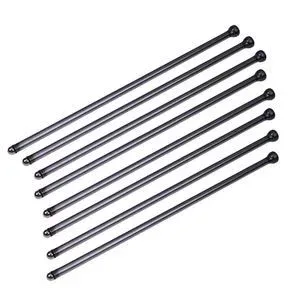
Matched Grade Dispatch — push rod 154-1248 ships with verified engine serial matching to prevent tolerance mismatch during CAT 3034 and C2.2 valve train rebuilds.
Technical Specifications
| Parameter |
Value |
| Part Number |
154-1248 |
| Product Type |
Push Rod |
| Cross-Reference |
1541248, CA1541248 (reference only) |
| Machine Fitment |
3034, 3024C, C2.2, 3024, C1.1, 216, 226, 228, 232, 242, 216B, 226B, 232B, 242B, 216B2, 216B3, 226B2, 226B3, 232B2, 232D, 232D3, 242B2, 239D, 249D, 247B, 257B, 247B2, 247B3, 257B2, 304.5, 902, AP255E, C2.2 DE18E3/DE22E2, DE18E3/DE22E3, DE9.5E3, CB-334E, CB-334E XW, CB-335E, CB34, CB34XW, CC34, CB34B, CB34B XW, CB36B, CC34B |
| Condition |
New Aftermarket |
| Material |
High-strength steel |
| Packaging |
8 pieces per package |
| Warranty |
3-12 months against manufacturing defects |
| MOQ |
1 piece |
| Manufacturing Standard |
ISO-certified production |
Application Suitability
| Engine System |
Related Components |
| Valve Train Motion Transfer |
Tappets, rocker arms, valve stem seals |
| Camshaft Interface |
Cam lobes, lifters, lifter bores |
| Top-End Overhaul |
Gasket set, valve guides, valve springs |
| Preventive Valve Service |
Rocker shaft assembly, push rod guide plates |
Why a Single Bent Push Rod Means the Whole Valve Train Needs Inspection
Replacing one rod without checking the tappet and cam lobe that drove it invites the same failure within weeks.
In humid Southeast Asian workshops, I have pulled bent push rods from CAT 3034 engines where the mechanic swapped only the damaged piece. The scored tappet beneath it kept hammering the new rod off-center until it bent again. A Push Rod engine rebuild demands you trace the load path from cam lobe through lifter to rocker arm—every interface carries the same wear signature [NEED_CITE: valve train wear pattern analysis for small-bore diesel engines].
The Valve Train as a Load Chain
This push rod sits between the camshaft lifter and the rocker arm, transmitting lift motion to open the intake and exhaust valves. When one Push Rod engine rebuild component fails, the adjacent surfaces have already been sharing the same contaminated oil and thermal cycles. Inspecting only the broken piece leaves the root cause untouched.
Engine Serial Variants That Change the Fit
The 3034, 3024C, and C2.2 families share the same base architecture but carry different valve train geometries across serial ranges. Deck height and block casting revisions alter the installed length the push rod must span. Ordering by engine model alone risks receiving a rod that seats loosely in the lifter cup or binds against the rocker adjuster [NEED_CITE: engine serial variant identification for valve train geometry].
Reading the Specs That Matter on the Bench
High-strength steel gives the rod the column stiffness to resist buckling under repeated valve spring loads, but the critical dimensions are the two end forms. The cup end must match the lifter ball radius to avoid point loading, while the adjuster end must seat cleanly in the rocker arm socket. Straightness tolerance along the shaft prevents the rod from flexing laterally at high RPM, which would accelerate wear at both contact points. Each rod in the 8-piece package shares the same production batch, keeping length variation within a matched set.

What a Mismatched Grade Costs the Shop
When pistons and cylinder liners arrive in different oversize grades, the block gets torn down a second time. Push rod mismatches are less visible but equally costly: a rod that is fractionally long keeps the valve open past its intended closing point, and the piston can contact the valve head during overlap. That single clearance error turns a top-end refresh into a full bottom-end inspection. Shops that skip the serial number check absorb these teardown hours repeatedly [NEED_CITE: valve-to-piston interference causes in small displacement diesels].
Why Source This Push Rod Through Our Engine System Desk
Our own production lines and qualified partner facilities operate under one warranty account, so a push rod ordered alongside a gasket set and valve stem seals carries identical QC terms. We hold Guangzhou warehouse stock on fast-moving valve train items for quick dispatch, and the one-piece minimum means a single emergency replacement ships without waiting for a batch order. Cross-reference verification covers superseded numbers across the 3034 and C2.2 families. If your machine nameplate is painted over, our technical team confirms fitment from a photograph or serial number before anything ships. A sample rod can go out first so you verify lifter cup seating and rocker arm interface before committing to a full engine set.
Documentation & Verification
- Commercial invoice and packing list listing each push rod batch and quantity
- Compatibility sheet mapping 154-1248 (cross-reference only) to your engine serial number
- Dimensional inspection record covering straightness and end-form radii
- Warranty terms covering material and manufacturing defects for 3-12 months
- Packing photographs showing rod separation and protective wrapping before crate closure
- HS code and export documentation prepared for destination customs clearance
Installation & Rebuild Sequence
- Clean lifter bores and verify tappet ball surface before inserting each new push rod
- Confirm rod length against the removed component to catch serial-variant differences
- Set valve clearance per engine manual after all rods and rocker arms are seated
- Torque rocker shaft fasteners in the specified sequence to avoid binding the new rods
- Run the engine at idle and listen for tapping that signals a mis-seated cup or adjuster end
What We Need to Quote Your Valve Train Job Accurately
Send the engine model, serial number, and any prior rebuild history so we can confirm whether your block uses the standard or revised valve train geometry. If the nameplate is gone, a clear photo of the block casting number and one removed push rod lets us verify length and end profile before shipping. Tell us which adjacent components—tappets, rocker arms, gasket set—you are replacing so we can match the order to a single rebuild event.
Frequently Asked Questions
Q: What other valve train components should be inspected when replacing a push rod?
A: Check the cam lobe that drives the failed rod for wear flats, inspect the tappet face for scoring, and measure rocker arm bushing clearance. Valve stem seals and springs should be evaluated if the engine has accumulated significant hours since the last top-end service. Replacing the rod without addressing worn adjacent surfaces shortens the new component's service life.
Q: Do different engine serial numbers within the same model use different push rod lengths?
A: Yes. Within the 3034, 3024C, and C2.2 families, block casting revisions changed deck height and valve train geometry across production runs. Providing your engine serial number lets us confirm the correct installed length rather than shipping a generic rod that may seat loosely or bind at the rocker adjuster.
Q: What in an overhaul kit relates to the valve train, and what must be ordered separately?
A: Most gasket sets include valve cover and intake manifold gaskets but exclude push rods, tappets, and rocker shaft components. Valve stem seals are sometimes included in top-end kits but not always. Confirm the kit contents against your rebuild checklist and order valve train hard parts as a separate matched line item.
Q: How do I confirm the root cause of push rod failure before ordering replacements?
A: Examine the failed rod for bend location—mid-shaft buckling suggests valve-to-piston contact, while end wear points to lifter or rocker misalignment. Check oil pressure history and filter condition, since lubrication starvation accelerates tappet scoring. Addressing the underlying fault prevents the new push rod from failing in the same manner.
Q: Can I get a sample push rod to verify fitment before committing to a full engine set?
A: We supply individual units as samples so you can confirm lifter cup seating, rocker arm interface, and installed length on your bench before ordering the full 8-piece package or multiple sets for a fleet overhaul. The sample carries the same quality inspection record and warranty terms as production quantities.