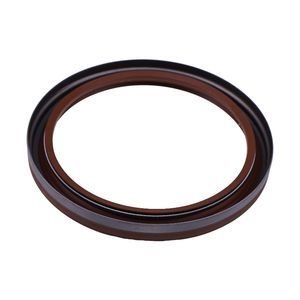
Matched Overhaul Supply — Con rod bearings shipped with verified main bearing grades and gasket sets for Kubota V3307 rebuilds.
Technical Specifications
| Parameter |
Value |
| Product Type |
Con Rod Bearing |
| Brand Fitment |
Kubota, Bobcat (compatible with) |
| Machine Fitment |
KX080-3, KX080-4, M6040, M6060, M7060, SSV75, SSV75C, SSV75P, SSV75PC, S630, S650, T650 |
| Material |
Tri-metal (alloy steel backing, copper-lead intermediate, friction-reducing overlay) |
| Bearing Clearance |
0.025-0.050mm |
| Hardness |
HB 200-250 |
| Condition |
New Aftermarket |
| Warranty |
3-12 months against manufacturing defects |
| Standard |
ISO 9001 |
Application Suitability
| Engine System |
Related Components |
| Lubrication System |
Oil pump, oil filter, lubrication passage cleaning |
| Rotating Assembly |
Main bearings, thrust washers, crankshaft inspection |
| Cylinder Components |
Piston assemblies, piston rings, cylinder liners |
| Sealing & Gaskets |
Overhaul gasket set, crankshaft seals |
Why the Wrong Grade Con Rod Bearing Destroys an Engine Rebuild
Measure the crankshaft journal before ordering, not after.
A teardown often reveals worn rod bearings, but the crankshaft journals may have been ground to an undersize during a previous overhaul. Ordering a standard grade without measuring the actual journal diameter leads to excessive clearance, oil pressure loss, and bearing failure within the first hours of operation. In Central Asian distribution channels, I have seen numerous Kubota V3307 rebuilds fail because the workshop assumed STD bearings were correct [NEED_CITE: engine rebuild clearance verification standards]. The same base part number ships in multiple oversize grades—STD, 0.25, 0.50—and only one matches the crankshaft in your machine.

System-Level Bearing Selection for V3307 Engines
Con rod bearings do not work in isolation. They sit at the heart of the rotating assembly, paired with main bearings that support the crankshaft and thrust washers that control axial movement. Supplying a matched set ensures consistent clearance across all journals, not just the rod pins. A complete overhaul kit should include con rod bearings alongside main bearings, piston assemblies, and the full gasket set so the rebuild achieves correct tolerances throughout.
Crankshaft Condition Dictates the Grade
The crankshaft in a Kubota V3307 or V3307T engine may have been machined during a prior rebuild, shifting the journal diameter away from factory specification. If the rod journals measure undersize, the corresponding oversize con rod bearing grade must be selected. Sending standard bearings to a crankshaft that has already been ground is one of the most common causes of early rebuild failure. Verify the actual journal diameter with a micrometer and cross-reference against the bearing grade chart before committing to an order [NEED_CITE: crankshaft journal measurement procedures for diesel engines].
Tri-Metal Construction and Load Distribution
The alloy steel backing provides structural rigidity under combustion loads. The copper-lead intermediate layer offers conformability—allowing the bearing to accommodate minor shaft misalignment without localized pressure points. The friction-reducing overlay minimizes wear during boundary lubrication conditions, such as cold starts and low oil pressure moments. This tri-metal design addresses the continuous load cycles and variable oil pressure typical of compact excavators and agricultural tractors operating under demanding conditions.
Bearing Clearance and Oil Film Integrity
The specified clearance range supports hydrodynamic oil film formation at operating temperature. Too tight, and the film breaks down under thermal expansion. Too wide, and oil escapes before building sufficient pressure to support the load. The correct clearance depends on both the bearing grade and the actual crankshaft journal condition, making measurement non-negotiable. Hardness within the stated range ensures the bearing surface resists embedment of fine contaminants while maintaining the conformability needed for journal contact.
The Cost of Grade Mismatch and Overlooked Root Causes
Installing a standard grade con rod bearing on a ground crankshaft produces excessive clearance from the first revolution. The oil pump cannot maintain pressure, the bearing overheats, and copper-lead material transfers to the journal surface. The machine is back in the shop within days. Meanwhile, the underlying cause—oil starvation from a blocked lubrication passage or a worn oil pump—remains unaddressed. The next set of bearings will fail for the same reason unless the entire lubrication system is verified during the rebuild [NEED_CITE: lubrication system root cause analysis in diesel engine failure].
Why Source Con Rod Bearings Through This Channel
Own production on selected bearing lines and qualified sourced supply carry the same QC and warranty terms, so matched sets ship from one account. Eight categories mean a complete overhaul kit—bearings, pistons, gaskets, seals—moves as one consignment rather than arriving from separate suppliers on different schedules. Minimum order from one set supports emergency rebuilds and sample fitment before bulk commitment. Part identification works from engine model, serial number, or a photograph of the existing bearing and crankshaft. Cross-reference verification covers superseded numbers and alternate grades across V3307 variants. The technical team confirms grade selection and system compatibility before dispatch.
Documentation & Verification
- Commercial invoice listing each bearing grade and oversize dimension for customs clearance
- Part compatibility sheet noting V3307 and V3307T variant differences as reference only
- Quality inspection record covering dimensional accuracy and tri-metal layer composition
- Warranty terms specifying coverage period and manufacturing defect conditions
- Packing photographs showing bearing sets sealed and labeled by grade
- HS code and customs documentation support for international engine parts shipment
Installation & Rebuild Sequence
- Verify crankshaft rod journal diameter with micrometer before opening bearing packaging
- Clean lubrication passages thoroughly to remove debris that caused prior bearing failure
- Install con rod bearings with correct orientation, checking oil hole alignment
- Torque connecting rod bolts to specification and confirm bearing clearance with plastigauge
- Prime oil system before first start to prevent dry-running the new bearing surfaces
Requesting a Quotation
Provide the exact engine model, engine serial number, and any known rebuild history so the correct bearing grade can be confirmed. If the crankshaft has been machined, include the measured journal diameter. Photographs of the existing bearings and crankshaft nameplate help verify variant identification and oversize requirements.
Frequently Asked Questions
Q: What is included in a full overhaul kit for the Kubota V3307 engine?
A: A complete kit pairs con rod bearings with main bearings, thrust washers, piston ring sets, and a full gasket set. Contents are verified against the specific engine serial number to ensure no items are missing for your particular V3307 build variant.
Q: The crankshaft was ground during a previous rebuild — which oversize grade do I need?
A: Measure the rod journal diameter with a micrometer and match it to the bearing grade chart. Common oversize grades include 0.25 and 0.50. The correct grade depends entirely on the actual machined dimension, not the original factory specification.
Q: Are internal components identical between V3307 and V3307T engine variants?
A: The turbocharged V3307T may have different piston and bearing specifications due to higher thermal and mechanical loads. Confirm the exact engine model and serial number before ordering to ensure the con rod bearing set matches your specific variant.
Q: What other engine systems should be inspected when con rod bearings fail?
A: Bearing failure frequently traces to oil starvation. Inspect the oil pump, oil filter, and all lubrication passages during the same rebuild cycle. Addressing the root cause prevents the new bearings from failing prematurely for the same reason.


![10767 → 1+0+7+6+7 = 21 21 mod 6 = 3 → 句式结构 3: [品牌/机型]-Compatible [品类词] – [站点修饰词] 站点 xunpomachineryparts.com 修饰词池: Engine Grade / Rebuild Kit / Matched Set / Overhaul Component / Powertrain / System-Matched 21 mod 6 = 3 → 取第4个(index 3): Overhaul Component GM-Compatible Camshaft Holding Tool Kit – Overhaul Component](https://xunpomachineryparts.com/wp-content/uploads/2026/09/10767-e28692-10767-21-21-mod-6-3-e28692-e58fa5e5bc8fe7bb93e69e84-3-e59381e7898c-e69cbae59e8b-compatible-e59381e7b1bbe8af8d-e7ab99-2c4fc1.webp)