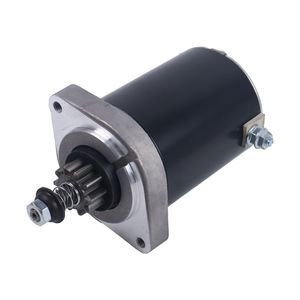
Matched Sets Shipped Together — this starter motor is verified against engine serial variants to ensure correct engagement depth and gear tooth profile before dispatch.
Technical Specifications
| Parameter |
Value |
| Part Number |
21163-0749 |
| Product Type |
Starter Motor |
| Cross-Reference (reference only) |
21163-0711, 21163-0714, 21163-7035, FR691V-AS04, MIA11761, MIA11949, MIA11984, MIA12214, MIA12455, MIA12485, MIA12926 |
| Machine Fitment |
Kawasaki FR541V, FR691V, FR730V, FS481V, FS600V, FS651V, FS691V, FS730V, FX600V, FX651V, FX691V, FX730V; Cub Cadet RZT46, RZT50, RZT54, Z-Force 48, Z-Force 54, Z-Force 60, LTX1046, LTX1050; John Deere X360, S240, X300, X300R, X304, X305R, X310, X320, X324, X350, X350R, X354, X370, X380, X384, X390, X394, Z530M, Z530R |
| Voltage |
12 V |
| Torque Output |
1.8 N·m |
| Engagement Speed |
2,100 rpm |
| Voltage Tolerance |
12 V ±15% |
| Peak Current Draw |
180 A |
| Hold Current Draw |
45 A |
| Armature Shaft Material |
40Cr steel (HRC 52–55) |
| Field Coil Insulation |
Class H (180°C thermal rating) |
| Internal Contacts |
Silver-plated brass |
| Housing Surface Treatment |
Zinc-nickel plating (≥15 μm thickness) |
| Dimensional Standard |
JIS B 8201 |
| Surface Treatment Standard |
ASTM B633 SC4 |
| Condition |
New Aftermarket |
| Warranty |
3–12 months against manufacturing defects |
| MOQ |
1 piece |
Application Suitability
| Engine System |
Related Components |
| Starting Circuit |
Battery terminals, main relay, wiring harness |
| Flywheel Interface |
Ring gear teeth, starter mounting flange bolts |
| Charging System |
Alternator output, voltage regulator |
| Engine Rebuild Sequence |
Crankshaft end-play, bearing clearance check |
Why Repeat Failures Happen After a Starter Motor Engine Replacement
The failed part is rarely the root cause.
In my experience supporting engine overhaul shops, a starter that burns out within months usually points to unresolved system faults rather than a defective replacement unit. Weak batteries force the starter to draw excessive current during cold cranks. Corroded terminals introduce resistance that drops voltage below the engagement threshold. A worn flywheel ring gear misaligns the pinion, creating partial engagement that shears teeth over time. [NEED_CITE: electrical starting system diagnostic procedures for small engines]
A starter motor engine replacement without system-level diagnosis often leads to repeat failures and unnecessary warranty claims. The closed-loop nature of the starting circuit means every component stresses the others.
The Starting System as an Integrated Loop
The battery, cables, solenoid, and starter motor form a single electrical path. When battery health degrades, internal resistance rises, and the starter receives insufficient voltage to reach full engagement speed. The pinion gear then partially meshes with the ring gear, generating heat and accelerated wear. This Starter Motor is rated for 180 A peak draw at 12 V ±15%, meaning any voltage drop below the tolerance window shifts the load profile outside design parameters. Checking cable resistance and terminal condition before installation prevents misdiagnosis.
Crankshaft Condition and Engagement Depth
Engine rebuild history directly affects starter fitment. If the crankshaft has been reground or thrust bearings replaced with non-standard clearances, the axial position of the flywheel shifts. This alters the engagement depth between the starter pinion and ring gear. I have seen cases where a standard starter motor was installed on a rebuilt Kawasaki FR691V, only for the gear to produce abnormal noise due to altered crankshaft end-play. Confirming engine serial number and rebuild history ensures the correct variant is supplied. [NEED_CITE: crankshaft end-play tolerances affecting starter engagement]

Specification Impact on Field Reliability
The 40Cr steel armature shaft, hardened to HRC 52–55, resists bending under high-torque engagement cycles typical of commercial zero-turn mowers operating multiple shifts daily. Class H insulation withstands thermal loads up to 180°C, which matters when the starter is cranked repeatedly in hot conditions without adequate cool-down intervals. Silver-plated brass internal contacts reduce arcing and contact resistance, extending solenoid life. The zinc-nickel plating at ≥15 μm thickness provides corrosion protection in humid or salt-air environments where municipal parks departments and coastal landscape contractors operate equipment.
The Cost of Skipping System Diagnosis
Replacing the starter without inspecting the ring gear, testing battery load capacity, and measuring voltage drop across cables leads to repeat failures. Each return visit costs labor hours, damages customer confidence, and generates warranty disputes. Shops that adopt system-level diagnosis before Starter Motor installation report fewer comebacks and more accurate fault isolation. [NEED_CITE: small engine electrical system troubleshooting workflow]
Why Source This Starter Motor Here
Our Guangzhou warehouse stocks this starter motor alongside associated electrical components, allowing system-level orders to ship in one consignment. We verify cross-reference numbers against engine build records, catching superseded part numbers that copied tables miss. Technical support confirms compatibility based on engine serial number and rebuild history, not just model designation. Sample supply is available for fitment confirmation before bulk commitment, reducing trial-fitment errors on site.
Documentation & Verification
- Commercial invoice listing engine serial and cross-reference numbers (reference only)
- Compatibility sheet confirming Kawasaki FR/FS/FX series variant match
- Quality inspection record covering pinion gear tooth profile and engagement depth
- Warranty terms specifying coverage for manufacturing defects
- Packing photographs showing housing condition before crating
- HS code and customs documentation for electrical starting components
Installation & Rebuild Sequence
- Verify crankshaft end-play and flywheel runout before mounting the starter motor
- Clean mounting flange surface to ensure proper electrical ground path
- Torque mounting bolts to specification to prevent housing distortion
- Test battery load capacity and cable voltage drop before first crank
- Inspect ring gear teeth for wear patterns indicating previous misalignment
- Run initial engagement test without load to confirm pinion travel and release timing
Requesting a Compatibility Confirmation
Provide the engine model, serial number, and any known rebuild history to receive a verified compatibility check. If the nameplate is worn or painted over, a photograph of the mounting flange and flywheel housing allows identification. For fleet orders, sharing the equipment list enables consolidated quoting across multiple engine variants.
Frequently Asked Questions
Q: Why did my starter fail again shortly after replacement?
A: Repeat failures usually stem from unresolved system faults rather than part defects. Weak batteries, corroded terminals, high cable resistance, or worn ring gear teeth force the starter to operate outside design parameters. System-level diagnosis before replacement identifies the root cause and prevents recurrence.
Q: What else should I inspect when replacing the starter motor?
A: Check battery load capacity, measure voltage drop across cables and terminals, inspect flywheel ring gear teeth for wear or damage, and verify crankshaft end-play if the engine has been rebuilt. These checks ensure the new starter operates within its rated engagement speed and current draw specifications.
Q: How do I confirm which OEM number applies to my engine serial?
A: Provide the engine model and serial number for cross-reference verification. Superseded numbers and variant differences across production runs mean the same base part may have multiple valid references. Our technical team confirms the correct match against equipment build records.
Q: Does the battery or wiring need attention when installing a new starter?
A: Battery health and cable condition directly affect starter performance. A degraded battery or high-resistance connections cause voltage drop below the engagement threshold, leading to partial gear mesh and accelerated wear. Testing these components before installation prevents misdiagnosis.
Q: Can I get a sample to verify fitment before ordering in bulk?
A: Sample supply is available for fitment confirmation. This allows verification of mounting pattern, pinion engagement depth, and electrical connector compatibility before committing to larger quantities, reducing the risk of field installation errors.