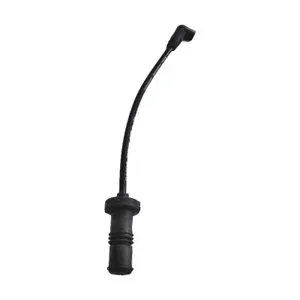
Engine Serial Variants Confirmed — Wire length and connector type verified against CM556 and CM2180 build sheets before dispatch, preventing misfire-prone misfits on Cummins B5.9 and ISB5.9G gas platforms.
Technical Specifications
| Parameter |
Value |
| Part Number |
3966404 |
| Product Type |
Spark Plug Wire |
| Cross-Reference |
3966404 (reference only) |
| Machine Fitment |
B5.9 GAS PLUS CM556, B5.9 LPG PLUS CM556, ISB5.9G CM2180 |
| Condition |
New Aftermarket |
| Warranty |
3–12 months against manufacturing defects |
| Minimum Order |
1 piece |
| Quality Standard |
ISO 9001 |
Application Suitability
| Engine System |
Related Components |
| Ignition system — gas combustion chamber |
Spark plugs, ignition coils, connector boots |
| LPG fuel delivery and ignition timing |
Spark plug set, coil pack, wiring harness connectors |
| Scheduled ignition service interval |
Full ignition wire set, plug gap tools, dielectric grease |
| Engine overhaul — ignition subsystem refresh |
Overhaul gasket set, ignition module, sensor harness |
Why Ignition Wires Fail Before the Plugs Do
Replacing only the spark plugs while reusing aged wires is the most common reason misfires return within weeks of a tune-up.
In Shandong rebuild bays, I have watched technicians swap plugs on B5.9 GAS PLUS engines only to chase phantom misfire codes the next morning. The spark plug wire carries high-voltage pulses through insulation that degrades from sustained heat exposure in gas and LPG combustion environments. Cracked jackets and increased core resistance force the coil to work harder, eventually damaging the coil itself. Addressing the fault means replacing the wire as a matched set with the plug and checking the coil output. [NEED_CITE: ignition system secondary circuit degradation patterns in natural gas engines]

The Ignition Circuit This Wire Belongs To
A spark plug wire sits between the ignition coil and the spark plug, transmitting high-voltage pulses that initiate combustion. On Cummins B5.9 and ISB5.9G gas and LPG engines, consistent spark delivery depends on every link in that chain performing within specification. Mismatched resistance across cylinders causes uneven combustion, which shows up as rough idle and elevated exhaust temperatures on individual cylinders.
Engine Serial Variants That Change the Wire Spec
The CM556 and CM2180 controller platforms use different harness routing and connector geometries. A wire cut for the CM556 may physically reach the plug on a CM2180 but stretch the boot or leave the connector under tension, inviting moisture ingress and eventual arcing. Before ordering, confirm the exact engine serial to ensure wire length and terminal type match the build configuration. [NEED_CITE: Cummins ISB5.9G CM2180 ignition harness routing differences]
What the Specs Mean in the Bay
High-temperature insulation on this spark plug wire resists the sustained heat loads typical of gas and LPG combustion chambers, where exhaust gas temperatures run hotter than diesel equivalents. The conductive core maintains stable resistance across the operating temperature range, preventing voltage drop that weakens spark intensity at high load. The outer jacket provides dielectric isolation so high-voltage pulses reach the plug gap rather than leaking to adjacent metal surfaces. Together, these characteristics support consistent ignition timing across all cylinders during an engine rebuild.
The Cost of Skipping the Wire During an Overhaul
Rebuilding a gas engine and reusing old ignition wires is a pattern I have seen repeat: the engine runs clean for a few hundred hours, then misfire codes return and the operator blames the new plugs or the fuel system. The real cause is degraded wire insulation that allows voltage leakage under load. By that point, the coil may also be damaged from compensating for the increased resistance, turning a simple wire replacement into a coil and diagnostic expense. [NEED_CITE: ignition coil failure correlation with aged secondary wiring in LPG engines]
Why Rebuild Shops Source This Wire Here
Own production lines and qualified partner supply operate under one account with identical warranty terms, so ignition components and overhaul gaskets ship together without quality tier confusion. Eight product categories mean a complete ignition system refresh — wires, plugs, coils, connectors — consolidates into a single consignment. Orders start at one piece, removing minimum-quantity barriers when a single cylinder wire has failed mid-season. Guangzhou warehouse stock enables fast dispatch on common ignition items. Part identification works from an engine serial number, a photograph of the old wire connector, or a nameplate image. Cross-reference verification covers superseded and alternate part numbers so the correct wire variant ships regardless of how many times the number has changed across engine generations.
Documentation & Verification
- Commercial invoice listing each ignition wire by engine serial and variant
- Compatibility sheet cross-referencing plug, wire, and coil part numbers (reference only)
- Resistance and dielectric strength test records per wire before dispatch
- Warranty terms covering manufacturing defects for 3–12 months
- Packing photographs showing connector boots protected during transit
- HS code and customs documentation support for international engine parts shipments
Installation & Rebuild Sequence
- Route the spark plug wire away from exhaust manifolds to prevent jacket scorching
- Apply dielectric grease inside the connector boot before seating on the plug terminal
- Verify each wire reaches its plug without stretching or pulling the connector
- Torque spark plugs to specification before attaching wires to avoid cross-threading damage
- Perform a cylinder balance test after installation to confirm even combustion across all cylinders
Share Your Engine Details for a Matched Quote
Provide the engine model, serial number, and any known rebuild history so the correct wire variant is confirmed for your CM556 or CM2180 platform. If the existing wire connector is still available, a photograph of the terminal end speeds identification. Request a full ignition system compatibility sheet covering plugs, wires, and coils before committing to bulk.
Frequently Asked Questions
Q: What other ignition components should be replaced together with the spark plug wire?
A: Replace spark plugs and inspect ignition coils whenever wires are changed during a spark plug wire engine rebuild. Connector boots and dielectric grease complete the set. Reusing old plugs with new wires or vice versa creates mismatched wear that shortens the service interval for both. Request an ignition system compatibility sheet covering all three components before ordering.
Q: Do CM556 and CM2180 engines use the same spark plug wire?
A: Not always. The CM556 and CM2180 controller platforms can differ in wire length and connector type due to harness routing changes. Ordering the wrong variant leads to stretched boots or loose terminals. Confirm your exact engine serial number before purchasing to ensure the spark plug wire matches your specific build configuration.
Q: How do I confirm the correct wire for my engine serial number?
A: Send the engine data plate photograph or the full serial number. The technical team cross-references the build record to confirm wire length, connector style, and routing path. This verification step prevents fitment issues that arise when part numbers have been superseded across engine production runs.
Q: Is testing available before bulk purchase?
A: Sample units ship for fitment confirmation on your engine before you commit to a full order. Resistance and dielectric strength test results accompany each sample. This allows your rebuild team to verify connector engagement, wire routing clearance, and spark consistency on one cylinder before scaling to the entire set.
Q: What does the warranty cover for ignition system parts?
A: The warranty covers manufacturing defects in the spark plug wire for 3–12 months from delivery. This includes insulation breakdown, core continuity failure, and connector defects under normal operating conditions. It does not cover damage from incorrect routing near exhaust components or installation without dielectric grease in the boot.