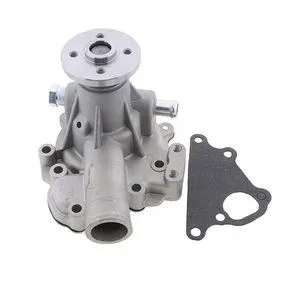
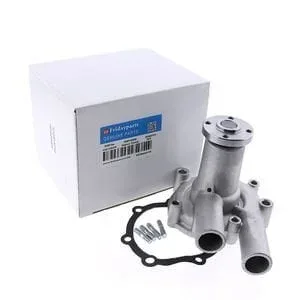
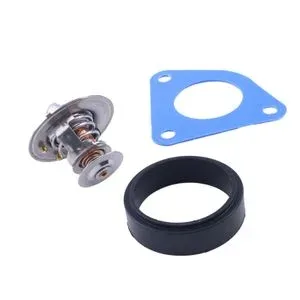
Matched Set Dispatch — This sea water pump ships with corresponding thermostat, impeller, and gasket kits for a complete cooling loop overhaul.
Technical Specifications
| Parameter |
Value |
| Part Number |
21214599, 3812693, 3862482 |
| Product Type |
Water Pump |
| Cross-Reference |
21214599, 3812693, 3862482, 3857202 (reference only for interchange purposes) |
| Machine Fitment |
3.0, 4.3, 5.0, 5.7, 5.0GXi-C, 5.0GXi-CF, 5.0OSi-C, 5.0OSi-CF, 5.0GXi-D, 5.0GXi-DF, 5.0OSi-D, 5.0OSi-DF, 4.3GXi-B, 4.3OSi-BF, 4.3GXi-BF, 4.3OSi-B, 5.7GiI-B, 5.7GXiI-C, 5.0GXi-B, 5.0OSi-BF, 5.7Gi-B, 5.7GXi-C, 5.7OSi-AF, 5.0GXi-BF, 5.7Gi-BF, 5.7GXi-CF, 5.7OSXi-AF, 5.0OSi-B, 4.3GXi-A, 5.7GXi-A, 5.7GSiI-A, 5.7GXiI-A, 5.0GXi-A, 5.7Gi-A, 5.7GXi-B, 5.7GiI-A, 5.7GXiI-B, 4.3GXi-C, 4.3GXi-CF, 4.3OSi-C, 4.3OSi-CF, 4.3GXi-D, 4.3GXi-DF, 4.3OSi-D, 4.3OSi-DF, 5.7Gi-C, 5.7Gi-CF, 5.7OSi-B, 5.7OSi-BF, 5.7GXi-D, 5.7GXi-DF, 5.7OSXi-B, 5.7OSXi-BF, 5.7GiI-C, 5.7GXiI-D, 5.7Gi-D, 5.7Gi-DF, 5.7G, 5.0GXi-E, 5.0GXi-EF, 5.0OSi-E, 5.0OSi-EF, 5.7Gi-E, 5.7Gi-EF, 5.7GXi-F, 5.7GXi-FF, 5.7OSi-D, 5.7OSi-DF, 5.7OSXi-D, 5.7OSXi-DF, 5.7GiI-E, 5.7GXiI-F, 4.3GXi-E, 4.3GXi-EF, 4.3OSi-E, 4.3OSi-EF, 3.0GSMEFS, 3.0GSPEFS, 4.3GSJWTR, 4.3GIJWTR, 4.3GLPEFS, 4.3GiPEFS, 5.0GLPEFS, 5.0GiPEFS, 5.7GSPEFS, 5.7GSIPEFS |
| Part Name |
Sea Water Pump |
| Condition |
New Aftermarket |
| Warranty |
3-12 months against manufacturing defects |
| Standards |
ISO 9001 |
| Applications |
Marine engine cooling systems for pleasure boats, fishing vessels, and commercial watercraft |
Application Suitability
| Engine System |
Related Components |
| Raw-water intake loop |
Impeller kits, intake strainers, hose clamps |
| Heat exchanger circuit |
Heat exchanger O-rings, end-cap gaskets, tube stack seals |
| Thermostat housing |
Thermostat elements, housing gaskets, temperature sensors |
| Circulating water path |
Circulating water pumps, bypass hoses, freeze plugs |
Why Overhaul Kits Often Miss the Root Cause
A cooling system job that only swaps the pump without inspecting the thermostat, hoses, and heat exchanger seals often sees repeat failure within the same season. The root cause was never fixed, just masked. In our Guangzhou workshop, we frequently encounter marine engines that have been reassembled with new seawater pumps only to overheat again weeks later. The wear pattern on the old impeller or scoring inside the pump housing usually points to debris ingestion upstream, yet the intake strainer and hoses were never serviced. This oversight means the replacement pump faces the same destructive conditions from day one [NEED_CITE: marine engine cooling system debris ingestion patterns]. Addressing the Sea Water Pump for Volvo Penta Engine rebuild as a system, rather than an isolated component swap, prevents these cascading failures.

Position Within the Raw-Water Cooling Circuit
The Sea Water Pump for Volvo Penta Engine rebuild occupies a critical node in the marine cooling system. It draws seawater through the drive coupling, pushes it through the heat exchanger, then discharges it overboard. Every connection point in this loop—from the intake through-hull fitting to the exhaust manifold injection point—represents a potential leak or flow restriction. When one component fails without addressing the entire circuit, adjacent parts inherit the stress and degrade prematurely.
Impeller and Housing Wear Patterns
Scoring on the wear plate or housing bore indicates debris ingestion upstream. If the intake strainer and hoses are not serviced simultaneously, this debris will destroy the new pump impeller within hours of operation. We have documented cases where replacement pumps failed before the end of the commissioning sea trial because the underlying contamination source was ignored [NEED_CITE: marine cooling system preventive maintenance protocols]. Matched impeller kits and housing inspection should accompany every pump replacement to break this failure cycle.
Interpreting Flow Rate and Material Compatibility
The pump's flow rate must align with the heat exchanger's thermal dissipation capacity across the engine's operating range. Undersized flow leads to inadequate heat transfer at high RPM, while excessive flow accelerates impeller wear and hose erosion. The housing material must resist both galvanic corrosion from mixed-metal contact in the saltwater circuit and cavitation erosion at the impeller tips. Bronze or polymer composites are selected based on the specific engine's raw-water chemistry and expected service environment.
The Cost of Mismatched Variants
The 3.0, 4.3, 5.0, and 5.7-liter Volvo Penta families span multiple generations (suffix letters A through F), each with distinct port orientations, drive spline counts, and mounting bolt patterns. Ordering a pump without confirming the exact engine serial number results in a unit that either cannot be mounted or connects to the wrong hose ports. The cost is not just the return freight and replacement delay—it is the extended vessel downtime during peak season when the engine remains inoperable and charter revenue is lost [NEED_CITE: marine engine serial variant identification methods].
Why Source the Cooling Loop Here
Our facility produces selected part lines in-house while sourcing the remainder from qualified ISO-certified manufacturing partners, so both self-produced and sourced supply carry the same QC and warranty terms. The eight product categories—engine parts, hydraulic system, electrical parts, undercarriage, cabin parts, seal kits, tools, and general spares—allow a complete cooling system overhaul to ship as one consignment under a single account. Minimum order is one piece, so a single emergency pump can be dispatched from Guangzhou warehouse stock alongside matched gaskets and impeller kits. Our technical team verifies cross-references across superseded numbers (21214599, 3812693, 3862482, 3857202) and confirms variant compatibility before bulk commitment, with sample supply available for fitment confirmation.
Documentation & Verification
- Commercial invoice listing all cooling loop components with HS codes for customs clearance
- Part compatibility sheet cross-referencing engine serial to pump variant (reference only)
- Quality inspection record documenting impeller clearance and shaft runout measurements
- Warranty terms specifying manufacturing defect coverage for 3-12 month period
- Packing photographs showing pump and matched gaskets secured for transit
- Dimensional verification report on port spacing and spline count before dispatch
Installation & Rebuild Sequence
- Clean all hose connections and inspect for internal delamination before reassembly
- Verify drive coupling spline engagement matches the pump shaft specification exactly
- Torque mounting bolts in the specified sequence to prevent housing distortion
- Prime the raw-water circuit and check for air locks before first engine start
- Run at idle and monitor discharge flow rate to confirm impeller seating
- Inspect all gasket joints for leaks after reaching normal operating temperature
Inquiry Guidance for Rebuild Shops
Provide the engine model designation, full serial number, and any previous rebuild history. This information allows us to confirm which pump variant fits your specific unit and whether superseded numbers apply. If the nameplate is worn or painted over, send clear photographs of the engine block casting numbers and the old pump's mounting flange. We will return a verified cross-reference sheet and a consolidated quote for the pump plus all related cooling system components needed for the overhaul.
Frequently Asked Questions
Q: What other cooling system components should be replaced at the same time as the sea water pump?
A: Replace the impeller kit, intake strainer, heat exchanger O-rings, thermostat housing gasket, and any hoses showing age cracking. The thermostat element itself should be tested or replaced. This matched-set approach prevents the new pump from inheriting stress from degraded adjacent parts and ensures the entire cooling loop is addressed in one overhaul pass.
Q: How do I determine which pump variant fits my specific engine serial within the 4.3/5.0/5.7 family?
A: Provide the complete engine serial number from the nameplate or block casting. The suffix letter (A through F) indicates the generation, which determines port orientation, drive spline count, and mounting bolt pattern. We cross-reference your serial against the OEM reference numbers (21214599, 3812693, 3862482, 3857202) to verify the superseded number chain applies to your specific engine build.
Q: My previous pump failed prematurely — what upstream conditions should I check before installing the replacement?
A: Inspect the intake strainer for blockage, check hoses for internal delamination that sheds debris, and examine the heat exchanger tube stack for scale buildup that restricts flow. Scoring on the old pump's wear plate indicates debris ingestion. Addressing these upstream conditions prevents the new pump from suffering the same premature wear caused by contaminated or restricted raw water flow.
Q: Are the impeller and wear plate serviceable separately, or must the entire assembly be replaced?
A: The impeller is typically replaceable as a separate kit, but the wear plate and housing should be inspected for scoring or erosion. If scoring exceeds specification limits, the entire pump assembly should be replaced to maintain proper impeller clearance and flow efficiency. Partial repairs on a scored housing lead to reduced pumping capacity and accelerated wear on the new impeller.
Q: How do I confirm the cross-reference chain applies to my engine build?
A: Submit your engine serial number and the part number from your old pump. We verify the cross-reference chain (21214599, 3812693, 3862482, 3857202) against your specific build sheet to confirm which numbers were active when your engine was manufactured and whether any superseded variants affect fitment. This verification is provided as reference only for identification purposes before you commit to a bulk order.