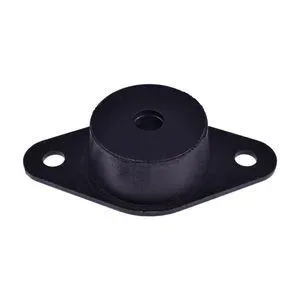
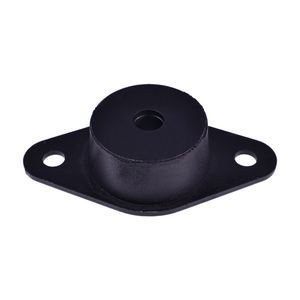
Matched Set Shipment — cushion dampers shipped alongside adjacent mounts and fasteners so every vibration isolation point on the Bomag BW roller gets addressed in one rebuild cycle.
Technical Specifications
| Parameter |
Value |
| Part Number |
06129902 06129901 |
| Product Type |
Cushion Damper |
| Cross-Reference |
06129901 (reference only), 06129902 (reference only) |
| Machine Fitment |
BW90, BW100, BW120, BW124, BW141, BW145, BW151, BW160, BW161 AC-4(AD-4), BW166, BW174, BW177, BW177PHD-3, BW179, BW180, BW184, BW202, BW203, BW211, BW212, BW212D, BW212D-3, BW213, BW213D-3, BW214, BW214D-3, BW216, BW216D-3, BW216D-4, BW218, BW219, BW219DH-3, BW219DH-4, BW220, BW225, BW225D-3, BW226, BW266 AD, BW278 AD, BW284 |
| Brand Compatibility |
Fits Bomag BW series vibratory smooth drum rollers |
| Condition |
New Aftermarket |
| Material |
High-grade synthetic rubber compound |
| Hardness |
Shore A 65±5 |
| Reinforcement |
Reinforced inner core |
| Dynamic Load Capacity |
up to 5000 N |
| Standard |
ISO 9001 |
| Warranty |
3-12 months against manufacturing defects |
| MOQ |
1 piece |
Application Suitability
| Engine System |
Related Components |
| Engine vibration isolation network |
Engine mounts, frame-to-cabin dampers, auxiliary bracket fasteners |
| Vibratory drum exciter system |
Eccentric shaft bearings, drive belt tensioners, exciter housing seals |
| Engine auxiliary cooling circuit |
Fan shroud mounts, radiator bracket isolators, coolant hose clamps |
| Operator cabin suspension |
Cabin mounting pads, floor plate insulators, control console buffers |
Why Engine Vibration Keeps Destroying Adjacent Systems on Bomag BW Rollers
A single degraded cushion damper redistributes vibratory energy into engine mounts, wiring harnesses, and frame welds.
In mining and road compaction sites, I have watched crews replace a failed Rubber Buffer Cushion Damper engine auxiliary parts for Bomag BW series roller overhaul rebuild only to see the engine shake loose a wiring connector within weeks. The root cause was never the new buffer — it was the three surrounding dampers that had hardened past their service life, forcing the fresh unit to absorb the entire vibratory load alone. [NEED_CITE: vibration isolation degradation patterns in vibratory compaction equipment]
When one buffer in the isolation network fails, the remaining units compensate until they too exceed their dynamic load capacity. By the time a second buffer tears, the engine auxiliary system has already accumulated misalignment stress on coolant hoses, exhaust brackets, and electrical connections. Replacing the entire matched set during a scheduled overhaul eliminates this cascade and restores even load distribution across all mounting points.

The Isolation Network Around Your Engine
This cushion damper sits within a broader vibration isolation system that protects the engine block, operator cabin, and structural welds from the high-frequency oscillations generated by the vibratory drum. On a typical BW series roller, multiple dampers share the static and dynamic load between the engine subframe and the main chassis. Each Rubber Buffer Cushion Damper engine auxiliary parts for Bomag BW series roller overhaul rebuild must maintain consistent hardness and compression behavior so the load divides evenly. When one unit hardens, cracks, or separates from its metal core, the adjacent dampers absorb disproportionate force and degrade faster.
Matching the Set to the Rebuild History
Engines that have undergone prior overhauls may sit on non-standard mount heights or use fasteners torqued outside specification. Before ordering a matched set, the rebuild history matters: an engine reinstalled with even slight misalignment will preload certain dampers beyond their rated dynamic load capacity. [NEED_CITE: engine mount preload effects on vibration isolator service life in heavy equipment] Verifying that all mounting surfaces are clean, flat, and within tolerance ensures the replacement set performs as designed. For rollers in high-utilization fleets, replacing all buffers at each major service interval prevents the uneven wear that leads to harness chafing and exhaust cracking.
Hardness, Load Rating, and What They Mean in the Field
The Shore A 65±5 hardness specification places this cushion damper in the mid-range stiffness band suited to vibratory roller applications where the engine must be isolated from both low-frequency chassis movement and high-frequency drum oscillation. The reinforced inner core prevents the rubber from extruding under sustained compression, maintaining dimensional stability through thousands of vibration cycles. A dynamic load capacity up to 5000 N covers the operating weight range across the BW series, from the lighter BW90 through the heavier BW284 models. [NEED_CITE: Shore A hardness selection criteria for engine vibration isolators in compaction machinery] Consistent vulcanization across the batch means each damper in a matched set compresses identically under load, preventing the uneven stress distribution that causes premature individual failures.
What Happens When You Replace Only the Failed Unit
Installing a single new buffer next to aged, hardened units creates a stiffness mismatch across the isolation network. The softer new damper deflects more under load, absorbing energy the hardened neighbors no longer accept. Within weeks the new unit shows tearing at the rubber-to-metal bond while the old dampers remain visibly intact but functionally rigid. This pattern repeats across consecutive single-unit replacements, generating a cycle of repeat teardowns that costs more in labor than a full matched-set replacement ever would. [NEED_CITE: vibration isolator stiffness mismatch consequences in mobile equipment engine mounts] Fleet operators who stock matched sets eliminate this trap entirely, swapping all positions during planned downtime rather than reacting to individual failures.
Sourcing Decisions That Prevent Repeat Failures
Every cushion damper ships under the same quality terms whether produced on our own lines or sourced from qualified ISO-certified partners. The eight product categories in our catalog mean engine mounts, seal kits, hydraulic components, and electrical parts for the same BW roller consolidate under one account and one warranty. A single-piece order moves through the same inspection process as a fleet-scale matched set — dimensional checks, hardness verification, and compression testing recorded before dispatch. When a nameplate is unreadable or a machine model is the only starting point, our technical team confirms the correct damper variant against the specific BW designation and engine serial range. Samples are available for fitment confirmation before bulk commitment on larger fleet orders.
Documentation & Verification
- Commercial invoice listing each buffer position and matched-set grouping for traceability
- Part compatibility sheet confirming BW model variant against cross-reference numbers (reference only)
- Quality inspection record including Shore A hardness and compression test results per batch
- Warranty terms covering manufacturing defects with clear replacement procedure
- Packing photographs showing cushion damper condition and protective wrapping before crate closure
- HS code and customs documentation prepared for international shipment
Installation & Rebuild Sequence
- Clean all mounting surfaces on the engine subframe and chassis before positioning new dampers
- Verify fastener grade and torque specification match the Bomag service manual for your BW variant
- Install all buffers in the matched set during the same session to maintain even load distribution
- Check adjacent engine mounts and wiring harness clearances after damper installation
- Run the vibratory system at low amplitude first, then inspect all damper positions for even compression
- Re-torque mounting fasteners after the initial break-in period as specified in service documentation
Requesting a Matched Overhaul Quotation
Provide the full Bomag roller model designation, engine serial number, and any prior rebuild history so we can confirm the correct cushion damper variant and recommend the appropriate matched-set scope. Including photographs of the existing buffers and mounting hardware helps us identify superseded part numbers and adjacent components that should ship together.
Frequently Asked Questions
Q: What other components should I inspect or replace when changing the rubber buffer?
A: During cushion damper replacement, inspect all engine mounts, subframe fasteners, wiring harness routing clips, exhaust brackets, and adjacent vibration isolators. Any component showing fatigue cracks, corrosion, or loosening should be replaced in the same session. A matched overhaul kit covering these associated items prevents a second teardown caused by vibration-induced failures elsewhere in the auxiliary system.
Q: Should I replace all buffers on the roller as a set or just the failed one?
A: Replacing the full set maintains uniform Shore A hardness and load distribution across every mounting position. A single new buffer next to hardened units absorbs disproportionate force and fails prematurely. For fleet maintenance planning, stocking matched sets and swapping all positions during scheduled major service eliminates the repeat failure cycle.
Q: What system-level issues cause premature buffer failure?
A: Common root causes include loose adjacent fasteners transferring shock loads, misaligned engine mounts from a prior rebuild, and degraded neighboring dampers shifting excess vibration into remaining units. Correcting these system-level conditions during installation ensures the new cushion damper set reaches its full service life without accelerated degradation.
Q: How do I confirm the correct buffer variant for my specific BW model?
A: Provide the complete Bomag model designation including suffix such as BW216D-4, along with the engine serial number if available. Variant differences within the BW series can affect damper dimensions and load rating. We verify the correct match against cross-reference data and confirm fitment before dispatch.