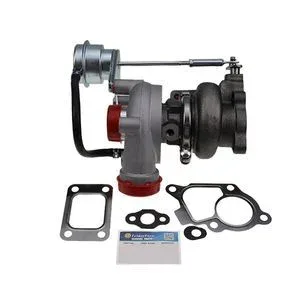
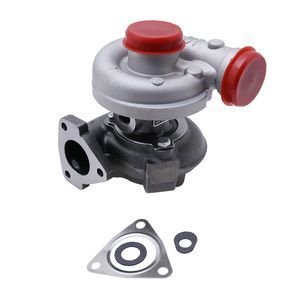
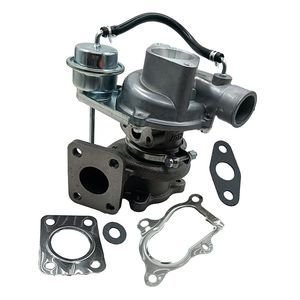
Engine serial variants verified — RHF3H turbocharger mounting and oil port configuration cross-checked against Kubota V2607-DI and V2607T build records before dispatch.
Technical Specifications
| Parameter |
Value |
| Part Number |
7000677 |
| Product Type |
Turbocharger |
| Cross-Reference |
7000677, 7020831 (reference only) |
| Machine Fitment |
S160, S185, S205, S550, S570, S590, T180, T190, T550, T590 |
| Turbo Model |
RHF3H |
| Compatible Engine Brand |
Kubota |
| Engine Number |
V2607-DI, V2607T |
| Condition |
New Aftermarket |
| Exhaust Temperature Rating |
Up to 850°C |
| Warranty |
3–12 months against manufacturing defects |
| Manufacturing Standard |
ISO 9001 |
Application Suitability
| Engine System |
Related Components |
| Intake and forced induction |
Exhaust manifold gasket, intake hose clamps, air filter element |
| Lubrication feed to turbo bearing |
Oil feed line, oil drain tube, crankcase breather |
| Exhaust gas routing |
Manifold-to-turbine flange fasteners, exhaust pipe gasket |
| Engine overhaul context |
Piston rings, main and rod bearings, valve stem seals |
Root-Cause Diagnostics Before a Turbocharger Engine Rebuild Replacement
A failed turbocharger is almost never the only problem — the system that killed it must be corrected or the replacement will follow the same path.
When a Kubota V2607-DI loses boost on a Dubai job site, the instinct is to swap the unit and restart. But restricted oil drain lines, excessive crankcase pressure, and over-fueling from worn injectors all destroy turbochargers from the inside. Replacing the unit without tracing the fault means the next turbocharger engine rebuild replacement happens in weeks, not years. I have pulled turbine wheels with coked oil passages off machines where the only documented repair was a new cartridge — the root cause sat untouched in the oil return path [NEED_CITE: diesel engine turbocharger failure root-cause analysis methodology].
Where This Turbocharger Sits in the V2607 Intake-Exhaust System
The RHF3H bolts between the exhaust manifold outlet and the charge-air plumbing on Kubota V2607-DI and V2607T engines. Hot exhaust gas spins the turbine, the compressor pushes denser air through the intake tract, and the oil film inside the center bearing keeps the shaft alive at well over 100,000 RPM. Every gasket, hose clamp, and oil line fitting in that loop affects whether a turbocharger engine rebuild replacement lasts its intended service life. Adjacent components such as the exhaust manifold gasket and the air filter housing seal should be evaluated as part of the same system event.
Engine Serial Variants That Change the Physical Fit
Kubota V2607-DI and V2607T share a displacement figure but differ in aspiration hardware and oil circuit routing. The turbine housing flange angle, oil feed fitting thread, and drain port clocking can shift between serial ranges within the same engine family. I once had an RHF3H shipped against a Bobcat S160 machine card arrive on a site where the V2607 variant used a different manifold orientation — the flange bolted on but the exhaust outlet fouled the frame rail. That experience reshaped how every order is now verified: engine serial number first, machine model second [NEED_CITE: Kubota V2607 engine serial variant identification procedures].

Reading the Specification Sheet Against Real Operating Conditions
The 850°C exhaust temperature rating matters because the V2607-DI runs sustained high-load cycles in excavation and grading where exhaust gas temperature climbs quickly. A turbine housing rated below the engine's peak EGT will crack at the wastegate port long before the bearing fails. The RHF3H model designation tells a rebuild shop which cartridge, wheel trim, and A/R ratio the housing was designed around — substituting a visually similar unit with a different trim shifts the compressor map and causes surge at low RPM. Oil feed and drain port sizes must match the engine's gallery pressure; an oversized feed orifice starves the main bearings downstream, while a restricted drain floods the center housing and pushes oil past the compressor seal into the intake.
The Hidden Cost of Skipping the System Check
A turbocharger that fails from oil starvation often sends metal particles through the oil cooler and into the main bearing galleries. Replacing the turbo without flushing the cooler and inspecting the bearings leaves abrasive debris circulating in a freshly assembled engine. On the exhaust side, a cracked manifold gasket leaks hot gas onto the turbo oil drain hose, accelerating hose degradation until the next oil fire. Shops that treat the turbocharger engine rebuild replacement as a single-part swap rather than a system intervention routinely see repeat failures within the first few hundred hours [NEED_CITE: turbocharger secondary damage and oil system contamination after bearing failure].
Why Sourcing Through This Supply Chain Works for Engine Rebuilds
Own production on selected lines and qualified sourced supply under one account means the turbocharger, manifold gasket, oil feed fitting, and drain hose all carry the same warranty terms and ship from the Guangzhou warehouse together. Cross-reference verification covers superseded numbers — 7020831 maps to the same RHF3H platform but may reference a different oil port configuration that needs confirmation against your engine serial. Minimum order of one piece allows a single emergency turbo to go out the same day, while sample supply before a bulk commitment lets a rebuild shop confirm fitment on the bench before ordering fleet quantities. The technical team handles variant identification from a photograph of the nameplate when the stamping is painted over or worn past legibility.
Documentation & Verification
- Commercial invoice listing RHF3H turbo model and cross-reference numbers for customs clearance
- Fitment sheet confirming engine serial range against oil port clocking and flange angle
- Dimensional inspection record covering turbine housing bore, shaft runout, and compressor wheel balance
- Warranty terms covering manufacturing defects for the stated period from date of dispatch
- Packing photographs showing protective caps on oil ports and compressor inlet before crate closure
- HS code and export documentation prepared for destination country requirements
Installation & Rebuild Sequence
- Pre-lube the center bearing with clean engine oil before cranking to prevent dry-start scoring
- Verify oil feed line flow rate and drain line slope to avoid center housing flooding
- Torque exhaust manifold flange nuts in the specified sequence to prevent housing distortion
- Replace the oil filter and flush the cooler after any turbo failure that involved bearing disintegration
- Confirm boost pressure and exhaust gas temperature at rated RPM before releasing the machine to work
What We Need to Quote the Right Configuration
Provide the Kubota engine serial number — not only the Bobcat machine model — so we can confirm whether your V2607-DI or V2607T uses the early or late oil port layout. If the nameplate is unreadable, a photograph of the existing turbo data plate and the oil feed fitting lets us verify the variant. Include your overhaul timeline so matched gaskets and seals can ship in the same consignment.
Frequently Asked Questions
Q: What other engine components should be inspected when the turbocharger fails?
A: Check the oil feed and drain lines for restriction or collapse, flush the oil cooler for metal debris, inspect the exhaust manifold gasket for blow-by marks, and test crankcase pressure. The air filter housing and intake ducting should be examined for debris ingestion. Addressing these items during the turbocharger engine rebuild replacement prevents the new unit from inheriting the same failure mode.
Q: Do V2607-DI and V2607T use the same turbocharger?
A: Both engines can use the RHF3H platform, but oil port configuration, flange angle, and drain fitting size may differ between serial ranges. We verify the correct variant against your engine serial number rather than relying solely on the machine model card, ensuring the replacement turbocharger bolts on without adapter modifications or hose interference.
Q: How do I confirm the root cause has been addressed before fitting the new turbo?
A: Verify unrestricted oil flow at the feed line, confirm the oil drain returns by gravity without kinks or blockages, measure crankcase blow-by against specification, and check injector spray pattern for over-fueling. A clean oil cooler and fresh filter complete the pre-installation checklist. Skipping these steps is the most common reason a turbocharger engine rebuild replacement fails prematurely.
Q: Can matching gaskets and oil seals ship as a set with the turbocharger?
A: Yes. We consolidate the exhaust manifold gasket, oil feed fitting seal, drain tube O-ring, and intake hose clamps into the same dispatch. This eliminates partial deliveries and ensures every sealing surface disturbed during the turbo swap is renewed in one service event rather than waiting on back-ordered hardware.
Q: What engine information do you need to verify correct fitment?
A: The Kubota engine serial number is the primary identifier, supplemented by a photograph of the existing turbo data plate if the stamping is worn. Machine model alone is not sufficient because Bobcat S160 and S185 loaders were built across multiple V2607 serial ranges with different turbo configurations.