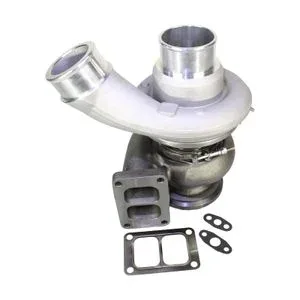
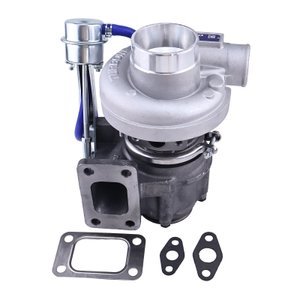
Engine Serial Variants Confirmed — every HX40 turbocharger we dispatch matches the specific 6BTA 5.9 build code, not just the model family.
Technical Specifications
| Parameter |
Value |
| Part Number |
3536620, 3536621, 3536621H, 3802829, 380282900, 3802829NX, 3802829RX, 4089816 |
| Product Type |
Turbocharger |
| Cross-Reference |
3536620, 3536621, 3536621H, 3802829, 380282900, 3802829NX, 3802829RX, 4089816 (cross-reference only) |
| Machine Fitment |
Cummins 6BTAM, 6BTA 5.9, 6B5.9 (Marine & Industrial Applications, 1995–2006) |
| Turbo Model |
HX40M, HX40-L8294T/J16S3, HX40 |
| Condition |
New Aftermarket |
| Turbine Housing Material |
Heat-resistant Ni-resist D5S alloy |
| Compressor Wheel Material |
Forged 7075-T6 aluminum |
| Bearing Type |
Dual ceramic ball bearings with PTFE-lubricated seals |
| Shaft Runout |
< 0.02 mm |
| Turbine Wheel Balance |
< 0.2 g·mm |
| Mating Flange Surface Finish |
Ra ≤ 1.6 μm |
| Operating Exhaust Gas Temperature |
Up to 720°C |
| Operating Boost Pressure |
Up to 2.4 bar |
| Warranty |
12 months against manufacturing defects |
| Standards |
ISO 9001, ISO 1940-1 Grade G2.5, SAE J1348, Cummins Engineering Specification CES 112-00 |
Application Suitability
| Engine System |
Related Components |
| Intake & Boost Circuit |
Intake manifold gaskets, boost pressure sensor, intercooler hose clamps |
| Lubrication Feed & Return |
Turbo oil feed line, oil return hose, crankcase breather |
| Exhaust & Emission Path |
Exhaust manifold studs and nuts, turbine outlet gasket, EGR cooler seal |
| Engine Overhaul Package |
Complete gasket set, main and rod bearings, piston ring set |
Why the Same Cummins 6BTA 5.9 Serial Number Demands a Different HX40 Variant
An HX40 turbocharger for Cummins 6BTA 5.9 engine rebuild is not a single universal part; production year and application code dictate oil port orientation, flange bolt pattern, and wastegate calibration.
In Indonesian mining camps and Philippine marine yards, I have watched mechanics unbox a turbo that looked right, only to find the oil return port aimed at the block instead of the sump. The 6BTAM marine variant often carries a water-cooled center housing that the industrial 6BTA 5.9 never used. Swapping between them without verifying the engine serial range leads to oil starvation or coolant cross-contamination within the first operating shift. [NEED_CITE: turbocharger oil feed and return orientation requirements for Cummins B-series engines]

Mapping the Turbo to the Intake and Exhaust Loop
The HX40 sits at the intersection of three engine circuits. On the intake side, it pressurizes the charge air that the fuel system meters against; on the exhaust side, it extracts energy from combustion gases that have already passed through the cylinder; and through its center housing, it depends on the lubrication system for bearing survival. A failure in any one of these circuits appears as turbo damage, yet the turbo itself may be the victim rather than the cause. Rebuild shops that replace only the failed unit without tracing the fault upstream often see the new HX40 turbocharger for Cummins 6BTA 5.9 engine rebuild fail within the first hundred hours.
Serial Variants and the Oil-Line Configuration Trap
Between 1995 and 2006, Cummins produced the 6BTA 5.9 in configurations ranging from marine propulsion to standby generators. The turbine housing flange on a genset unit may use a different bolt circle than the marine HX40M. Oil feed restrictor orifice size changed across production runs, meaning a turbo designed for a later engine may receive excessive oil flow on an earlier block, pushing oil past the compressor seal. Confirming the engine serial number, the CPL code, and the existing turbo data plate before ordering eliminates this mismatch. [NEED_CITE: Cummins B-series engine production variant identification by CPL and serial range]
Reading the Spec Sheet Beyond Marketing Claims
The Ni-resist D5S turbine housing is specified because standard grey cast iron cracks under the thermal cycling of a marine engine that swings from idle to full load in seconds. Forged 7075-T6 aluminum on the compressor wheel resists the centrifugal stresses at sustained boost, where cast wheels can fracture along grain boundaries. Dual ceramic ball bearings with PTFE-lubricated seals reduce startup friction during the critical seconds before oil pressure builds, which is when most turbo bearing wear accumulates. Shaft runout held below 0.02 mm keeps the turbine wheel centered in its housing, preventing the blade-tip rub that destroys boost efficiency. The mating flange surface finish of Ra ≤ 1.6 μm ensures the gasket seats without relying on excessive bolt torque that could warp the exhaust manifold.
The Hidden Cost of Skipping Root-Cause Diagnosis
A workshop that installs a fresh turbo without flushing the oil feed line or checking the crankcase breather is betting against contamination. Metal particles from a failing main bearing travel straight to the turbo journal. A clogged breather raises crankcase pressure, which fights the turbo oil return and forces oil past the turbine seal. The result is not a defective turbo — it is a system fault that the new unit simply inherits. Rebuild shops that skip this diagnostic step often blame the replacement part when the real failure mechanism remains inside the engine. [NEED_CITE: root cause analysis methodology for turbocharger repeat failures in diesel engines]
What Sets This Supply Chain Apart
Our own production lines and qualified sourcing partners operate under one warranty, so whether the HX40 unit comes from our facility or a certified partner, the quality inspection standard and 12-month coverage remain identical. Eight product categories sit under a single account, meaning the turbo, the gasket set, the oil feed line, and the exhaust studs all ship in one consignment with one set of documents. Orders start from one piece — no minimum order quantity blocks an emergency single-unit replacement. The Guangzhou warehouse holds stock on fast-moving configurations for rapid dispatch. Part identification works from a number, a machine model, a photograph, or a nameplate image, and cross-reference verification covers superseded and alternate references such as the transition from 3536621 to 3802829. A sample unit is available for fitment confirmation before any bulk commitment.
Documentation & Verification
- Commercial invoice and packing list itemizing each turbocharger serial number against the purchase order
- Part compatibility and cross-reference sheet mapping 3536620 through 4089816 references to engine serial ranges
- Quality inspection record covering rotational balance, boost curve plot, and seal leak-down test results
- Warranty terms document specifying 12-month coverage scope and claim procedure for manufacturing defects
- Packing photographs showing protective caps on oil ports and flange faces before crate closure
- HS code and customs classification support for turbocharger exports to marine and industrial end-users
Installation & Rebuild Sequence
- Verify oil feed line interior for metal debris using a borescope before connecting to the new HX40 center housing inlet
- Prime the turbo bearing cavity with clean engine oil through the feed port before first cranking to prevent dry startup
- Torque exhaust manifold nuts in the specified sequence to avoid flange distortion against the Ra ≤ 1.6 μm mating surface
- Run the engine at idle for a minimum warm-up period to confirm stable oil return flow and absence of seal weeping
- Check boost pressure against the engine specification card at rated RPM to validate correct wastegate calibration
- Inspect the crankcase breather and replace if clogged, eliminating backpressure that would fight turbo oil drainage
Request a Fitment-Verified Quotation
Provide the engine model designation, full serial number, and CPL code so we can confirm which HX40 variant matches your specific 6BTA 5.9 build. If the existing turbo data plate is legible, a photograph accelerates cross-reference verification. Share any known rebuild history — previous oversize bearings or crankshaft grinding — so we can flag related system checks. For fleet-level programs, tell us the number of units and operating environment to align warranty documentation and dispatch sequencing.
Frequently Asked Questions
Q: Which gaskets and seals should accompany the turbo for a complete reinstall?
A: A proper reinstall requires the turbine outlet gasket, compressor inlet gasket, oil feed line O-rings, and oil return flange gasket. We include these matched seals with every HX40 turbocharger shipment so the repair is complete without a second order. Specify your exact engine serial so we supply the correct gasket thickness and bolt pattern.
Q: How do I confirm which HX40 variant fits my 6BTA 5.9 engine serial?
A: Send us the engine serial number and CPL code from the nameplate. We cross-reference against the production variant database to confirm oil port orientation, flange pattern, and wastegate calibration. A photograph of the existing turbo data plate provides a secondary check, especially when superseded references like 3536621 and 3802829 are involved.
Q: What upstream engine conditions must be checked before installing the replacement turbo?
A: Inspect the oil feed line for metallic contamination, verify crankcase breather function, and confirm the air filter and intake ducting are clear. Check exhaust manifold flatness and stud condition. These system checks address the fault that destroyed the previous unit, preventing the new HX40 turbocharger from inheriting the same failure mode within weeks.
Q: Are superseded part numbers like 3536620 and 3802829 fully interchangeable?
A: Not always. Some supersessions reflect hardware changes in oil restrictor orifice size or turbine housing bolt pattern. We verify each reference against the specific engine serial range before confirming interchangeability. This cross-reference verification prevents ordering a turbo that physically bolts on but delivers incorrect oil flow or boost characteristics.
Q: Can I order a sample unit to verify fitment before placing a fleet order?
A: Yes. We supply a single sample HX40 turbocharger for fitment and dimensional confirmation before any bulk commitment. This is especially useful for marine operators managing multiple 6BTAM units across different production years, where variant differences may not be apparent from paperwork alone.