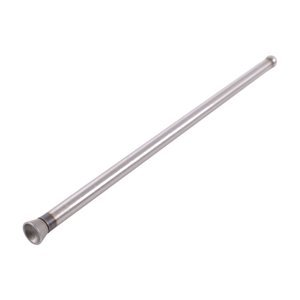
Matched Valve Train Sets — Push rods sized to the actual rebuild condition of your 4JH1 or 4JA1, confirmed against engine serial and previous machining history before dispatch.
Technical Specifications
| Parameter |
Value |
| Part Number |
8-97071673-0, 8970716730, 8-94143202-0, 8941432020, 8-97071673-1, 8970716731 |
| Product Type |
Push Rod |
| Cross-Reference |
8-97071673-0, 8970716730, 8-94143202-0, 8941432020, 8-97071673-1, 8970716731 (reference only) |
| Engine Fitment |
4JA1, 4JB1, 4JC1, 4JG1, 4JG2, 4JH1, UM4JA1, UM4JB1, UM4JG1 |
| Material |
High-strength alloy steel, precision ground and heat-treated |
| Surface Treatment |
Black oxide finish |
| Condition |
New Aftermarket |
| Warranty |
6-month manufacturer warranty against defects in materials and workmanship |
| MOQ |
1 piece |
| Standards |
ISO 9001, ISO 6892-1 |
Application Suitability
| Engine System |
Related Components |
| Valve Train – Overhead Cam / Push Rod |
Lifters, rocker arms, valve springs, camshaft |
| Cylinder Head Assembly |
Valve guides, valve seats, head gasket set |
| Engine Block Lower End |
Bearings, crankshaft, timing gear set |
| Full Overhaul Kit Contents |
Piston sets, ring sets, gasket kits, seal kits |
When a Rebuild Fails on the Bench Before It Leaves the Shop
A push rod that matches the factory part number may still be the wrong part for a rebuilt engine.
I learned this the hard way in the Pearl River Delta. An Isuzu 4JH1 came in for a full overhaul. The crankshaft had been ground undersize during a previous rebuild, which shifted the entire valve train geometry. We installed standard push rods that matched the book specification, and the engine developed a distinct clatter on the test bench. The root cause was not the component quality — it was that the replacement push rod did not account for the dimensional changes already present in that specific engine [NEED_CITE: valve train geometry changes after crankshaft regrind and head resurfacing]. That single oversight cost us a second teardown and delayed the truck's return to service.

The Valve Train as a System, Not a Parts List
Every Push Rod in a 4JH1 or 4JA1 engine works within a chain of components — camshaft lobes, lifters, rocker arms, and valve springs — that must all agree on lift, timing, and operating clearance. When one link in that chain is replaced without checking the others, the result is accelerated wear at the contact points and gradual valve timing drift. Rebuild shops that treat the valve train as a matched system consistently achieve longer intervals between adjustments.
Why Previous Rebuilds Change the Rules
A 4JA1 or 4JH1 that has been through one or more prior overhauls may no longer match factory baseline dimensions. Resurfacing the cylinder head reduces its height, moving the rocker shaft closer to the camshaft. Regrinding the crankshaft alters the relationship between the timing gears and the cam. Each machining step shifts the effective length requirement for the Push Rod installed in that engine [NEED_CITE: dimensional stack-up effects in multi-rebuild diesel engines]. Confirming the current build condition — not just the original specification — is what prevents bench failures and early return visits.
Reading the Specifications That Actually Matter
The high-strength alloy steel construction and heat treatment to a hardened surface provide the wear resistance needed at both contact ends, where the push rod bears against the lifter and the rocker arm adjuster screw. The black oxide finish serves as a corrosion barrier during storage and initial run-in before full oil film establishes. Precision grinding controls straightness across the full length, which matters because even a slight bend under load will cause inconsistent valve lift between cylinders. Diameter tolerance held to tight limits ensures the push rod slides freely through its guide bore without lateral play that would introduce noise and uneven wear. These specifications collectively determine whether the valve train operates quietly and holds adjustment over thousands of cycles [NEED_CITE: push rod material and heat treatment standards for medium-duty diesel engines].
The Cost of Skipping the Root Cause Check
Replacing a bent or worn push rod without investigating what caused the failure almost always leads to a repeat event. Oil starvation to the lifters creates dry contact that wears the push rod tip. Excessive camshaft lobe wear changes the lift profile and overloads the push rod at its base. A weak valve spring allows the valve to float at higher RPM, sending shock loads back through the entire train. Shops that address only the visible damage without tracing it upstream find themselves performing the same repair again within a short period [NEED_CITE: valve train failure root cause analysis in commercial diesel service].
What Makes This Supply Chain Different for Engine Rebuilds
Our own production lines and qualified sourced supply operate under a single warranty, so a valve train order covering push rods, lifters, and rocker arms arrives as one accountable consignment. We identify the correct variant from a part number, engine serial plate, or a photograph of the old component when the nameplate is unreadable. Cross-reference verification covers superseded numbers and alternate references across the 4JA1 and 4JH1 families, catching errors that copied tables often carry forward. Sample supply is available for fitment confirmation before you commit to bulk quantities for a fleet overhaul program. The technical team is on hand to confirm dimensional grade against your specific engine build history, not just the catalog listing.
Documentation & Verification
- Commercial invoice and packing list referencing each push rod variant by engine code
- Compatibility and cross-reference sheet marked reference only for OEM numbers
- Quality inspection record covering straightness, diameter, and surface hardness checks
- Six-month warranty terms covering material and workmanship defects
- Packing photographs showing push rod protection and consignment layout
- HS code and customs documentation support for cross-border engine parts shipments
Installation & Rebuild Sequence
- Verify push rod length and end profile against the engine's current machining state, not just the factory manual
- Clean push rod bores in the block thoroughly — any debris left behind will score the rod and lifter during initial cranking
- Check lifter condition and replace as a set; a worn lifter face will rapidly damage a new push rod tip
- Confirm valve adjustment clearances after installation, then recheck after the first heat cycle
- Record the installed push rod grade and variant in the engine rebuild log for future service reference
Request the Right Variant for Your Engine Build
To confirm the correct push rod for your specific 4JH1, 4JA1, or related Isuzu engine, provide the engine code, serial number, and any known rebuild history including head resurfacing or crankshaft regrinding. If the nameplate is worn or painted over, send a photograph of the block casting numbers and the old push rod next to a ruler. We will cross-reference the correct variant and confirm compatibility before you commit.
Frequently Asked Questions
Q: What other valve train components should be replaced together with the push rods?
A: During a full overhaul, lifters and rocker arms should be replaced as matched sets alongside new push rods. Valve springs should be tested or replaced depending on measured tension. Camshaft lobes need inspection for profile wear — a worn lobe will damage new lifters and push rods quickly. Gasket sets and valve stem seals complete the system-level supply.
Q: My engine has been rebuilt before — how do I confirm the correct push rod variant?
A: Provide the engine serial number and describe any known machining work such as head resurfacing or block decking. These processes change valve train dimensions from the factory baseline. Our technical team will cross-reference your engine's current build state against available push rod grades to supply the variant that matches your actual conditions, not just the original catalog entry.
Q: Do different Isuzu 4JA1 and 4JH1 serial numbers use different push rods?
A: Yes. Within the 4JA1 and 4JH1 families, production changes across serial ranges can affect push rod length and end profile. The variant difference may not be visible from the part number alone. Confirming the exact engine code and serial ensures you receive the push rod that fits your specific build without trial fitment on the bench.
Q: What system-level checks should be done before replacing push rods to avoid repeat failure?
A: Inspect the lifters for face wear and the camshaft lobes for profile degradation. Verify oil supply passages to the valve train are clear. Check valve spring tension. These upstream conditions are common root causes of push rod damage. Addressing them during the repair prevents the new components from failing for the same reason within a short service period.
Q: How do I identify my exact engine code when the nameplate is worn or painted over?
A: Send photographs of the block casting numbers, the old push rod, and any visible stamped codes on the engine block or cylinder head. These markings often survive even when the external plate is gone. We use these images alongside machine model data to confirm the correct engine family and serial range, then supply the matching push rod variant.