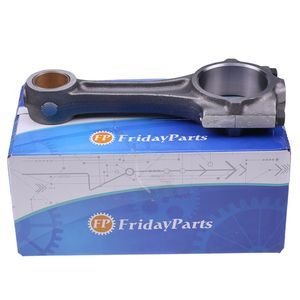
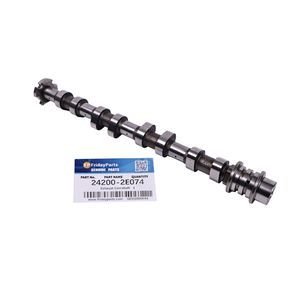
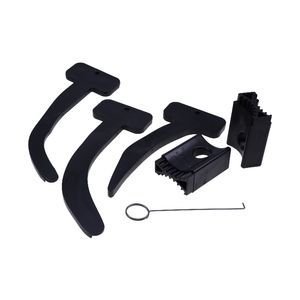
Matched Valve Train Sets — push rod length variants verified against engine serial range before dispatch to prevent timing mismatch on Perkins-family rebuilds.
Technical Specifications
| Parameter |
Value |
| Part Number |
733817M1 |
| Product Type |
Push Rod |
| Cross-Reference |
733817M1 (reference only) |
| Machine Fitment |
Massey Ferguson 184, 185, 188, 194, 274, 275, 285, 290, 362, 365, 373, 375, 377, 383, 387, 390, 393, 396, 565, 575, 590, 675, 690, 698, 699, 1014, 1130, 1135, 2620, 2640, 2645, 2675, 2680, 2720, 2725, 3050, 3060, 3065, 3070, 3080, 3090, 3095, 3115, 3125, 3625, 3630, 3645, 3650, 3655; Massey Ferguson Backhoe Loader 50, 275, 290, 383, 390, 690; Massey Ferguson Combine 550, 750, 760; Oliver 1850; White Combine 5542, 7300, 7600, 8600, 8800; White Tractor 2-85, 2-105 |
| Brand Compatibility |
Replacement for Massey Ferguson, Oliver, White engine applications |
| Material |
High-strength steel |
| Condition |
New Aftermarket |
| Warranty |
3–12 months against manufacturing defects |
| Standards |
ISO |
Application Suitability
| Engine System |
Related Components |
| Valve train actuation |
Camshaft, lifters, rocker arms, valve springs |
| Top-end overhaul kit |
Cylinder head gasket, valve stem seals, rocker shaft |
| Full engine rebuild |
Pistons, cylinder liners, main and big-end bearings |
| Scheduled valve clearance service |
Tappets, push rod guides, rocker cover gasket |
Why Push Rods Fail After a Fresh Overhaul
Bent push rods on first start-up almost always trace back to a system fault, not the rod itself.
When an engine rebuild kit arrives without the correct push rod set for the specific serial variant, or when rods salvaged from a previous rebuild are reused with a reconditioned head, the valve timing relationship shifts. The result is valve-to-piston contact or a bent rod within the first few hours of operation. [NEED_CITE: valve train failure root cause analysis for agricultural diesel engines]
System Position of This Push Rod
This push rod sits between the cam follower and the rocker arm in Perkins-family diesel engines fitted across Massey Ferguson, Oliver, and White agricultural equipment. Its length and end profile must match the exact engine serial range, because even minor production changes across generations alter rocker geometry and lifter travel. A correct push rod engine rebuild parts specification preserves the designed valve lift and timing relationship throughout the entire power cycle.
Serial Variants and Rebuild History
Production changes across Perkins-family engine generations mean the same base engine may require different push rod lengths depending on serial number break points. Previous head work can further complicate fitment — a reconditioned head with different valve seat inserts or a shaved deck surface changes the installed geometry. [NEED_CITE: Perkins engine serial break point reference for valve train components] Confirming the engine serial number and any recorded rebuild history ensures the right push rod engine rebuild parts variant ships, rather than a generic number that may not seat correctly against the rocker arm cup.
Dimensional Tolerance and Material Response
The push rod transmits cam lobe lift to the rocker arm under cyclic compressive loading at engine speed. High-strength steel construction resists buckling under peak valve spring pressure while maintaining dimensional stability through thermal cycling. End-profile geometry — whether ball-and-cup or flat-to-adjuster — must match the mating lifter and rocker surfaces precisely. Even a fraction of a millimetre deviation in overall length alters valve opening duration, reducing volumetric efficiency and increasing the risk of valve float at governed RPM.

The Hidden Cost of Mismatched Valve Train Grades
Fitting push rods without verifying serial-range compatibility or ignoring the root cause of a previous bend leads to predictable repeat failures. A rod that is marginally too long keeps the valve slightly open at rest, burning the seat within one operating season. A rod that is too short increases lash, hammering the rocker tip and lifter face until both require replacement. [NEED_CITE: consequences of incorrect valve lash settings in medium-duty diesel engines] Rebuild shops that replace the symptom without diagnosing the system fault end up absorbing warranty costs and losing customer confidence.
Why Source This Push Rod Here
Our Guangzhou facility stocks push rod variants for the most common Perkins-family serial ranges, with technical staff available to confirm length and end-profile against your engine number. Self-produced lines and sourced supply carry identical QC standards and warranty terms under one account. Cross-reference verification covers superseded numbers and alternate references, reducing the chance of receiving an outdated variant. Single-piece orders are accepted for emergency top-end work, and matched valve train sets ship together for full rebuilds. Sample supply is available for fitment confirmation before bulk commitment.
Documentation & Verification
- Commercial invoice listing push rod part number and engine serial reference for customs clearance
- Compatibility sheet noting 733817M1 cross-reference only with verified superseded number trace
- Dimensional inspection record confirming overall length and end-profile geometry before dispatch
- Warranty terms covering manufacturing defects for 3–12 months from delivery
- Packing photographs showing rod bundling and end-cap protection for transit
- HS code and export documentation support for agricultural parts shipments
Installation & Rebuild Sequence
- Verify push rod length against engine serial variant before removing old components from the bench
- Clean push rod bores in the cylinder block and inspect for scoring that could misalign the new rod
- Check lifter face condition and replace any concave followers to prevent early push rod tip wear
- Confirm valve clearance with a feeler gauge after initial assembly and re-check after first thermal cycle
- Run the engine at idle for the initial break-in period and re-torque rocker shaft fasteners to specification
- Inspect push rod ends for abnormal contact patterns after the first operating shift
Request a System-Matched Quote
Provide your engine model, serial number, and any recorded rebuild history so we can confirm the correct push rod variant and matching valve train components. If the engine nameplate is illegible, send a photograph of the block casting number or the existing push rod alongside a ruler for length reference. Rebuild shops ordering for multiple engines can submit a list of serial ranges for consolidated matching and dispatch.
Frequently Asked Questions
Q: What other valve train parts should be replaced together with push rods during an overhaul?
A: Push rods work as part of a system with cam followers, rocker arms, valve springs, and valve stem seals. When a push rod has bent, the mating lifter face almost always shows asymmetric wear and should be replaced. Including these components in the same order avoids a second teardown once the engine is on the bench.
Q: How do I confirm the correct push rod variant for my engine serial number?
A: Provide the full engine serial number from the block stamping or build plate. Production break points across Perkins-family engines mean the same model year may use different rod lengths. Our technical team cross-references your serial against variant tables before confirming the match.
Q: Why do push rods bend repeatedly even after replacement with new components?
A: Repeated bending usually indicates a stuck valve, excessive carbon buildup on the stem, or a worn lifter bore allowing side-loading. Replacing the push rod alone treats the symptom. A full valve train inspection including guide clearance and spring pressure measurement addresses the root cause.
Q: Are push rods included in a standard overhaul kit or ordered separately?
A: Most standard overhaul kits cover pistons, rings, bearings, and gaskets but exclude valve train components. Push rods, lifters, and rocker parts are typically ordered as a separate matched set. Confirm your kit contents before committing to avoid delays once the engine is disassembled.
Q: Can I order matched push rod sets for a fleet of machines undergoing winter overhaul?
A: Yes. Submit the engine model and serial number for each unit, and we will confirm the correct variant for every engine in the batch. Matched sets ship consolidated so all valve train components arrive together for scheduled rebuild periods.