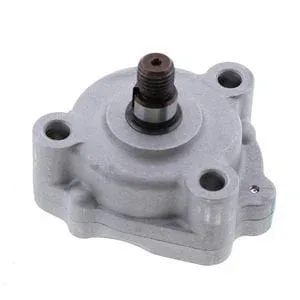
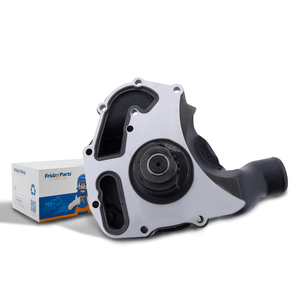
Matched Set Dispatch — Every oil pump ships with cross-checked gaskets and seals sized to the specific Kubota engine serial variant, preventing the missing-item rework that stalls rebuild benches.
Technical Specifications
| Parameter |
Value |
| Part Number |
16851-35012 |
| Product Type |
Oil Pump |
| Cross-Reference |
16851-35012 (reference only) |
| Machine Fitment |
Kubota Tractor B7300HSD, B7400HSD, B7410D, BX1500D–BX25DLB-1 series; Garden Tractor G1700–TG1860 series; Excavator K-008, K008-3, KH-007H, KX018-4, KX41-3, U15, U17; Utility Vehicle RTV900 / RTV-X900 series; Zero-Turn Mower ZD1011–ZP330P series |
| Engine Model Fitment |
D722, D782, D902, DF752, DF972, DG972, WG750, WG752, WG972, Z402, Z482, Z602, and 30+ variants |
| Condition |
New Aftermarket |
| Warranty |
3–12 months against manufacturing defects |
| Machining Tolerance |
±0.02 mm |
| Internal Gear Hardness |
HRC 58–62 |
| Gasket Material |
NBR rubber |
| Quality Standards |
ISO 9001, ISO 4406 |
Application Suitability
| Engine System |
Related Components |
| Lubrication circuit overhaul (D722 / D902 family) |
Main and con-rod bearings, crankshaft seals, oil gallery gaskets, pressure relief valve components |
| Single-component pump replacement after isolated failure |
Pump mounting gasket, oil filter, sump drain plug washer |
| Scheduled fleet service on Kubota compact platforms |
Complete lubrication service kit matched to engine serial suffix |
| Distributor stock for high-population Kubota variants |
Assorted oversize bearing shells, matched seal sets, relief valve springs |
Why Lubrication Failures Return After a Fresh Pump Install
The failed part is rarely the root cause — it is the symptom of a system that was never inspected as a whole.
Rebuild benches see a familiar pattern: a new oil pump goes in, oil pressure stays low, and the engine comes back apart. The actual fault often sits elsewhere — worn main bearings bleeding pressure, a fatigued relief valve spring, or sludge blocking a gallery that starves the pump of supply. I have watched D722 and D902 engines cycle through two or three pump swaps before someone finally measured bearing clearances and found them beyond service limits [NEED_CITE: engine lubrication system root-cause diagnosis procedures for compact diesel platforms]. An Oil Pump engine rebuild replacement for Kubota D722 D902 must be evaluated alongside every component it feeds and draws from. Replacing the pump without verifying the rest of the circuit simply moves the failure point downstream.
The Lubrication Circuit as a Matched System
This oil pump sits at the heart of the Kubota D722/D902 lubrication system. Correct pressure and flow are prerequisites for any successful engine rebuild. Pairing it with matched bearings, gaskets, and seals from one source eliminates the compatibility gaps that cause early re-failure. The pump does not operate in isolation; its output must align with the clearances set by the bearing shells and the cracking pressure of the relief valve.
Rebuild History Changes the Clearances You Need
If the crankshaft was reground during a prior overhaul, bearing shells are now oversize — and the oil film thickness the pump must maintain has shifted. Standard-grade components fitted into a block that has already been machined will not hold pressure at operating temperature. Confirming whether the engine is on its first build or a subsequent regrind determines which bearing grades and pump tolerances are correct [NEED_CITE: crankshaft regrind oversize bearing selection for small-bore diesel engines]. Every Oil Pump engine rebuild replacement for Kubota D722 D902 should be specified against the actual measured dimensions of the block, not the factory nominal values.
What the Specification Sheet Actually Means for Your Bench
The ±0.02 mm machining tolerance governs gear-to-housing clearance, which directly controls internal leakage and therefore cold-start pressure. Gears hardened to HRC 58–62 resist the abrasive wear that gradually increases internal clearance and drops hot-idle pressure over thousands of hours. The NBR gasket material, rated across a broad operating temperature window, maintains its seal against both conventional and synthetic lubricants common in modern Kubota platforms. These parameters matter because lubrication system failure in compact diesels is overwhelmingly a clearance and contamination story, not a metallurgy story [NEED_CITE: gear-type oil pump internal clearance and volumetric efficiency relationships].
The Cost of Skipping System-Level Verification
An oil pump installed without checking the relief valve, bearing clearances, and gallery condition will either mask the real fault or fail prematurely itself. The engine goes back together, runs for a handful of hours, and comes apart again — this time with scored journals or a spun bearing that turns a pump swap into a short-block replacement. That second teardown costs more in labor and lost machine availability than a thorough system inspection ever would [NEED_CITE: cost of repeat teardown versus upfront system inspection in engine overhaul].
What Makes This Supply Route Different
Selected part lines are produced in our own facility, with the remainder sourced from qualified ISO-certified manufacturing partners — both carry the same QC and warranty terms. Eight product categories mean a complete lubrication overhaul kit ships under one account with one warranty. Minimum order starts at one piece, so a single emergency pump is never blocked by volume thresholds. Part identification works from a number, a machine model, a photograph, or a nameplate image — whichever is legible. Cross-reference verification covers superseded and alternate numbers, and sample supply is available for fitment confirmation before any bulk commitment. A technical team is on hand for compatibility and grade confirmation when serial suffixes diverge.

Documentation & Verification
- Commercial invoice and packing list itemizing pump and all matched gaskets
- Part compatibility sheet listing engine serial suffix cross-references (reference only)
- Quality inspection record covering flow volume, pressure stability, and leak bench test
- Warranty terms covering manufacturing defects for the stated period
- Packing photographs taken before crate closure for visual dispatch confirmation
- HS code and customs documentation support for cross-border lubrication parts shipments
Installation & Rebuild Sequence
- Flush all oil galleries and verify no sludge remains before mounting the new pump
- Confirm bearing shell grades match measured crankshaft journal dimensions, not factory nominal
- Torque pump mounting fasteners to engine manual specification in the stated sequence
- Prime the pump through the filter housing before first crank to prevent dry-start scoring
- Check relief valve cracking pressure on the bench before installation, not after assembly
- Run a graduated break-in: idle, then stepped load, verifying pressure at each stage
Request a System-Matched Quote
Provide your exact engine model, serial suffix (for example D722-E2B-LCN-1 or D902-E3B-MRG-2), and any known rebuild history. If the nameplate is worn or painted over, send a photograph of the block casting numbers and we will work from there. Include the full list of lubrication components you need so the kit can be matched and consolidated before dispatch.
Frequently Asked Questions
Q: What other lubrication components should be replaced together with the oil pump during an engine rebuild?
A: Main and con-rod bearing shells, crankshaft front and rear seals, oil gallery gaskets, and the pressure relief valve spring and plunger should all be inspected and typically replaced as a set. Mismatched ages across these components create uneven pressure distribution that shortens the life of the new pump.
Q: How do I determine if my engine has been rebuilt before and what oversize grades are now required?
A: Measure crankshaft main and big-end journals with a micrometer and compare readings against factory service limits. If journals are undersize, a prior regrind has occurred and oversize bearing shells must be fitted. The oil pump itself does not change size, but the system clearances it must support have shifted.
Q: Do different serial suffixes within the D722 or D902 family use different internal pump specifications?
A: Yes. Serial suffixes can indicate different emission tiers, governor types, or accessory drives that alter internal oil circuit routing and pressure requirements. Always confirm the full suffix string before ordering to avoid receiving a pump calibrated for a variant with different gallery geometry.
Q: What system-level checks confirm the oil pump is actually the root cause of low pressure?
A: Measure main bearing clearances with plastigauge, verify relief valve operation on a bench, and check oil gallery passages for blockage. If bearings are within spec, the valve holds correct cracking pressure, and galleries are clear, then the pump itself is the likely fault source.
Q: How do I confirm the exact engine model when the nameplate is worn or painted over?
A: Locate the casting numbers on the block and cylinder head, photograph them clearly, and send the images along with any machine model information you have. These casting marks remain legible long after adhesive nameplates deteriorate and allow accurate identification.