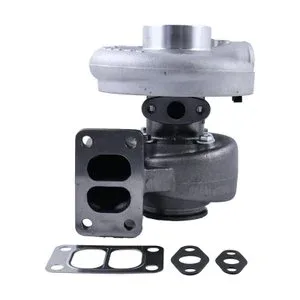
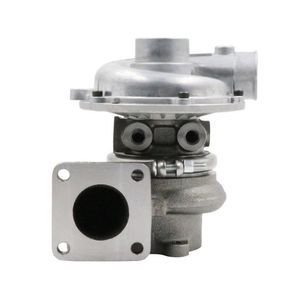
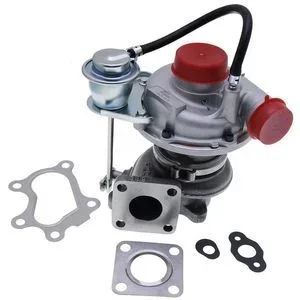
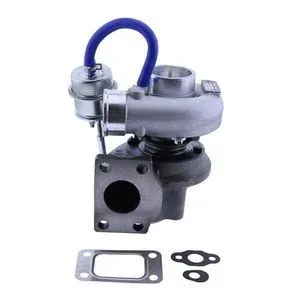
System-Matched Turbo Supply — H1C turbocharger arrives with oil feed gaskets and exhaust hardware verified against the same Cummins 6BT engine serial to prevent rebuild rework.
Technical Specifications
| Parameter |
Value |
| Part Number |
3802289 3522777 3528742 3528741 3522778 |
| Product Type |
Turbocharger |
| Cross-Reference (reference only) |
3802289, 3522777, 3528742, 3528741, 3522778, 3526739, 3802302, 3802115, 466563-0001, 466563-0003, 447450-0051, 447450-0065, 3535415, 3535416, 3535417, 3535418, 3528740, 3528749, 3534829, 3534830, 3535430, 3907026, 3919121, 124015, 333056ABS, 3535419, A3919119, A3919121, 3535420, 3535421, 3535454, 3538188, 3538277 |
| Turbo Model |
H1C, H1C-8243AF/E18DA11 |
| Engine Fitment |
Cummins 6BT, 6BT-590, 6T-590 |
| Machine Fitment |
Cummins, J.I. Case, DFM XMQ |
| Condition |
New Aftermarket |
| Turbine Housing Material |
Ni-Resist D2 ductile iron |
| Compressor Wheel Material |
7075-T6 aluminum alloy |
| Shaft Assembly |
Dual ceramic ball bearings with PTFE-coated retainers |
| Sealing Surface Finish |
Ra ≤0.4 μm |
| Boost Pressure Validation |
1.2 bar |
| Turbine Wheel Balance Tolerance |
≤0.5 g·mm |
| Oil Seal Leakage Test |
1.5 bar static pressure |
| Applicable Engine Year Range |
1994–2009 |
| Warranty |
3–12 months against manufacturing defects |
| Standards |
ISO 9001, Cummins Engineering Specification CES 113-02 |
Application Suitability
| Engine System |
Related Components |
| Intake and boost system |
Air filter housing, intake manifold gaskets, boost pressure sensor |
| Oil supply and return |
Oil feed line, oil return gasket, oil filter |
| Exhaust and emission |
Exhaust manifold gasket, EGR cooler, exhaust clamp and flange hardware |
| Engine overhaul |
Overhaul gasket kit, piston assembly, main and rod bearing sets |
| Cooling and intercooling |
Intercooler hoses, coolant bypass lines near turbo mounting |
When the Turbo Fails but the Real Fault Lives Elsewhere in the System
A replacement H1C turbocharger engine rebuild replacement for Cummins 6BT solves nothing if the oil starvation or exhaust restriction that killed the first unit remains unaddressed.
On dusty construction sites in the Gulf region, I have watched fleets replace a turbocharger only to see the new unit fail within weeks. The oil return passage was partially blocked by carbon buildup, or the air filter housing had a hairline crack feeding unfiltered air into the compressor side. The root cause was never the turbo itself — it was a symptom of a broader system fault that the repair team never investigated. [NEED_CITE: turbocharger failure root cause analysis for diesel engines in high-dust environments]
The 6BT family spans production runs with meaningful differences in oil port orientation, compressor housing configuration, and exhaust flange geometry. A cross-reference number may cover several variants, and picking one without verifying the engine serial number against the production year leads to a turbocharger that physically bolts on but operates outside its designed boost curve. That mismatch accelerates bearing wear and shortens the interval to the next teardown.
System-Level Fault Tracing Before Component Replacement
The H1C turbocharger engine rebuild replacement for Cummins 6BT operates within a network of intake, oil, and exhaust pathways. When a turbo fails, the diagnostic sequence must trace upstream and downstream of the unit. Oil supply pressure at the feed line, exhaust backpressure at the manifold, and intake restriction across the air filter all affect turbo bearing life. Replacing the turbocharger without verifying these parameters invites a repeat failure.
Engine Serial Variants and Cross-Reference Precision
Within the 6BT, 6BT-590, and 6T-590 range, production changes introduced different oil port clocking positions and compressor housing orientations. The reference numbers 3522777 and 3528742, for instance, cover units that share a base turbocharger design but differ in mounting detail. Confirming the engine serial number against the specific production year ensures the correct variant ships, avoiding forced fitment that stresses gasket surfaces. [NEED_CITE: Cummins 6BT engine serial number identification and variant mapping]
Specifying Boost Validation and Balance Integrity
The boost pressure validation at 1.2 bar confirms the turbocharger delivers the designed pressure ratio for the 6BT combustion chamber. Turbine wheel balance tolerance held within ≤0.5 g·mm limits vibration transmitted to the bearing cartridge and adjacent exhaust manifold studs. The Ni-Resist D2 ductile iron turbine housing resists thermal fatigue across the repeated heat cycles typical of quarry and construction duty. Compressor wheel material in 7075-T6 aluminum alloy maintains dimensional stability under sustained boost loading without creep deformation.

The Hidden Cost of Swapping the Turbo Without Checking the System
A workshop replaces the turbocharger, reassembles, and fires the engine. Two weeks later, the new unit shows oil seepage at the compressor seal or excessive shaft play. The oil return line had a restriction that backed pressure into the bearing housing, or the exhaust manifold gasket was reused and leaked hot gas across the turbo flange. The repair cost doubles because the adjacent components were never inspected. [NEED_CITE: diesel engine rebuild rework causes and frequency in fleet maintenance]
This pattern repeats across engine rebuild shops handling 6BT work regularly. The cost is not just the second turbocharger — it is the labor hours, the machine downtime, and the erosion of confidence in the parts supply chain.
Why Source This Turbocharger Through XUNPO
Own production lines and qualified sourced supply operate under a single warranty, so the turbocharger and its matched gaskets carry the same quality terms without cross-supplier finger-pointing. Eight product categories mean the overhaul gasket kit, oil feed line, air filter, and exhaust hardware ship as one consignment against one account.
Minimum order from one piece supports the emergency single-unit rebuild, while sample supply lets a shop verify fitment on a bench before committing to a batch for recurring 6BT work. Cross-reference verification covers superseded and alternate numbers across the full H1C variant range, confirmed against engine serial rather than copied from generic interchange tables. A technical team reviews the engine serial, production year, and overhaul history to confirm the correct build before dispatch.
Documentation & Verification
- Commercial invoice and packing list itemizing turbocharger plus matched gaskets and seals per engine serial
- Cross-reference sheet mapping H1C variants to specific 6BT production runs, marked reference only
- Quality inspection record covering boost validation, rotor balance, and oil seal static pressure test
- Warranty terms stating coverage period and defect scope for turbocharger and associated components
- Packing photographs showing turbocharger protective wrapping and matched component layout before crate closure
- HS code and customs documentation prepared for turbocharger export classification
Installation & Rebuild Sequence
- Flush oil feed and return lines before installing the H1C turbocharger to prevent carbon debris from entering the bearing cartridge
- Verify oil port orientation matches the engine block porting — forcing a misaligned connection distorts the gasket surface
- Torque exhaust manifold studs and turbo mounting nuts in the specified sequence to avoid flange distortion on the Ni-Resist housing
- Prime the turbocharger oil gallery with clean engine oil before first start to protect the ceramic ball bearing assembly
- Run the engine at idle for several minutes, then check for oil seepage at the compressor and turbine seals before loading
Requesting a Matched Quote
Provide the engine model, serial number, and production year so the correct H1C variant is confirmed against your specific 6BT build. If the engine has been rebuilt previously, share the oversize grades installed and any non-standard modifications to the intake or exhaust system. Photos of the existing turbocharger nameplate, oil port orientation, and exhaust flange help resolve any cross-reference ambiguity before shipment.
Frequently Asked Questions
Q: What other components should be replaced when rebuilding the turbocharger on a 6BT engine?
A: The oil feed and return gaskets, air filter element, exhaust manifold gasket, and turbo mounting hardware should be replaced alongside the turbocharger. Oil supply lines should be inspected for internal restriction. Any reused gasket risks a leak that compromises turbo bearing lubrication or introduces exhaust gas contamination into the intake tract.
Q: How do engine serial variants within the 6BT range affect turbo selection?
A: Production changes across the 6BT, 6BT-590, and 6T-590 family introduced differences in oil port clocking, compressor housing orientation, and exhaust flange geometry. The engine serial number and production year determine which variant applies. Cross-reference numbers alone do not resolve these differences — serial verification is required.
Q: Can the turbocharger be supplied as part of a complete overhaul kit?
A: Yes. The H1C turbocharger ships alongside overhaul gasket kits, piston assemblies, bearing sets, and seal kits matched to the specific engine configuration. This system-level supply ensures all components are verified against the same engine serial and arrive in a single consignment, eliminating mismatched lead times from multiple suppliers.
Q: How do I determine whether the turbo was the root cause or a symptom of another fault?
A: Inspect the oil supply pressure, air filter restriction, and exhaust backpressure before condemning the turbocharger. Carbon buildup in oil return lines, cracked intake hoses, or restricted exhaust can all produce turbo failure symptoms. Addressing these system faults during the same teardown prevents a repeat failure on the replacement unit.
Q: What documentation confirms the turbo has been tested before shipment?
A: Each unit ships with a quality inspection record covering boost pressure validation, turbine wheel balance measurement, and oil seal static pressure test results. The cross-reference sheet maps the supplied unit to the applicable engine serial range. Packing photographs document the protective wrapping and matched component layout before dispatch.