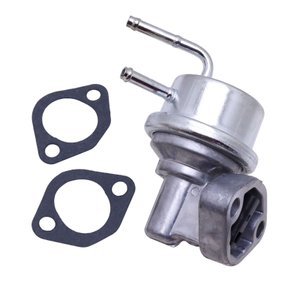
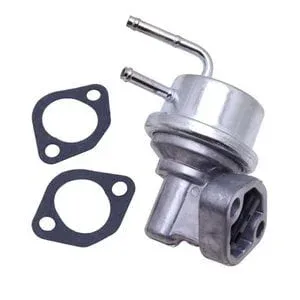
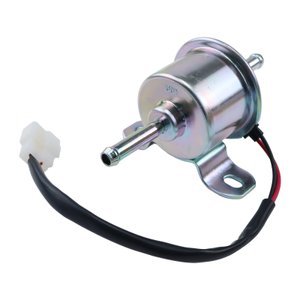
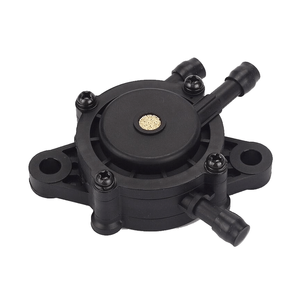
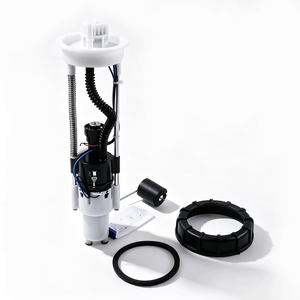
Matched Set Dispatch — every fuel pump ships with cross-reference verification covering FD590V and FD611V serial variants, so rebuild shops receive confirmed fitment data alongside the component.
Technical Specifications
| Parameter |
Value |
| Part Number |
AM132715 |
| Product Type |
Fuel Pump |
| Cross-Reference |
AM132715 (reference only) |
| Machine Fitment |
John Deere 240, 245, 260, 265, 285, 320, 325, 335, 345, GX345, LX172, LX173, LX176, LX178, LX186, LX188, LX277, LX279, LX289, 2243, F725; Kawasaki FD501V, FD590V, FD611V |
| Condition |
New Aftermarket |
| Diaphragm Material |
Reinforced nitrile rubber (rated for ethanol-blended fuels up to E15) |
| Housing Material |
Aluminum (machined to ±0.05 mm dimensional tolerance) |
| Internal Check Valve Material |
Stainless steel |
| Inlet/Outlet Port Threading |
M10×1.25 |
| Flow Rate |
2.1–2.4 L/h at 3.5 psi |
| Warranty |
6-month warranty against manufacturing defects |
| Manufacturing Standard |
ISO 9001 |
Application Suitability
| Engine System |
Related Components |
| Fuel delivery — Kawasaki FD-series twin-cylinder |
Fuel filter, fuel line hoses, carburetor bowl gasket, inline shut-off valve |
| Fuel delivery — John Deere LX/GX lawn tractor |
Fuel tank sediment screen, vacuum pulse line, carburetor needle valve and seat |
| Small-engine overhaul — FD590V / FD611V rebuild |
Complete gasket set, fuel pump diaphragm kit, intake manifold insulator |
| Fleet preventive maintenance — commercial landscaping |
Fuel stabilizer, replacement fuel cap, sediment bowl assembly |
Why Replaced Fuel Pumps Fail Again Within Weeks
A fuel pump replaced in isolation rarely solves the root cause — contaminated fuel upstream and degraded line hoses feed the same diaphragm failure back into the new unit.
In the repair bays around the Pearl River Delta, I have pulled fuel pumps off Kawasaki FD590V engines that were less than a month old, only to find the diaphragm already blistered from ethanol-saturated fuel sitting in cracked hoses that nobody bothered to swap. The carburetor bowl on those engines was typically packed with varnish and particulate that the old fuel filter had long stopped catching. Shops that treat the Fuel Pump engine replacement as a standalone job keep seeing comebacks; shops that address the entire fuel circuit see the repair hold. [NEED_CITE: small engine fuel system contamination and ethanol degradation of elastomers]
The Fuel Circuit This Pump Belongs To
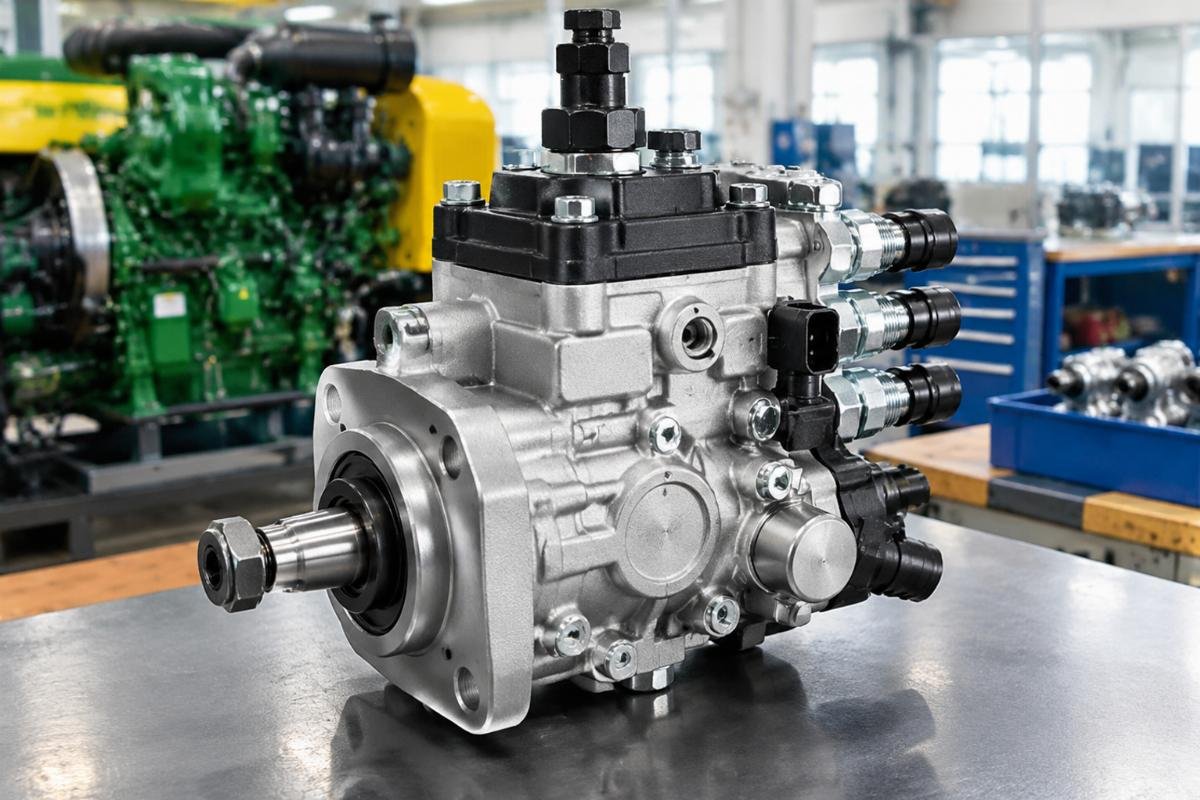
The AM132715 fuel pump sits on the pulse-driven side of the Kawasaki FD-series and John Deere LX/GX fuel system, drawing from the tank through a filter and pushing metered volume to the carburetor inlet. Its diaphragm responds to crankcase pressure pulses, so any leak in the pulse line or degradation in the vacuum hose directly starves the pump of its actuation force. When sourcing this Fuel Pump engine replacement, the adjacent pulse line, fuel filter, and carburetor mounting gasket should be included in the same overhaul kit to keep the entire circuit at a consistent service age.
Serial Variants and Port Configuration Across Engine Families
Kawasaki FD501V, FD590V, and FD611V engines share a common fuel pump architecture, yet mounting boss geometry and port orientation shifted across production runs. Some early FD590V serial ranges route the outlet port toward the carburetor side, while later builds flip the casting to clear an added heat shield. Confirming the M10×1.25 inlet/outlet threading against the existing hose fittings before teardown prevents a situation where the replacement pump is physically mountable but the fuel line cannot reach without an awkward bend. [NEED_CITE: Kawasaki FD-series engine serial variant identification for fuel system components]
What the Flow Rate and Diaphragm Material Mean in Practice
The specified 2.1–2.4 L/h flow at 3.5 psi matches the needle-valve seat diameter on the Nikki and Walbro carburetors fitted to these engines — a pump that pushes harder floods the bowl and causes rich-running surges, while one that delivers less creates lean hesitation under load. The reinforced nitrile diaphragm is formulated to resist ethanol-blended fuels up to E15, which matters because standard rubber compounds swell and lose tension after repeated exposure to modern pump fuel. The aluminum housing, held to ±0.05 mm machining tolerance, keeps the diaphragm clamping surface flat so the gasket seals evenly across its full circumference. Stainless steel check valves resist corrosion from water-contaminated fuel that accumulates in seasonal equipment sitting between mowing cycles.
The Cost of Skipping System-Level Inspection
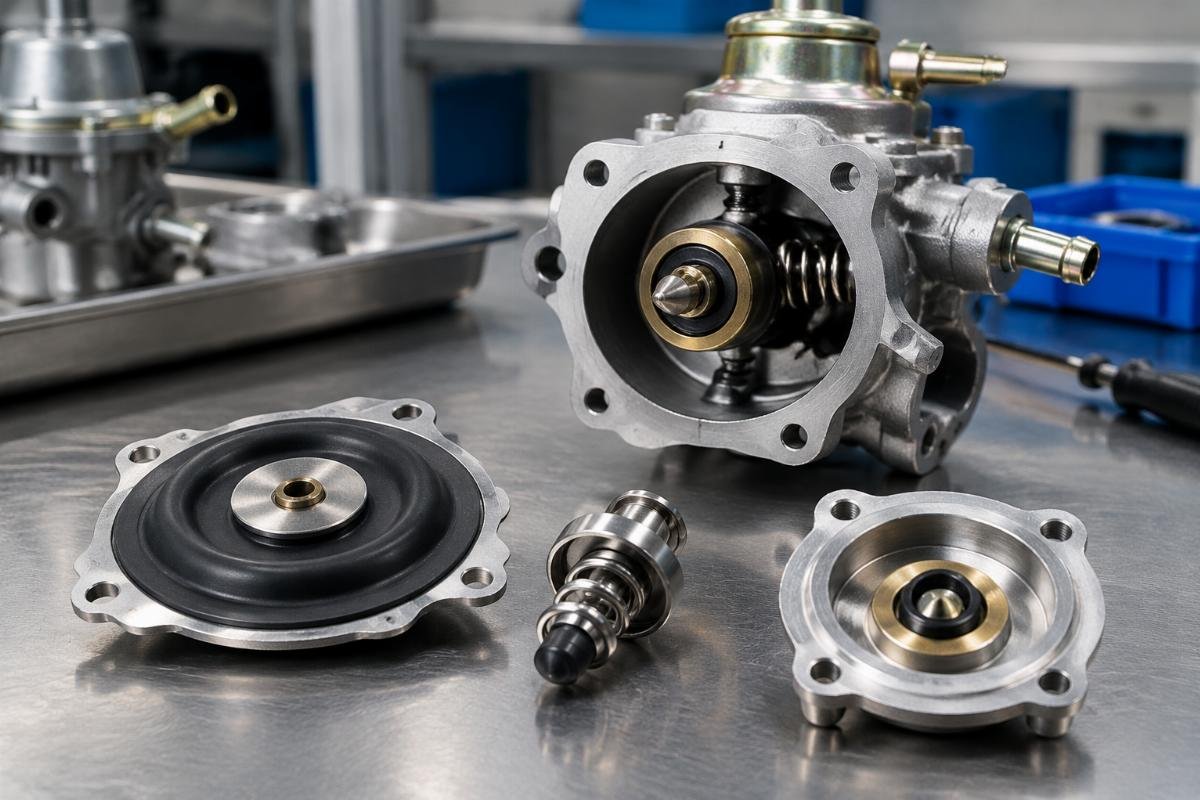
When a rebuild shop installs a new fuel pump without flushing the tank, replacing the filter, and inspecting the carburetor float needle, the same contaminated fuel that destroyed the first diaphragm attacks the replacement immediately. The comeback is not a warranty issue — it is a diagnostic gap. Repeat disassembly and reassembly consume labor hours that erase any margin the shop carried on the original job, and the customer loses confidence in the repair. [NEED_CITE: small engine fuel system diagnostic checklist for repeat failure prevention]
Why Rebuild Shops Source This Component Here
Our own production lines and qualified sourced supply share identical QC protocols and a single six-month warranty, so shops ordering the AM132715 fuel pump alongside overhaul gaskets and fuel line kits receive everything under one account. Guangzhou warehouse stock on fast-failure fuel-system items means common Kawasaki FD-series and John Deere LX/GX parts dispatch without multi-week waits. The technical team verifies engine serial numbers against cross-reference databases to confirm port orientation and mounting pattern before the order ships. Sample units are available for fitment trials before shops commit to bulk quantities for fleet overhaul programs. Part identification works from a part number, a machine model, or a photograph of a worn nameplate — whichever the shop has on hand.
Documentation & Verification
- Commercial invoice listing each fuel pump by AM132715 cross-reference and matched companion components
- Compatibility sheet confirming FD590V / FD611V serial range and port threading verification
- Quality inspection record covering diaphragm pressure-hold and leak-integrity bench test
- Six-month warranty terms specific to fuel pump manufacturing defects
- Packing photographs documenting sealed box condition and anti-static foam placement before dispatch
- HS code and customs documentation support for international fuel-system component shipments
Installation & Rebuild Sequence
- Flush fuel tank and replace inline filter before connecting the new AM132715 pump to prevent immediate diaphragm contamination.
- Inspect the crankcase pulse hose for cracks and replace if any hardness or surface checking is visible.
- Confirm M10×1.25 port fittings thread smoothly without cross-threading; do not force mismatched hose barbs.
- Torque mounting bolts evenly to seat the aluminum housing flat against the gasket surface.
- Prime the carburetor bowl manually and verify steady fuel delivery before cranking the engine.
- Run the engine at idle and inspect all connections for leaks during the first ten minutes of operation.
Request a System-Matched Quote
Send us the engine model, serial number, and any rebuild history on file, and we will confirm which fuel pump variant fits your specific Kawasaki or John Deere configuration. Include the carburetor type if known — we will cross-reference port threading and flow rate against the needle-valve spec. If you are quoting a full fuel-system refresh, list the companion filters, hoses, and gaskets so everything ships in one consignment.
Frequently Asked Questions
Q: What other fuel-system components should I replace alongside this pump?
A: Replace the fuel filter, inspect all fuel line hoses for ethanol-induced softening, and check the carburetor bowl gasket and float needle seat. On pulse-driven pumps like this one, the crankcase vacuum hose is equally critical — a cracked pulse line will starve the new diaphragm of actuation pressure and cause early failure.
Q: How do I confirm which variant fits my engine serial number?
A: Provide the full engine model and serial number from the nameplate or stamped block. We cross-reference against our database to verify port orientation, mounting boss pattern, and M10×1.25 threading compatibility. If the nameplate is illegible, a photograph of the existing pump and its port arrangement is usually sufficient.
Q: Can I order a matched fuel-system kit in one shipment?
A: Yes. We consolidate the fuel pump with filters, fuel line hose, carburetor gaskets, and pulse-line tubing into a single consignment. This ensures all components arrive at matched service age and eliminates split freight costs that come from sourcing each item separately.
Q: Why did my last fuel pump fail so quickly?
A: Premature diaphragm failure typically traces back to ethanol-contaminated fuel sitting in degraded hoses, a clogged upstream filter creating excessive suction load, or a leaking pulse hose that forced the diaphragm to over-travel. Addressing the root cause across the full fuel circuit prevents the same failure from recurring on the replacement unit.