Engine Serial Variants Confirmed — Every 49040-7008 fuel pump we dispatch is matched to the exact FR, FS, or FX engine code, verifying pulse port orientation and mounting pattern before the crate leaves Guangzhou.
Technical Specifications
| Parameter |
Value |
| Part Number |
49040-7008 |
| Product Type |
Fuel Pump |
| Cross-Reference |
49040-0770, 49040-0802 (reference only) |
| Machine Fitment |
Kawasaki FR541V, FR600V, FR651V, FR691V, FR730V, FS730V, FX651V, FX691V, FX730V; Cub Cadet LTX 1042, LTX 1046, Z-Force SX54 |
| Condition |
New Aftermarket |
| Diaphragm Material |
Polymer with ethanol-blend compatibility |
| Housing |
Corrosion-resistant construction |
| Warranty |
3–12 months against manufacturing defects |
| MOQ |
1 piece |
| Manufacturing Standard |
ISO 9001 |
Application Suitability
| Engine System |
Related Components |
| Fuel delivery — Kawasaki FR/FS/FX vertical-twin and single-cylinder mower engines |
Fuel filter, fuel lines, carburetor inlet fitting, tank vent valve |
| Fuel delivery — Cub Cadet LTX and Z-Force series riding mowers |
Inline fuel filter, pulse hose, carburetor rebuild kit |
| Seasonal equipment recommissioning after extended storage |
Fresh fuel supply, fuel stabilizer, filter element, line clamps |
| Fleet overhaul on commercial landscaping units showing hesitation under load |
Carburetor jet cleaning, vacuum pulse line inspection, tank sediment flush |
Why a Fresh Fuel Pump 49040-7008 Fails Again Within Weeks
The pump is rarely the root cause — upstream contamination or vapor lock is.
In mine-site maintenance camps across West Africa, I have watched replacement fuel pumps of this type fail within days of installation on Kawasaki FR651V engines powering mower and utility tractors. The mechanic swaps the pump, the engine runs for a shift, then the new diaphragm seizes or the check valve sticks. [NEED_CITE: fuel system contamination as leading cause of premature pump failure in small engines] The real culprit usually sits upstream: degraded fuel lines shedding particles, a blocked tank vent creating vacuum lock, or ethanol-blended fuel attacking an incompatible diaphragm compound. Replacing a Fuel Pump 49040-7008 engine replacement unit without tracing the fuel path from tank to carburetor is treating the symptom, not the fault.

The Fuel Pump Inside the Kawasaki FR/FS/FX Delivery System
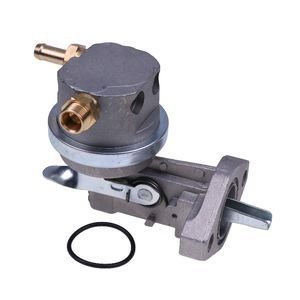
This Fuel Pump 49040-7008 sits between the fuel tank and the carburetor in a vacuum-pulse-driven diaphragm system. It relies on crankcase pressure pulses routed through a small-diameter hose to flex the polymer diaphragm, drawing fuel from the tank and pushing it toward the carburetor float bowl. When diagnosing fuel starvation, the entire path — tank outlet, inline filter, pulse hose, pump, and carburetor inlet — must be evaluated as one system. A clogged filter upstream forces the diaphragm to work against higher vacuum, accelerating fatigue.
Engine Serial Variants That Change Mounting and Port Layout
Within the FR651V family alone, sub-codes like AS34, AS42, AS45, and BS34 differ in fuel line routing direction, pulse port connection position, and mounting bolt orientation. A pump that physically bolts on may still route the discharge port toward a heat shield or leave the pulse hose kinked against the crankcase. [NEED_CITE: Kawasaki FR series engine serial variant differences in fuel system layout] Confirming the full engine serial code — not just the base model — prevents misfitment that looks correct on the bench but fails under vibration and heat. The same cross-reference numbers (49040-0770, 49040-0802) apply across variants, but the installation geometry changes.
Reading the Specs That Actually Matter for Field Life
The polymer diaphragm compound determines whether the pump survives ethanol-blended fuels now standard across many regions — a diaphragm not formulated for E10 or E15 swells, stiffens, and loses pumping volume within a single mowing season. The corrosion-resistant housing matters in high-humidity environments where condensation accumulates inside the pump body between operating cycles, pitting unprotected alloy surfaces and generating oxide debris that migrates downstream into the carburetor jets. Pulse-port diameter and hose barb profile must match the factory crankcase fitting; a mismatched barb forces a clamp that pinches the pulse hose, reducing diaphragm stroke and starving the engine under load. These three factors — diaphragm chemistry, housing material, and port geometry — define whether a Fuel Pump 49040-7008 engine replacement survives its first season or returns to the bench.
The Hidden Cost of Ignoring the Fuel System Root Cause
A workshop that replaces only the pump without flushing the tank, swapping the filter, and inspecting the pulse hose typically sees the unit return within one operating cycle. The new pump ingests the same debris that destroyed its predecessor, and the mechanic concludes the aftermarket part was defective. [NEED_CITE: repeat fuel pump failure diagnosis checklist for diaphragm-type pumps] This cycle burns through inventory, erodes customer confidence, and keeps machines off revenue-generating work. For fleet operators managing dozens of Kawasaki-powered mowers, the cumulative effect is measurable in lost mowing hours during peak season when every downed unit means uncut acreage.
Why Rebuild Shops and Fleet Buyers Source This Pump Here
Our own production lines and qualified sourced supply share identical QC protocols and warranty terms, so a Fuel Pump 49040-7008 engine replacement carries the same coverage regardless of which facility produced it. Eight product categories — from fuel system to engine internals to electrical — mean a complete overhaul list ships as one consignment under one account. Single-piece MOQ removes the barrier when one mower in the fleet needs an emergency part while the rest are running. Cross-reference verification covers superseded numbers like 49040-0770 and 49040-0802, catching interchange errors before dispatch. Technical staff confirm engine serial variant compatibility and diaphragm grade before the order is released.
Documentation & Verification
- Commercial invoice listing each fuel system line item with engine serial cross-reference
- Packing list matching pump quantity to carburetor and filter quantities on the same job
- Compatibility sheet noting 49040-0770 and 49040-0802 as reference only interchange numbers
- Pre-shipment pressure test record verifying diaphragm stroke and check-valve sealing
- Photographic log showing pump housing, port barbs, and mounting face before crating
- HS code and customs paperwork prepared for fuel system component export classification
Installation & Rebuild Sequence
- Flush the fuel tank and replace the inline filter before installing the new pump to prevent inherited debris from scoring the diaphragm
- Verify pulse hose integrity and inner diameter match to the pump barb; a collapsed hose starves the diaphragm of crankcase pulses
- Confirm mounting bolt torque follows Kawasaki FR/FS/FX service manual sequence to avoid warping the housing flange
- Prime the carburetor float bowl manually before first cranking so the pump is not dry-cycled against a closed needle valve
- Run the engine at idle for several minutes and inspect all fuel fittings for seepage before returning the unit to service
Getting the Right Variant to Your Workshop
Send the full engine model and serial code from the Kawasaki nameplate — not just the machine model — so we can confirm pulse port position and mounting orientation against our cross-reference database. If the nameplate is illegible, a clear photograph of the old pump showing port layout and mounting holes lets our technical team identify the correct variant. For fleet orders, request a fuel system component checklist so filters, line seals, and pulse hose ship alongside the pumps in a single dispatch.
Frequently Asked Questions
Q: What other fuel system parts should I replace alongside this pump?
A: Pair the pump with a fresh inline fuel filter, new fuel line clamps, and a pulse hose inspection. If the carburetor has not been cleaned in the current service cycle, a rebuild kit addresses jet deposits that mimic pump failure. Shipping these items together eliminates a second order and ensures the entire fuel path is refreshed at once.
Q: How do I confirm which variant fits my specific engine serial?
A: Provide the complete engine code from the Kawasaki nameplate — for example, FR651V-AS45 rather than just FR651V. Sub-codes affect fuel line routing and pulse port location. Our technical team cross-checks your serial against fitment records and confirms port orientation before dispatch, reducing the risk of a misfit that only appears once the engine bay is reassembled.
Q: Why did my last replacement pump fail so quickly?
A: Rapid repeat failure usually traces to upstream contamination — degraded fuel lines shedding particles, a blocked tank vent creating vacuum lock, or ethanol-blended fuel attacking an incompatible diaphragm. Replacing the pump without addressing these system-level causes means the new unit inherits the same destructive conditions. A full fuel-path audit from tank to carburetor typically reveals the actual fault.
Q: Are the superseded reference numbers fully interchangeable?
A: Numbers 49040-0770 and 49040-0802 are listed as cross-reference only identifiers for the same functional pump family. However, interchangeability depends on your specific engine serial variant and production date. We verify each reference against the engine build record to confirm the correct revision ships, rather than assuming blanket interchange across all FR, FS, and FX variants.
Q: Can I order a sample before committing to a fleet quantity?
A: Yes. A single sample unit ships for fitment confirmation on one engine before you release a bulk order. This lets your workshop verify mounting geometry, port alignment, and hose barb compatibility on the actual machine, particularly useful when servicing mixed fleets with several Kawasaki engine sub-codes across different mower models.