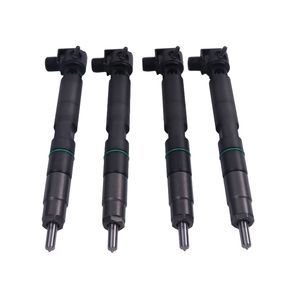
Matched Injector Sets for Rebuild — D1803 and V2403 common-rail units ship with calibration data matched across cylinders, preventing imbalance after overhaul.
Technical Specifications
| Parameter |
Value |
| Part Number |
1J808-53050 |
| Product Type |
Fuel Injector |
| Cross-Reference |
1J808-53050, 1J808-53052, 0445110775, 1J808-53051, 0445110711 (reference only) |
| Machine Fitment |
Kubota D1803, V2403, R430, R430CA |
| Condition |
New Aftermarket |
| Warranty |
3–12 month warranty against manufacturing defects |
| MOQ |
1 piece |
| Lead Time |
2–5 working days for in-stock items |
| Standards |
ISO-certified manufacturing |
Application Suitability
| Engine System |
Related Components |
| Common-Rail Injection |
Fuel filters, supply lines, return hoses, rail pressure sensor |
| Cylinder Combustion |
Piston crowns, cylinder head gaskets, valve seats |
| Engine Control |
Wiring harness connectors, ECU calibration maps |
| Fuel Delivery |
Supply pump, water separator, tank breathers |
Why Injectors Fail Months After a Fresh Rebuild
Replacing a fuel injector for Kubota D1803 V2403 engine rebuild without diagnosing upstream fuel contamination leads to repeat failure.
I have seen V2403 engines back on the stand within weeks because the shop swapped the injector but ignored the degraded return line dumping debris into the rail. A Kubota R430 wheel loader operating in a dusty quarry environment cycles enormous volumes of fuel through components that were already marginal [NEED_CITE: common-rail diesel fuel system contamination failure modes]. When the root cause is a worn supply pump or bypassed filtration, the new injector simply becomes the next victim. This fuel injector for Kubota D1803 V2403 engine rebuild is supplied with the understanding that system-level fault isolation must precede component replacement, otherwise the investment is wasted on a temporary fix.

The Injection Circuit as a Closed System
A single fuel injector for Kubota D1803 V2403 engine rebuild does not operate in isolation. The common-rail architecture on these Kubota engines maintains hydraulic pressure across all cylinders simultaneously, meaning any restriction, leak, or calibration mismatch in one circuit affects combustion balance across the entire block. Rebuild shops that address only the failed cylinder often find the adjacent units were already operating outside specification, masked by the ECU compensating with fuel trim adjustments.
Engine Serial Variants and Calibration Differences
The suffix on your engine plate matters. A D1803-CR-TIE4B-KEA-1 may require a different injector calibration profile compared to a V2403-CR-TIE4BG-KEA1, even though both use the same base injector body. Connector pin-out, return port orientation, and flow rate mapping can shift between production runs [NEED_CITE: Kubota common-rail engine serial variant identification procedures]. Confirming the exact serial variant ensures the replacement fuel injector for Kubota D1803 V2403 engine rebuild communicates correctly with the existing ECU and fuel rail geometry.
Reading the Specification Sheet
The spray pattern and flow rate data on the quality inspection record tells you whether the injector will atomize fuel consistently at the rail pressures these engines demand. A nozzle that flows within tolerance at bench test but drifts under thermal load will cause cylinder-to-cylinder imbalance that manifests as rough idle or excessive smoke under load. The ISO-certified manufacturing standard applied here covers dimensional accuracy of the nozzle seat and needle clearance, which directly governs how the injector responds to rapid pulse commands from the rail control module.
The Cost of Skipping the Root-Cause Check
When a shop installs a replacement injector without inspecting the fuel supply pump, water separator, and return lines, the new component inherits whatever contamination or pressure irregularity killed the original. This results in a second teardown, a second set of gaskets and seals, and a machine that loses revenue while sitting idle. The cumulative downtime from a misdiagnosed fuel system fault often exceeds the cost of replacing the entire set of related components during the first intervention [NEED_CITE: diesel engine repeat failure root cause analysis methodology].
What This Supply Model Covers
The production lines and sourced partners supplying this component operate under a single warranty framework, so accountability does not fracture when you need support. Cross-reference verification covers superseded numbers like 1J808-53052 and Bosch interchange references such as 0445110775, reducing the chance of ordering the wrong variant. The technical team confirms connector type and calibration match against your engine serial before dispatch. Sample supply is available for fitment confirmation before you commit to bulk quantities for a fleet overhaul program.
Documentation & Verification
- Commercial invoice listing injector part numbers and engine compatibility references
- Cross-reference sheet mapping 1J808-53050 to superseded and Bosch interchange numbers (reference only)
- Quality inspection record covering spray pattern, flow rate, and pressure resistance test data
- Warranty terms document specifying coverage period and replacement conditions for manufacturing defects
- Packing photographs showing injector packaging integrity and quantity verification before dispatch
- HS code and customs documentation support for international shipment of fuel system components
Installation & Rebuild Sequence
- Verify rail pressure sensor and fuel filter are replaced before installing the new injector set
- Confirm return line hose clamps and banjo bolt seals are free of deformation or cracking
- Torque injector hold-down clamps to engine manual specification to prevent nozzle seat leakage
- Prime the fuel system and bleed air from the rail before commanding the ECU to fire the injectors
- Monitor fuel trim values across all cylinders during the initial run-in to confirm balanced contribution
Inquiry Guidance
Provide your engine model, serial number, and the exact suffix from the nameplate so the correct calibration variant is identified. If the existing injector carries a faded label, send a photograph of the nozzle body and connector for cross-reference verification. Specify whether you need a matched set for a full overhaul or a single unit for a targeted cylinder repair.
Frequently Asked Questions
Q: What other fuel system parts should be replaced together with the injectors?
A: Fuel filters, supply line O-rings, return hose clamps, and the water separator element are typically addressed during injector service. A worn supply pump can deliver inadequate rail pressure, so inspecting its output before reassembly prevents the new injectors from operating outside their design envelope.
Q: How do I confirm which injector variant fits my specific D1803 or V2403 engine serial?
A: Provide the full engine serial including the suffix after the dash. Variants like D1803-CR-TIE4B-KEA-1 and V2403-CR-TIE4BG-KEA1 may differ in connector pin-out or calibration mapping. The cross-reference number on the old injector body also helps verify the correct variant.
Q: Are these injectors matched as a set or can I order individual units?
A: Both options are available. For a full engine overhaul, matched sets ensure consistent flow rate and spray pattern across all cylinders. Single units can be ordered for targeted cylinder repair, but verifying the remaining injectors are still within specification is recommended to avoid imbalance.
Q: What typically causes premature injector failure on Kubota common-rail engines?
A: Fuel contamination from degraded filtration, water ingress, or particulate bypass is the primary cause. Worn supply pump internals can introduce metal debris into the rail. Operating with a clogged return line can also cause excessive pressure spikes that damage the injector nozzle seat over time.