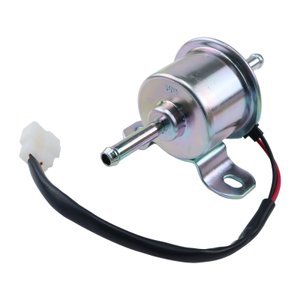
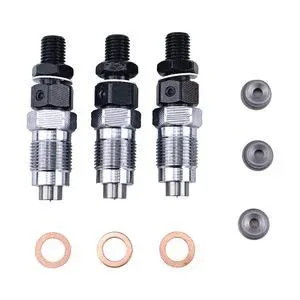
Matched Set Dispatch — Every V2403 injector in this consignment is calibrated as a batch, so cylinder balance holds from the first hour after rebuild.
Technical Specifications
| Parameter |
Value |
| Part Number |
1J801-53052 |
| Product Type |
Fuel Injector |
| Cross-Reference |
1J801-53052, 1J80153051, 1J801-53051, 0445110777 (for identification purposes only) |
| Machine Fitment |
Kubota KX040-4, U48-5, L3301, L3560, L3901, L4060, L47, L4701, L4802, MX4800, MX5200, MX5400 series |
| Engine Compatibility |
V2403, D1803, D1803-CR-E4, D1803-CR-TE4, V2403-CR-E4, V2403-CR-TE4 |
| Condition |
New Aftermarket |
| Warranty |
3-12 months against manufacturing defects |
| Quality Standard |
ISO 9001 |
Application Suitability
| Engine System |
Related Components |
| High-pressure common rail injection |
Fuel filter assembly, supply pump, rail pressure sensor |
| Cylinder combustion balance |
Full injector set, copper washers, return line hoses |
| Emission control (E4 variant) |
EGR valve gasket, intake manifold seals |
| Fuel filtration and supply |
Primary and secondary fuel filters, water separator |
Why One Replaced Injector Fails Again Within Weeks
A single fuel injector replaced in isolation rarely solves the underlying fuel system fault.
I have watched workshop teams swap out one injector on a Kubota V2403 after seeing white smoke on cylinder three, only to have cylinder two follow the same failure pattern within a month. The contaminated fuel that destroyed the first injector is still circulating through the rail, and the worn supply pump that caused pressure fluctuation is still starving the remaining units. When sourcing Fuel Injector engine rebuild parts for a common-rail diesel, treating the symptom instead of the system burns through replacement inventory and extends machine downtime [NEED_CITE: common rail diesel fuel system diagnostic procedures].
The Fuel Delivery Chain This Injector Sits Inside
The 1J801-53052 injector operates at the terminal end of a high-pressure common-rail circuit shared across the V2403 and D1803 engine families. Fuel moves from the tank through primary filtration, into the supply pump, through secondary filtration, then into the high-pressure pump and rail before reaching each nozzle. A failure at any upstream stage — a collapsed filter element, a scored pump rotor, a leaking return line pulling air — delivers abnormal conditions to every injector in the set. Rebuilding this Fuel Injector engine rebuild parts position without addressing upstream health simply moves the next failure to an adjacent cylinder.
Engine Serial Variants That Change the Calibration
The V2403 platform spans multiple serial variants — V2403-CR-E4, V2403-CR-TE4, and the later V2403-CR-E4B builds — and each carries distinct rail pressure mapping and connector geometry. The D1803-CR-E4 and D1803-CR-TE4 share the injector body envelope but differ in nozzle spray pattern and solenoid resistance values. Ordering against the engine model alone without confirming the serial suffix risks receiving a unit that physically fits but delivers incorrect fuel volume at cruise load [NEED_CITE: Kubota engine serial variant identification methods]. Always supply the full engine serial plate data before committing to a matched set.
Flow Rate, Nozzle Geometry, and What They Mean at the Rail
The nozzle orifice diameter and spray cone angle in this Fuel Injector engine rebuild parts application are matched to the combustion chamber bowl geometry of the V2403 and D1803 indirect-injection heads. Common-rail systems hold steady rail pressure regardless of engine speed, so nozzle flow characteristics determine atomization quality at low idle just as much as at rated load. An oversized orifice causes rich combustion and soot loading at idle, while an undersized orifice forces the ECU to extend pulse width beyond its correction window at high load. The solenoid response time must fall within the ECU's expected range, or the injector trim code will not compensate adequately.

The Cost of Skipping Root-Cause Verification
When a rebuild shop installs a new injector without flushing the rail or testing the high-pressure pump output, residual metallic debris from the failed unit circulates directly into the replacement. The new nozzle scores within operating hours, and the machine returns with the same misfire complaint. This pattern repeats until the shop treats the entire fuel circuit — draining the rail, replacing the filter, verifying pump delivery pressure — rather than chasing individual cylinders. Repeat failures under warranty erode profit margins on the job and damage workshop credibility with the fleet owner [NEED_CITE: diesel fuel system contamination failure analysis].
What This Supply Channel Delivers for Your Rebuild
Both the injector lines produced in our own Guangzhou facility and those sourced from qualified manufacturing partners carry identical QC protocols and warranty terms, so a matched set behaves consistently across all cylinders. The eight product categories in our catalog mean the fuel filter, copper crush washers, return line seals, and overhaul gasket kit ship under one commercial invoice and one tracking number. Orders start from a single unit for emergency replacement, but matched-set pricing applies when you order the full complement for an overhaul. Cross-reference verification covers superseded numbers like 1J801-53050 and 0445110777, confirmed against your engine serial before dispatch. A sample unit is available for fitment confirmation before you commit to bulk volume for your rebuild shop inventory.
Documentation & Verification
- Commercial invoice listing each injector by serial variant and engine application
- Cross-reference sheet mapping 1J801-53052 against alternate part numbers for identification purposes only
- Dimensional inspection record covering nozzle seat angle and solenoid connector pin spacing
- Warranty terms specifying coverage period and manufacturing defect scope
- Packing photographs showing injector protective caps and cylinder-separated packaging
- HS code and export documentation prepared for customs clearance at destination
Installation & Rebuild Sequence
- Flush the common rail and replace the high-pressure pump filter element before installing the new Fuel Injector engine rebuild parts to prevent debris ingestion.
- Verify copper crush washer thickness matches the cylinder head counterbore depth to maintain correct nozzle protrusion.
- Torque injector clamp bolts to the engine service manual specification in a two-stage sequence to avoid seat distortion.
- Connect return lines and verify flow back to the tank with no kinks or restrictions before cranking.
- Prime the low-pressure side manually until fuel reaches the high-pressure pump inlet, then crank with injectors disconnected electrically to purge air from the rail.
- After start-up, log fuel trim values at idle and rated speed to confirm each cylinder falls within ECU correction range.
Requesting a Fitment Confirmation
Provide your engine model, the full serial number from the engine plate, and any previous rebuild history — including whether oversize components or non-standard filtration modifications are present. This allows us to verify the correct injector variant, confirm cross-reference coverage, and identify adjacent fuel system components that should ship in the same consignment.
Frequently Asked Questions
Q: Should I replace all injectors as a matched set or only the failed unit?
A: On the V2403 and D1803 common-rail platform, replacing the full set ensures balanced fuel delivery across all cylinders. A single new injector alongside worn units causes uneven combustion and accelerated wear on the new component. If budget constrains a full set, at minimum replace the failed injector and the two adjacent units, then verify rail pressure and fuel trim values before returning to service.
Q: What other fuel system parts should I order alongside this injector?
A: The fuel filter element, copper crush washers for each injector seat, and return line O-rings should be replaced whenever injectors are removed. If the failure was contamination-related, also replace the high-pressure pump inlet screen and flush the rail. Ordering these together avoids a second delivery and keeps the machine on a single repair timeline.
Q: My engine serial suffix does not match the listed variants exactly — will it fit?
A: The V2403 and D1803 families include sub-variants built for specific equipment manufacturers, and the suffix can differ from the standard E4 or TE4 designations. Supply the complete engine serial plate data so the exact injector calibration and connector type can be confirmed before dispatch. Physical fitment alone does not guarantee correct fuel mapping.
Q: What typically causes these injectors to fail prematurely?
A: The most common root causes are contaminated fuel bypassing degraded filtration, water ingress corroding the nozzle seat, and worn supply pumps causing pressure fluctuation that starves the high-pressure pump. Addressing these upstream conditions during the repair prevents the replacement injector from following the same failure path within weeks of installation.