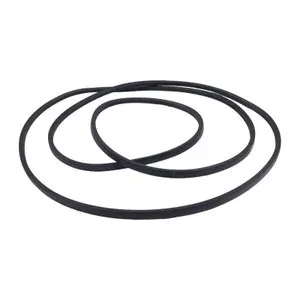
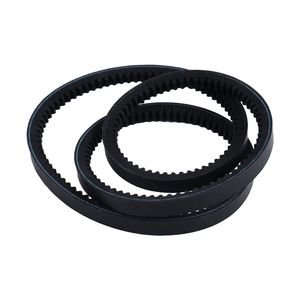
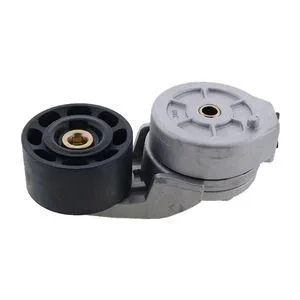
System-Matched Overhaul — Dimensional grade and accessory drive variant confirmed against your specific engine serial before dispatch.
Technical Specifications
| Parameter |
Value |
| Part Number |
3914458 |
| Product Type |
Fan Pulley |
| Cross-Reference |
3914458 (reference only) |
| Machine Fitment |
ISB, QSB, 6CTA, ISC, QSC, 4B3.9, 6B5.9, 6C8.3, B3.9 G, B4.5, B5.9 G, G5.9, G5.9 CM558, ISB CM550, ISB CM850, ISBE CM800, ISBE4 CM850, QSB4.5 CM850(CM2850) |
| Brand Compatibility |
Cummins |
| Condition |
New Aftermarket |
| Construction |
High-strength alloy |
| Surface Treatment |
Corrosion-resistant coating |
| Warranty |
3-12 months against manufacturing defects |
| Manufacturing Standard |
ISO-certified manufacturing |
Application Suitability
| Engine System |
Related Components |
| Belt drive and accessory drive |
Drive belt, belt tensioner, idler pulleys |
| Cooling system front-end |
Fan blade, fan hub, water pump pulley |
| Engine overhaul matched set |
Seal kits, gaskets, bearing shells, piston assemblies |
| Generator set auxiliary drive |
Alternator pulley, crankshaft pulley, vibration damper |
Why a Fan Pulley Replacement Rarely Fixes the Root Cause Alone
The belt drive system fails as a network, not as isolated components.
When a Cummins ISB or QSB engine arrives at the rebuild bench with a shredded belt or a wobbly fan pulley, the instinct is to replace the visible damage. Yet in my experience across Southeast Asian job sites, the underlying cause almost always traces back to a misaligned tensioner, a worn idler bearing, or a crankshaft pulley that has drifted off its tolerance stack. Replacing only the failed fan pulley without inspecting the full accessory drive invites a repeat failure within weeks [NEED_CITE: accessory drive system failure root cause analysis for medium-duty diesel engines]. Shops that treat the fan pulley engine rebuild replacement as a system-level event consistently see longer intervals between comeback jobs.

The Belt Drive Network Inside B-Series and C-Series Engines
The fan pulley sits at one node of a multi-component belt drive loop that includes the crankshaft pulley, tensioner assembly, idler pulleys, and the driven accessories. On Cummins ISB, QSB, ISC, and QSC platforms, these components share a common belt path where wear on any single surface transfers load unevenly to the rest. A fan pulley engine rebuild replacement that ignores the tensioner spring force or the idler bearing play will load the new pulley asymmetrically from day one. Shops performing full overhauls on 6CTA or 4B3.9 engines benefit from refreshing the entire belt drive as a matched set, ensuring every contact surface meets the same wear baseline.
Serial Variants and the Hidden Differences Across Engine Builds
Cummins B-series and C-series engines span multiple electronic control modules — ISB CM550, ISB CM850, ISBE CM800, ISBE4 CM850, and QSB4.5 CM850(CM2850) among them. Each variant can carry a different accessory drive configuration, meaning the fan pulley mounting depth, bolt circle, and belt groove profile may differ even when the base engine family appears identical [NEED_CITE: Cummins B-series and C-series accessory drive variant identification procedures]. Confirming the engine serial number against the specific control module and build code prevents the costly discovery that the pulley does not seat correctly. I once watched a workshop in Jakarta lose an entire day because the rebuild kit contained a pulley variant meant for a different CM calibration, and the belt tracked off-center from the first crank.
Material and Coating Choices That Matter at Temperature
The high-strength alloy construction of this fan pulley addresses the thermal cycling that B-series and C-series engines impose on front-end accessories. Exhaust-side ambient temperatures in an excavator engine bay or a genset enclosure push pulley surfaces through repeated expansion and contraction cycles. The corrosion-resistant coating mitigates surface pitting that would otherwise degrade belt contact and accelerate groove wear [NEED_CITE: belt drive pulley surface degradation mechanisms in high-temperature diesel environments]. On mining trucks and agricultural equipment operating in high-dust conditions, this coating also reduces abrasive wear on the belt-facing surfaces, preserving the dimensional tolerances that keep the belt tracking true.
What Happens When the Grade or Variant Is Wrong
Sending a standard-dimension fan pulley to an engine that has already been rebuilt once — perhaps with a reground crankshaft or an oversize bearing set — creates a mismatch that reveals itself only after reassembly. The belt tension reads correctly on the gauge, but the pulley sits at a slightly wrong axial position, causing the belt to walk. On a 6CTA I inspected in Surabaya, the previous rebuild house had fitted standard bearing shells to a crankshaft that had already been ground undersize; the resulting clearance wiped the bearings within hours [NEED_CITE: engine rebuild dimensional grade verification after crankshaft regrind]. That same principle applies to the accessory drive: every component in the belt path must match the actual — not the original — dimensional state of the engine.
Why Rebuild Shops Source the Belt Drive as a System Here
Production on selected lines and qualified sourced supply operate under a single quality account and a single warranty, so whether a component is self-manufactured or partner-sourced, the inspection standard is identical. Eight product categories mean the fan pulley ships alongside matched belts, tensioners, seal kits, and gaskets in one consignment, eliminating the partial-delivery problem that stalls rebuild benches. Minimum order from one piece supports the emergency single-unit overhaul as readily as the fleet-level kit build. The Guangzhou warehouse stocks common belt drive items for fast dispatch, while the technical team verifies compatibility against your engine serial number and prior rebuild history before confirming the order [NEED_CITE: aftermarket parts cross-reference verification standards for diesel engine components]. Cross-reference checks cover superseded and alternate numbers, and sample supply is available for fitment confirmation before you commit to bulk quantities.
Documentation & Verification
- Commercial invoice and packing list itemizing every belt drive component in the consignment
- Part compatibility and cross-reference sheet for 3914458 marked as reference only against your engine serial
- Dimensional inspection record confirming groove profile, bolt circle, and mounting depth tolerances
- Warranty terms covering manufacturing defects for 3-12 months from dispatch date
- Packing photographs showing protective separation of pulley surfaces during transit
- HS code and customs documentation support for international engine parts shipments
Installation & Rebuild Sequence
- Clean all belt contact surfaces and verify idler bearing play before mounting the new fan pulley
- Confirm bolt torque sequence and fastener grade match the Cummins service manual specification
- Check belt alignment with a straightedge across crankshaft pulley, fan pulley, and tensioner
- Run initial break-in at idle, then inspect belt tracking and tensioner position after the first thermal cycle
- Record pulley axial position and belt tension readings for future service interval comparison
Requesting the Correct Configuration for Your Rebuild
Provide the full engine model, serial number, and electronic control module designation so the accessory drive variant can be verified against your specific build. If the engine has been rebuilt previously, share any oversize or undersize grades already installed so the fan pulley and adjacent belt drive components match the current dimensional state. Photographs of the nameplate, existing pulley, and belt routing diagram help confirm fitment before dispatch.
Frequently Asked Questions
Q: What other belt drive components should be replaced together with the fan pulley during an overhaul?
A: The tensioner assembly, drive belt, and all idler pulleys should be evaluated and typically replaced as a matched set. Worn idler bearings or a fatigued tensioner spring will load the new fan pulley unevenly, cutting its service life short. Rebuild shops ordering a complete belt drive kit avoid the partial-refresh trap that leads to comeback jobs.
Q: Do different Cummins ISB and QSB serial ranges use different fan pulley variants?
A: Yes. Variants exist across control module calibrations such as ISB CM550, ISB CM850, ISBE CM800, and QSB4.5 CM850(CM2850). The mounting depth, bolt pattern, and belt groove profile can differ between these builds. Confirming the engine serial number ensures the correct variant is supplied rather than a visually similar but dimensionally incompatible alternative.
Q: How do I confirm the correct grade if the engine has been rebuilt before?
A: Share the rebuild history including any crankshaft regrind, oversize bearings, or modified accessory drive components. The technical team cross-references your engine serial against known dimensional grades to verify the fan pulley matches the engine's current state, not its original factory specification.
Q: What system-level faults cause premature fan pulley failure beyond the pulley itself?
A: Misaligned tensioners, worn crankshaft pulley bearings, and degraded belt material all transfer abnormal loads to the fan pulley. High-dust environments accelerate groove abrasion, while thermal cycling in enclosed genset bays promotes surface fatigue. Addressing the full accessory drive during overhaul prevents repeat failures.
Q: Can I order a matched belt drive overhaul kit instead of sourcing individual components?
A: Yes. Matched kits including the fan pulley, belts, tensioner, idlers, and associated seals ship as a single consignment. This approach guarantees dimensional compatibility across all belt-path components and consolidates freight into one dispatch, reducing both lead time and bench-side waiting.