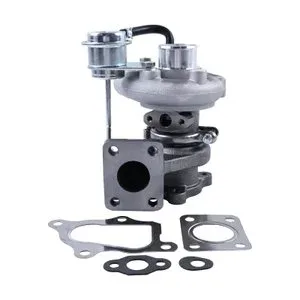
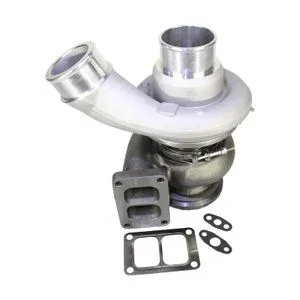
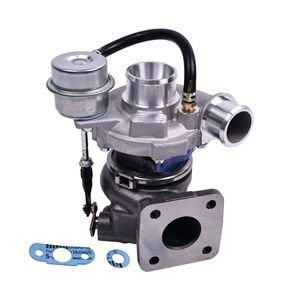
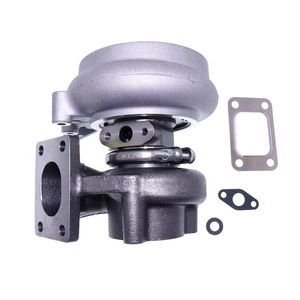
Engine Rebuild Kit Matched — TD03 turbocharger supplied with verified cross-reference and adjacent intake system components for complete Kubota V2003T and V2403 overhauls.
Technical Specifications
| Parameter |
Value |
| Part Number |
49131-02090 |
| Product Type |
Turbocharger |
| Cross-Reference (reference only) |
49131-02093, 49131-02092, 49131-02091, 1J403-17015, 1J403-17014, 1J403-17013, 1J403-17010, 1J403-17011, 1J403-17012, 115-8628, 49131-02140, VD410096, 1J403-17016, KEART-1J403, 1E499-17012 |
| Machine Fitment |
Industrial Tractor, Machinery with V2403-M-T-E3B-KEA-2 Engine |
| Turbo Model |
TD03-07G-6.0, TD03-07G-3.3, TD03-07T-4.0 |
| Engine Compatibility |
Kubota V2003T, V2003-T, V2403-M-T, V2403-M-T-E3B-KEA-2, V2403 |
| Condition |
New Aftermarket |
| Warranty |
3-12 months against manufacturing defects |
| Standards |
ISO 9001 |
Application Suitability
| Engine System |
Related Components |
| Forced Induction & Intake |
Intake boots, air filters, intercooler hoses, boost sensors |
| Lubrication Supply |
Oil feed lines, oil drain tubes, crankcase breathers |
| Exhaust Routing |
Exhaust manifold gaskets, flex pipes, heat shields |
| Engine Overhaul Package |
Top-end gasket sets, piston ring kits, bearing shells |
Why Turbo Failures Return Weeks After Rebuild
A replacement TD03 turbocharger fails prematurely when the root cause within the engine system remains unresolved.
Workshops frequently swap the turbocharger unit without tracing the oil contamination or exhaust restriction that destroyed the original component. Bearing journal scoring inside the failed unit usually points to degraded oil supply lines or blocked crankcase breathers pushing excessive pressure into the drain path. Ignoring these adjacent system faults guarantees the new TD03 Turbocharger engine rebuild replacement will be back on the teardown bench within a short operating window [NEED_CITE: common root causes of turbocharger bearing failure in diesel engines].

Positioning the Turbocharger Within the Engine Rebuild Sequence
This TD03 turbocharger sits at the intersection of the intake and lubrication circuits on Kubota V2003T and V2403 powerplants. During a top-end overhaul, the turbo must be evaluated alongside the oil pump pickup screen, the cylinder head drain passages, and the compressor-side intake plumbing. Removing the turbo without capping the oil feed line invites debris into the lubrication gallery. A complete engine system approach treats the TD03 Turbocharger engine rebuild replacement as one node in a network of interdependent fluid and gas paths.
Matching Turbo Variants to Engine Serial Configurations
The V2403-M-T engine family spans multiple build codes, each potentially carrying a different turbo mounting flange orientation or compressor housing clock position. Variant TD03-07G-6.0 serves specific intake flow requirements that differ from TD03-07G-3.3 or TD03-07T-4.0 configurations. Installing the wrong variant results in boost pressure mismatches, oil drain interference with the block, or intake hose routing conflicts. Cross-referencing the engine serial plate against the turbo data tag prevents these fitment errors before the unit leaves the bench [NEED_CITE: turbocharger variant identification by engine serial range].
Interpreting Compressor and Turbine Specifications
The TD03 family designation covers a range of trim levels and A/R ratios that govern how quickly boost pressure builds and at what flow rate the turbine operates efficiently. Compressor wheel diameter and inducer geometry determine the air mass delivered to the intake manifold at a given shaft speed. Turbine housing A/R ratio affects exhaust gas velocity entering the wheel; a mismatch here causes either sluggish low-rpm response or excessive backpressure at rated load. Oil journal bearing clearances must align with the engine's oil pressure curve to maintain the hydrodynamic film that prevents shaft contact with the bearing surface.
The Cost of Skipping System-Level Diagnosis
Replacing only the turbocharger while leaving carbon-clogged oil drain tubes or cracked exhaust manifold gaskets in place leads to repeat failures. Oil pooling inside the turbine housing from a restricted drain causes carbon buildup on the turbine wheel, throwing the rotor assembly off balance. A cracked exhaust gasket admits unmetered air that disrupts the air-fuel ratio, raising exhaust temperatures beyond the turbine wheel's material limits. These secondary failures compound workshop labor hours and erode confidence in the TD03 Turbocharger engine rebuild replacement supply chain [NEED_CITE: effects of exhaust leaks on turbocharger turbine temperature].
Sourcing the Complete Turbocharger Kit From One Account
Our Guangzhou facility consolidates turbocharger units with matched gasket sets, oil line seals, and intake clamps under a single commercial invoice. Self-produced part lines and sourced components from ISO 9001 certified partners carry identical warranty terms, eliminating the need to trace quality responsibility across multiple vendors. Cross-reference verification covers superseded numbers such as 1J403-17013 and 49131-02093, so worn nameplates still yield correct identification. Minimum order starts at one piece for emergency rebuilds, while bulk orders ship as one consignment with consolidated freight. Technical support confirms variant selection against engine serial data before dispatch, and sample units are available for fitment trials prior to fleet-wide commitments.
Documentation & Verification
- Commercial invoice listing turbocharger part number with cross-reference identifiers marked as reference only
- Packing list itemizing matched gaskets, oil seals, and intake hardware shipped in the same consignment
- Quality inspection record covering rotor balance verification and bearing clearance measurement
- Warranty terms document specifying coverage period and manufacturing defect conditions
- Packing photographs showing turbocharger unit secured with desiccant and protective caps on oil ports
- HS code classification support for customs clearance across Southeast Asian import jurisdictions
Installation & Rebuild Sequence
- Flush oil feed and drain lines before connecting the TD03 turbocharger to prevent debris ingestion into journal bearings
- Torque exhaust manifold and turbo mounting flange fasteners in the sequence specified for Kubota V2403-M-T engines
- Verify compressor housing clock position aligns with intake hose routing without kinking or interference
- Pre-lube the turbocharger bearing housing through the oil feed port before initial engine cranking
- Run the engine at idle for the specified break-in period to establish stable oil film across bearing surfaces
Inquiry Guidance for System-Matched Turbocharger Supply
Provide the engine model designation, serial number, and any available data plate photographs to confirm which TD03 variant matches your specific Kubota V2003T or V2403 build code. Include details of prior rebuilds, oversize bearing installations, or known oil system modifications so the supplied kit accounts for existing engine condition. Workshops quoting complete overhaul packages should submit the full engine disassembly inspection report to receive matched gasket and seal lists alongside the turbocharger unit.
Frequently Asked Questions
Q: What gaskets and seals should be replaced along with this turbocharger?
A: Every turbocharger installation on Kubota V2003T and V2403 engines requires new exhaust manifold gaskets, oil feed line O-rings, oil drain flange gaskets, and intake boot clamps. Reusing compressed exhaust gaskets or hardened oil seals creates leak paths that alter boost pressure or starve the turbo bearing of clean lubricant. Request the matched seal list with your order to ensure all interface points are addressed in a single teardown.
Q: How do I confirm which TD03 variant fits my specific V2403 engine serial?
A: Submit your engine serial number and any legible characters from the existing turbocharger data plate. Variants TD03-07G-6.0, TD03-07G-3.3, and TD03-07T-4.0 correspond to different engine build codes and intake flow configurations within the V2403-M-T family. Our cross-reference verification checks superseded part numbers and mounting flange orientations to match the correct unit before dispatch.
Q: What engine system faults commonly cause premature turbo failure?
A: Restricted oil drain lines, carbon-clogged crankcase breathers, and exhaust manifold leaks are frequent root causes that destroy replacement turbochargers shortly after installation. Oil contamination from worn main bearings also circulates abrasive particles through the turbo journal. Diagnosing these system-level faults during teardown prevents the new turbocharger from suffering the same failure mode within its first operating cycle.
Q: Are oil feed and drain lines included in a turbo replacement kit?
A: Oil feed hoses, drain tubes, and associated clamps are supplied as separate line items that ship together with the turbocharger in one consignment. Specify your engine serial when ordering so the correct hose lengths and flange configurations are matched to your Kubota V2403 or V2003T installation. This approach avoids the delays that occur when a critical line item arrives from a different supplier weeks after the main unit.
Q: How do I cross-reference my worn turbo part number to the correct replacement?
A: Photograph the turbocharger data plate or submit any visible casting numbers from the compressor and turbine housings. Worn or paint-covered plates may still show partial characters that narrow the identification to a specific TD03 variant. Our verification process checks the submitted number against superseded references including 49131-02093, 1J403-17015, and 1J403-17014 to confirm the correct replacement for your engine configuration.