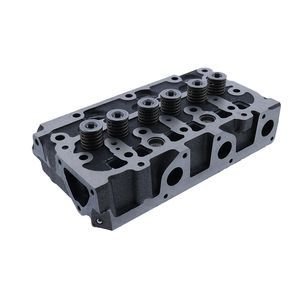
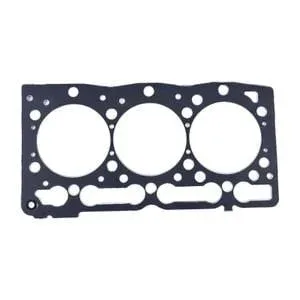
Matched Sets Shipped Together — Every piston, liner, and bearing grade inside this Kubota V2203 engine overhaul rebuild kit is verified against the same engine serial variant before dispatch.
Technical Specifications
| Parameter |
Value |
| Product Type |
Overhaul Kit |
| Engine Compatibility |
Kubota V2203, V2203E, V2203T, V2203DI, V2203-M-DI, V2203-M-DI-E2B, V2203-M, V2203-M-E2B, V2203-M-E3B, V2203-M-E3BG |
| Machine Fitment |
KX121-2, KX161-2, L4350DT, L4400DT, L4740, L5240, MX5100, 753C, 753F, 753G, 763, 763C, 763F, 763G, 773, 773C, 773F, 773G, S130, S150, S160, S175, S185, 331, 334, 337, 341 |
| Liner Material |
Centrifugally cast GGG-50 nodular iron |
| Liner Type |
Semi-finished (requires final honing) |
| Liner Outer Diameter Tolerance |
±0.02 mm |
| Piston Material |
Forged AL2618 alloy with molybdenum-doped skirt coating |
| Gasket Construction |
Multi-layer steel (MLS) with Viton elastomer bead |
| Gasket Temperature Rating |
180°C |
| Condition |
New Aftermarket |
| Warranty |
6-month standard warranty (extendable to 12 months per request) |
| MOQ |
1 set |
| Standards |
ISO 9001, ISO 6788, SAE J1960 |
Application Suitability
| Engine System |
Related Components |
| Cylinder head assembly |
Valve stem seals, injector sleeves, head bolt set |
| Crankcase bottom end |
Main bearings, rod bearings, thrust washers |
| Lubrication circuit |
Oil pump, oil cooler gaskets, crankshaft front and rear seals |
| Cooling system |
Water pump, thermostat housing gasket, coolant hose clamps |
| Fuel delivery |
Lift pump diaphragm, injection line crush washers |
Why a Generic Kubota V2203 Engine Overhaul Rebuild Kit Leaves the Block Open
An incomplete kit means the engine stays on the stand until the missing components arrive.
Rebuild shops across mining and quarry operations regularly encounter this scenario: the Kubota V2203 engine overhaul rebuild kit arrives, but the thrust washers specified for the E3B variant are absent, or the valve stem seals in the box belong to an earlier engine generation. The block sits open, contamination risk climbs, and the machine remains non-productive. [NEED_CITE: engine rebuild contamination exposure during extended teardown] I have seen crankshafts that were previously ground to undersize receive standard-grade bearing shells because the kit contents were never reconciled against the actual rebuild history, forcing a second teardown within weeks.
The Cylinder Group as a Matched System
This Kubota V2203 engine overhaul rebuild kit treats the cylinder group as an integrated system rather than a collection of unrelated parts. The GGG-50 nodular iron liners arrive semi-finished so the rebuild shop can hone them to the precise bore geometry of a block that may have already seen multiple machining cycles. Pistons and ring sets are selected in the same oversize grade as the liners, which prevents the compression loss that surfaces when components from different tolerance bands are forced together.
Variant Differences Between V2203 Sub-Models
The V2203 family spans naturally aspirated, turbocharged, and direct-injection variants, and the block architecture is shared while valve train and fuel system components diverge. A V2203-M-DI-E2B and a V2203-M-E3B share cylinder bore dimensions but use different injector sleeve profiles and valve spring specifications. Confirming the engine serial number before the kit ships ensures that every component inside the Kubota V2203 engine overhaul rebuild kit matches the build sheet of the specific engine on the stand. [NEED_CITE: Kubota V2203 serial variant differences in valve train and injection hardware]
Reading the Specifications That Matter
The GGG-50 nodular iron liner material provides the graphite nodule structure needed to absorb cyclic combustion loading without micro-cracking, which is a common failure mode in grey iron liners subjected to repeated thermal cycles. The ±0.02 mm outer diameter tolerance on the liners controls press-fit interference so that liner protrusion stays within the range required for proper head gasket clamping. Forged AL2618 pistons carry a molybdenum-doped skirt coating that reduces scuffing during the critical first hours after rebuild, when oil film establishment is still stabilizing. The MLS head gaskets with Viton elastomer beads maintain seal integrity at sustained exhaust manifold temperatures, addressing the blow-by failures typical of single-layer replacements in high-idle applications like demolition and port logistics.

The Hidden Cost of Grade Mismatch
Sending standard-size bearing shells to a crankshaft that has already been ground to the first undersize creates excessive oil clearance, which shows up as low oil pressure at idle and accelerated bearing wear within the first few hundred hours. Similarly, fitting a finished liner into a bore that has drifted out of round from previous overheating events leads to poor liner-to-bore contact and localized hot spots. These are not manufacturing defects — they are specification mismatches that could have been caught during the pre-shipment verification stage. [NEED_CITE: crankshaft undersize bearing grade matching in diesel engine rebuilds]
What Makes This Supply Approach Different
Production lines for selected cylinder components are operated in-house, while remaining kit items are sourced from ISO-certified manufacturing partners, and both streams carry identical quality control and warranty terms. Eight product categories sit under one account, so gasket sets, seal kits, and fuel system components ship in the same consignment as the overhaul kit. Minimum order is one set, which matters when a single machine is down and there is no fleet to justify bulk purchasing. The Guangzhou warehouse holds stock on fast-failure items for rapid dispatch. Part identification works from an engine number, a machine model, or a photograph of a worn nameplate. Cross-reference verification covers superseded numbers so that an older reference on a faded tag still resolves to the correct current kit configuration.
Documentation & Verification
- Commercial invoice and packing list itemizing every kit line by component description
- Compatibility and cross-reference sheet (for identification purposes) matching engine serial to kit contents
- Dimensional inspection records covering liner protrusion and bearing crush height
- Warranty terms specifying coverage period and claim procedure for matched component sets
- Packing photographs showing foam-separated liner and piston protection before crate closure
- HS code guidance and customs documentation support for international engine parts shipments
Installation & Rebuild Sequence
- Verify crankshaft journal sizes with a micrometer before selecting bearing grades from the Kubota V2203 engine overhaul rebuild kit.
- Hone semi-finished liners to final bore diameter after press-fit, checking protrusion against the head gasket specification.
- Install piston-to-liner clearance within the range defined by the forged AL2618 piston expansion coefficient.
- Torque MLS head gasket in the manufacturer-specified multi-pass sequence to ensure even Viton bead compression.
- Prime the lubrication system before first crank and follow a graduated load break-in schedule over the initial operating hours.
Requesting the Right Kit Configuration
Provide the full engine model designation, the serial number from the block stamping, and any known regrind history on the crankshaft journals. If the nameplate is illegible, a clear photograph of the engine number stamping or the injection pump data plate allows cross-reference confirmation. Sharing the previous rebuild records — if available — helps determine whether oversize components are needed and which variant-specific items the Kubota V2203 engine overhaul rebuild kit must include.
Frequently Asked Questions
Q: What components are included in the V2203 overhaul kit and what might be missing for my specific engine build?
A: The kit covers liners, pistons with rings, main and rod bearings, full gasket set, and crankshaft seals. However, valve stem seals, injector sleeves, and thrust washer thicknesses vary across V2203 sub-models. Providing the engine serial number before shipment allows the kit contents to be reconciled against the specific build sheet so no variant-specific items are omitted.
Q: How do I determine whether I need STD, 0.25, or 0.50 oversize liners and pistons?
A: Measure the current cylinder bore diameter at multiple depths and compare against the original specification. If the block has been machined during a prior rebuild, the existing bore size dictates the oversize grade needed. The semi-finished liners in this kit allow final honing to match the exact bore geometry required.
Q: Are V2203-M-DI and V2203-M-E3B variants fully interchangeable within this kit?
A: The block architecture and bore dimensions are shared, but valve train components, injector sleeve profiles, and certain gasket geometries differ between the DI and E3B variants. These parts are not interchangeable, and the kit must be configured to the exact engine serial to ensure correct fitment throughout.
Q: What other engine systems should be inspected or replaced during the same overhaul cycle?
A: The water pump, oil pump, and thermostat should be evaluated for wear since they are accessible during the teardown. Fuel system components like the lift pump diaphragm and injection line washers are low-cost items that prevent early post-rebuild leaks. Addressing these during the same cycle avoids a second disassembly.
Q: How do I confirm the exact engine model when the nameplate is worn or painted over?
A: The engine serial number is typically stamped directly into the block near the injection pump mounting face. A photograph of this stamping, even if partially obscured, can be cross-referenced against production records to confirm the exact V2203 variant and ensure the correct kit configuration.