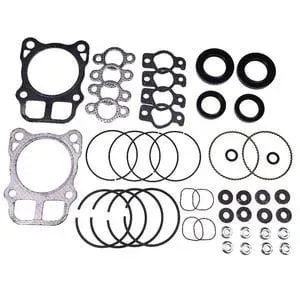
Matched Tolerance Sets — every ring, gasket, and seal in this kit shares the same dimensional grade, verified against engine serial before dispatch.
Technical Specifications
| Parameter |
Value |
| Part Number |
24-108-22-S |
| Product Type |
Overhaul Kit |
| Cross-Reference |
24 108 22, 2410822 (reference only) |
| Machine Fitment |
Kohler CH18, CH20, CH22, CH620, CH630, CH640, CH641, CV18, CV20, CV22, CV620, CV630, CV640 |
| Kit Contents |
Piston rings, gaskets, seals |
| Piston Ring Material |
Cast iron with molybdenum-doped chrome plating |
| Cylinder Head Gasket |
0.5mm stainless steel core, elastomeric coating (MLS type) |
| Head Gasket Pressure Rating |
12 bar |
| Seal Material |
NBR (nitrile butadiene rubber) |
| Seal Temperature Range |
–40°C to +150°C |
| Dimensional Tolerance |
±0.02 mm |
| Connecting Rod Bearing Surface Hardness |
HB 170–210 (SAE J300) |
| Condition |
New Aftermarket |
| Warranty |
3–12 months against manufacturing defects |
| MOQ |
1 piece |
| Standards |
ISO 9001, SAE J300 |
Application Suitability
| Engine System |
Related Components |
| Cylinder & piston assembly |
Piston rings, cylinder bore condition, piston pin bushings |
| Cylinder head sealing |
MLS head gasket, head bolt torque sequence, valve cover gasket |
| Crankcase & oil sealing |
NBR crankshaft seals, oil pan gasket, breather assembly |
| Bottom-end bearings |
Connecting rod bearings, main bearings, crankshaft journal condition |
| Cooling & blow-by management |
Coolant passage seals, thermostat housing gasket, PCV components |
When a Kohler CH18–CH641 Engine Overhaul Kit Arrives Incomplete
A teardown that stops mid-rebuild because the kit lacks the right gasket variant costs more than the gasket itself. Rebuild shops working on Kohler CH and CV series engines routinely discover that a base model number covers multiple internal configurations. A CH620 and a CH641 may share a block family, but the piston ring end-gap, head gasket thickness, and seal profiles differ across serial ranges. When the Kohler CH18–CH641 engine overhaul kit arrives without verifying these variant differences, the engine sits disassembled while the correct components ship on a second order [NEED_CITE: engine serial variant identification practices in aftermarket rebuild operations]. I have watched a skid steer engine wait on a bench for days because the ring set in the box was sized for a standard bore, while the block had already been machined to an oversize grade during a previous rebuild.
The Cylinder and Sealing System as One Unit
This Kohler CH18–CH641 engine overhaul kit covers the full cylinder and sealing envelope — piston rings, MLS cylinder head gasket, and NBR seals — matched to a single dimensional tolerance of ±0.02 mm. For a rebuild shop pulling a CH640 or CV630 out of a compact excavator or industrial generator, that matched tolerance means the ring-to-bore clearance, the head gasket compression behavior, and the crankshaft seal lip fit all align with the same engine build specification. Ordering piston rings from one source, gaskets from another, and seals from a third introduces tolerance stack-up that no single supplier takes responsibility for.
Serial Variants and Oversize History
The CH18 through CH22 and CH620 through CH641 ranges share visible similarities but diverge in internal component specifications across production runs. Before ordering, the block bore condition must be confirmed — whether it remains at standard diameter or has been machined to an oversize grade during a prior rebuild. Sending rings in the wrong grade forces a second teardown [NEED_CITE: piston ring grade selection after cylinder rebore operations]. Our technical team verifies the exact engine serial against the kit variant, confirming that the piston ring end-gap, gasket profile, and seal dimensions correspond to the specific build on the bench, not just the base model family.
Reading the Specifications That Matter
The molybdenum-doped chrome plating on the cast iron piston rings addresses the abrasive dust ingestion these engines encounter in quarrying and construction environments, where airborne particulate accelerates ring and bore wear beyond what standard iron rings tolerate. The MLS cylinder head gasket uses a 0.5mm stainless steel core with an elastomeric coating that conforms to minor surface irregularities on the head and block mating faces, maintaining a seal under sustained 12 bar combustion pressure without relying on retorquing after initial heat cycles. NBR seals rated from –40°C to +150°C cover the full operating envelope of engines that may cold-start in winter and run continuous load in summer, preventing coolant contamination from blow-by gases that degrade oil chemistry over time [NEED_CITE: elastomer selection criteria for small engine crankcase sealing].

The Cost of a Grade Mismatch
When piston rings arrive sized for a standard bore but the block was previously machined oversize, the rings cannot seat properly — compression drops, oil consumption rises, and the engine comes back apart within its first service interval. I have seen this happen with Kohler CV series engines in rental fleet skid steers, where the previous rebuild shop left no record of the bore grade. The machine goes back to the customer, fails under load within weeks, and the rebuild shop absorbs a second teardown, new components, and a reputation hit [NEED_CITE: documentation practices for cylinder bore condition during engine rebuilds]. Confirming the bore grade before ordering eliminates this failure mode entirely.
Why Source This Kit Through XUNPO
Both our in-house production lines and qualified sourced partners operate under the same quality control and warranty terms, so a Kohler CH18–CH641 engine overhaul kit ships with consistent accountability regardless of which facility produced each component. Eight product categories sit under one account, meaning adjacent engine system parts — oil filters, coolant hoses, fuel system components — consolidate into a single shipment rather than arriving on staggered schedules. Minimum order starts at one piece, so a single emergency rebuild does not require padding a purchase order. Part identification works from the engine serial number, a photograph of the nameplate, or the worn part itself, and cross-reference verification covers superseded and alternate numbers. Sample supply is available for fitment confirmation before any bulk commitment, and our technical team confirms compatibility and grade selection against the specific engine build.
Documentation & Verification
- Commercial invoice and packing list itemizing each kit component by position and quantity
- Part compatibility sheet listing verified engine serial ranges for CH and CV variants (reference only)
- Dimensional inspection record covering ring end-gap, gasket thickness, and seal lip diameter
- Warranty terms stating coverage period against manufacturing defects from dispatch date
- Pre-shipment packing photographs showing kit contents before sealing
- HS code and customs documentation prepared for international engine parts clearance
Installation & Rebuild Sequence
- Verify block bore grade with a dial gauge before opening the kit to confirm ring size match
- Clean all mating surfaces to bare metal and check head flatness before placing the MLS gasket
- Follow Kohler-specified head bolt torque sequence and angle stages for even gasket clamping
- Measure connecting rod bearing clearance with plastigauge against the HB 170–210 journal surface
- Run a break-in procedure with loaded cycles to seat chrome-plated rings against the cylinder wall
Requesting the Right Kit for Your Engine Build
Provide the exact Kohler engine model, serial number, and any known history of previous rebuilds — including whether the block was bored to an oversize grade. If the nameplate is worn or painted over, send a photograph of the engine block casting number or any legible identification marks. This allows us to confirm the correct kit variant, match the dimensional grade to the actual bore condition, and include every gasket and seal the specific build requires.
Frequently Asked Questions
Q: What exactly does this overhaul kit include, and will it cover every gasket my engine build needs?
A: The kit contains piston rings, MLS cylinder head gasket, and NBR seals matched to the specific Kohler CH or CV engine variant. Before dispatch, we confirm the complete contents list against your engine serial number to ensure no gasket or seal required by your particular build is missing. Generic kits that omit variant-specific items are a common source of mid-rebuild delays.
Q: My engine was rebuilt before with oversize pistons — how do I know which ring grade this kit supplies?
A: Provide the engine serial number and any available rebuild records indicating the bore grade. If records are unavailable, measuring the cylinder bore with a dial gauge before ordering confirms whether STD or oversize rings are needed. We match the ring grade in the kit to the actual measured bore condition, not an assumed original specification.
Q: Do CH620 and CH641 use the same overhaul kit, or are there internal differences?
A: While CH620 through CH641 share a base engine family, internal component specifications — including piston ring dimensions, gasket profiles, and seal sizes — vary across serial ranges within the series. We verify the exact engine serial to confirm which kit variant corresponds to your specific build before shipping.
Q: Beyond the overhaul kit, what adjacent engine components should I inspect during the rebuild?
A: Connecting rod bearings, main bearings, crankshaft journal condition, piston pin bushings, oil pump clearances, and the cooling system thermostat should all be evaluated. Wear in these adjacent systems often caused the original failure and will cause repeat failure if left unaddressed during the rebuild cycle.
Q: How do I confirm the engine model and serial when the nameplate is worn or painted over?
A: Send a photograph of the engine block casting number, any visible stampings on the block or head, or the machine model and year. Our technical team cross-references these identifiers against Kohler production records to determine the correct engine variant and corresponding kit configuration.