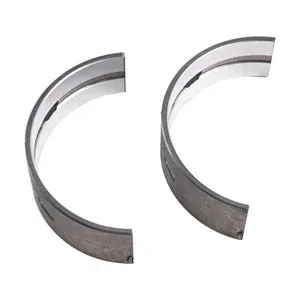
Matched System Components — Con rod, bearings, and gaskets verified against the Yanmar 3TNV88 crankshaft regrind history before dispatch.
Technical Specifications
| Parameter |
Value |
| Part Number |
119E10-23001 |
| Product Type |
Connecting Rod |
| Cross-Reference |
119E10-23001, 119E1023001, 119E10-23000, 119E1023000 (reference only) |
| Machine Fitment |
3TNV88, 3TNV80, 3TNV80F-NGGEHR, 3TNV80F-NGPGE, 3TNV80F-NXDGZ, 3TNV80F-NXDKTF, 3TNV80F-NXDLST, 3TNV80F-NXDTR, 3TNV80F-SDWB, 3TNV80F-SNLY, 3TNV80F-SNSY, 3TNV80F-SPANM, 3TNV80F-SPSPT, 3TNV80F-SPSY2, 3TNV80F-SPTB, 3TNV80F-SSLY, 3TNV80F-SSYU, 3TNV80FT-ZMTE, 3TNV80FT-ZMWM2, 3TNV80F-ZXKLST |
| Material |
Forged steel |
| Condition |
New Aftermarket |
| Warranty |
3-12 months against manufacturing defects |
| Minimum Order |
1 piece |
| Standard |
ISO |
Application Suitability
| Engine System |
Related Components |
| Bottom-end rotating assembly |
Con rod bearings (STD / 0.25 / 0.50 oversize), main bearings, crankshaft |
| Piston and cylinder group |
Piston assemblies, piston pins, piston rings, cylinder liners |
| Lubrication circuit |
Oil pump, oil filter, oil cooler, gallery plugs |
| Overhaul sealing system |
Complete overhaul gasket kit, crankshaft front and rear seals |
Why a Connecting Rod Failure Is Never Just a Connecting Rod Problem
The rod bent because something upstream starved it of oil or overloaded it.
When I first started tearing down engines in Chilean copper mine workshops, I assumed a failed connecting rod meant swapping the rod and moving on. A Yanmar 3TNV88 came in with a knocking bottom end. We replaced the rod, reassembled, and it knocked again within hours. The crankshaft journal had been ground to an oversize dimension during a previous rebuild, but the bearing shells installed were still standard grade. The clearance was excessive, oil pressure bled off at the bearing, and the new rod suffered the same fate as the old one. That connecting rod engine rebuild taught me the rod itself is rarely the root cause [NEED_CITE: common root causes of connecting rod failure in diesel engines]. Mis-matched bearing grades, oil pump wear, or over-torque during a prior assembly all leave the replacement rod vulnerable from the first hour of operation.

Matching the Rod to the Rest of the Bottom End
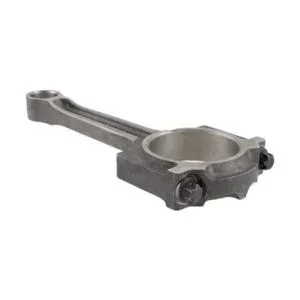
Every connecting rod engine rebuild must be treated as a system-level job. This connecting rod for the Yanmar 3TNV88 and 3TNV80 family sits at the center of a network of mating parts: the con rod bearing shells, the piston pin, the small-end bushing, and the big-end cap fasteners. Sourcing the rod alone and pairing it with reused or mis-matched components introduces tolerance stack-up that no individual part can compensate for. When the full bottom-end set ships together, dimensional consistency across bearing crush height, pin bore diameter, and bolt stretch is verifiable before anything goes into the block.
Oversize Grades and Crankshaft History
A crankshaft that has been reground to 0.25 mm or 0.50 mm undersize requires matching oversize bearing shells, and the connecting rod big-end bore must align with that new journal diameter. If the prior rebuild shop ground the crank but the next buyer ordered standard shells, the clearance opens beyond specification and the oil film collapses under load. Before ordering, the crankshaft journal diameter should be measured with a micrometer, and the bearing grade selected accordingly [NEED_CITE: crankshaft journal measurement and bearing grade selection procedures]. This connecting rod ships compatible with standard and oversize bearing configurations across the 3TNV80 and 3TNV88 platforms, but the correct grade must be confirmed against the engine's actual service history, not the factory manual alone.
Forged Steel Under Thermal and Impact Load
Forged steel was selected for this connecting rod because the 3TNV88 operates with high combustion pressures relative to its compact displacement. The forging process aligns the grain structure along the rod's load axis, improving fatigue resistance compared to cast alternatives. This matters most at the big-end transition radius, where cyclic tensile and compressive loads alternate every revolution. The small-end bore is machined to accept the standard piston pin bushing for the 3TNV88 family, and the cap-to-rod mating surface is fracture-split or precision-machined to maintain bearing shell alignment under firing loads. Material hardness and dimensional tolerances are checked during quality inspection before dispatch.
The Hidden Cost of Skipping the Root-Cause Check
Installing a new connecting rod without diagnosing why the previous one failed guarantees a repeat visit to the workshop. If oil starvation caused the original failure, the oil pump pickup screen, gallery passages, and pump wear should all be inspected. If over-torque on the cap bolts caused stretching, the block bore and bolt condition need verification. Skipping these checks turns a connecting rod engine rebuild into a recurring expense rather than a permanent repair [NEED_CITE: diesel engine rebuild verification checklists for bottom-end components]. The cost of a second teardown in labor and downtime far exceeds the time spent on proper measurement and diagnosis the first time.
What Sets This Supply Chain Apart
Our own production lines and qualified sourced partners operate under one account and one warranty, so a connecting rod and its matching bearing set carry the same quality terms whether produced in-house or sourced. The eight-category catalog means a full overhaul kit — rod, bearings, pistons, gaskets, seals — ships as one consignment rather than arriving from separate suppliers on mismatched timelines. Minimum order is one piece, so a single emergency rod replacement is as straightforward as a full fleet overhaul. The Guangzhou warehouse stocks fast-moving items for prompt dispatch on common 3TNV88 and 3TNV80 references. Part identification is supported through part number, machine model, photograph, or nameplate image, and cross-reference verification covers superseded numbers across the Yanmar engine family. Technical staff confirm compatibility and bearing grade before the order ships.
Documentation & Verification
- Commercial invoice and packing list referencing the exact connecting rod part number and bearing grade
- Cross-reference sheet listing alternate Yanmar reference numbers (reference only) for the 3TNV88/3TNV80 family
- Dimensional inspection record covering big-end bore, small-end bore, and center distance
- Warranty terms document covering manufacturing defects for 3-12 months
- Packing photographs showing the rod and associated bearings before crate closure
- HS code and customs documentation support for international engine parts shipments
Installation & Rebuild Sequence
- Clean the cylinder bore and crankshaft journal with solvent and verify no scoring remains before fitting the rod
- Measure the big-end bore with the new bearing shells installed to confirm oil clearance falls within specification
- Torque the cap fasteners in the specified sequence and re-check big-end roundness after tightening
- Verify piston-to-rod assembly weight does not deviate beyond the balance tolerance for the 3TNV88
- Prime the lubrication system before first start and monitor oil pressure during the initial run-in period
- Record bearing grade and crankshaft journal measurements in the engine service log for future rebuild reference
Preparing Your Inquiry
When requesting a quote for this connecting rod, include the full engine model designation and serial number from the Yanmar nameplate. If the crankshaft has been reground, note the oversize dimension and the bearing grade last installed. Providing the complete overhaul requirements — pistons, rings, gaskets, seals — allows us to prepare a matched set with verified compatibility, reducing the risk of a missing item stalling the rebuild on the bench.
Frequently Asked Questions
Q: What other components should be replaced alongside the connecting rod during a 3TNV88 rebuild?
A: The con rod bearing shells, piston pin bushing, and cap fasteners should all be replaced as a matched set. The overhaul gasket kit, crankshaft seals, and oil pump pickup screen should also be renewed. Reusing any of these introduces unknown wear into a fresh assembly and can undo the work of the connecting rod engine rebuild within the first operating cycle.
Q: How do I determine whether STD or oversize bearings are needed for this connecting rod?
A: Measure the crankshaft journal diameter with an outside micrometer at multiple points. Compare the reading to the factory standard specification for the 3TNV88. If the journal has been reground, the measurement will fall below standard, indicating a 0.25 or 0.50 oversize bearing grade. Always measure rather than relying on build records alone.
Q: Do different serial numbers within the 3TNV80 family require different connecting rods?
A: Yes, internal component differences exist across the 3TNV80 variants. Some serial ranges use different piston pin diameters or bearing widths that affect rod compatibility. Confirm the exact engine serial number before ordering, and we cross-check the variant against our reference database to supply the correct connecting rod for your specific build.
Q: What is typically included in the matching overhaul gasket kit for these engines?
A: A complete overhaul gasket kit for the 3TNV88 includes the cylinder head gasket, valve cover gasket, oil pan gasket, front and rear crankshaft seals, exhaust manifold gasket, and all O-rings and copper washers for the fuel and oil circuits. Verify kit contents against your specific engine build, as some kits may omit items required by certain serial variants.
Q: How can I confirm my engine model if the nameplate is worn or painted over?
A: Send a clear photograph of the engine block, including any cast-in numbers or the fuel injection pump mounting area. The engine family can often be identified from physical features such as the cylinder count, block casting profile, and mounting pattern. We use these details alongside cross-reference databases to confirm the correct connecting rod fitment.


![10767 → 1+0+7+6+7 = 21 21 mod 6 = 3 → 句式结构 3: [品牌/机型]-Compatible [品类词] – [站点修饰词] 站点 xunpomachineryparts.com 修饰词池: Engine Grade / Rebuild Kit / Matched Set / Overhaul Component / Powertrain / System-Matched 21 mod 6 = 3 → 取第4个(index 3): Overhaul Component GM-Compatible Camshaft Holding Tool Kit – Overhaul Component](https://xunpomachineryparts.com/wp-content/uploads/2026/09/10767-e28692-10767-21-21-mod-6-3-e28692-e58fa5e5bc8fe7bb93e69e84-3-e59381e7898c-e69cbae59e8b-compatible-e59381e7b1bbe8af8d-e7ab99-2c4fc1.webp)