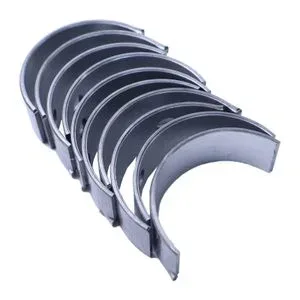
Matched Rebuild Set — Every cam bearing position ships as a verified thickness set, confirmed against the engine build code before dispatch so rebuild shops avoid head-off rework.
Technical Specifications
| Parameter |
Value |
| Part Number |
8973861890 |
| Product Type |
Camshaft Bearing |
| Cross-Reference (reference only) |
8-97386189-0, 8-97356939-0, 8973861891, 8976026990, 8943903110, 8943903111 |
| Engine Compatibility |
Isuzu 4HK1, 6HK1, 6HK1 TIER3, UM6HK1 |
| Condition |
New Aftermarket |
| Quality Standard |
ISO 9001 |
| Warranty |
3–12 months against manufacturing defects |
Application Suitability
| Engine System |
Related Components |
| Cylinder Block & Rotating Assembly |
Main Bearings, Con Rod Bearings, Thrust Washers |
| Top-End Overhaul |
Cylinder Head Gasket Set, Valve Stem Seals, Camshaft |
| Bottom-End Repair |
Crankshaft Main Bearings, Oil Pump Pickup Gasket |
| Lubrication Circuit |
Oil Pump Assembly, Oil Filter, Turbo Oil Feed Line |
| Complete Engine Rebuild |
Full Overhaul Gasket Kit, Piston Ring Set, Cylinder Liner Kit |
System Faults That Destroy a New Camshaft Bearing Set for Isuzu 4HK1 6HK1 Engine Rebuild
The bearing is rarely the root cause.
Rebuild shops often replace cam bearings only to have them fail again within the first hundred hours. In most cases, the failure originates from a system fault — low oil pressure, contaminated lubrication, or a blocked feed hole that starves the journal long before the bearing material itself is at fault. [NEED_CITE: diesel engine lubrication system root cause analysis for bearing failure]. Fitting a fresh camshaft bearing set for Isuzu 4HK1 6HK1 engine rebuild without diagnosing the upstream oil circuit means the new components enter service under the same starvation conditions that destroyed the originals.

Matching the Bearing Set to the Engine Build Code
A camshaft bearing set for Isuzu 4HK1 6HK1 engine rebuild must match the specific build code stamped on the engine dataplate. Variants such as 6HK1XZSA-01 and 6HK1XZSA01A carry different journal specifications and oil feed hole alignments, and a mismatch here means the bearing shell either blocks an oil passage or runs with excessive clearance from day one.
Grade Selection After a Previous Regrind
This is where most rebuilds go wrong on re-entry engines. If a previous shop reground the camshaft journals to an undersize, fitting a STD camshaft bearing set will leave excessive clearance and immediate knock on startup. The crankcase must be measured to confirm whether STD, 0.25, or 0.50 oversize shells are needed. [NEED_CITE: engine bearing grade selection after crankshaft or camshaft regrind]. Always verify the prior rebuild history — the grade last installed may not be the grade the engine left the factory with.
Reading the Spec Sheet for Fitment Tolerance
The wall thickness of each bearing shell determines the running clearance between the camshaft journal and the block bore. Consistent wall thickness across all positions in a matched set ensures uniform oil film development and prevents one journal from carrying a disproportionate share of the load. Material composition — typically a lead-tin-copper overlay on a steel back — governs conformability and embeddability, which define how well the bearing tolerates minor misalignment and particulate contamination during initial break-in. Oil feed hole alignment must be verified position-by-position against the block casting to ensure each journal receives pressurized lubrication from the main gallery.
The Rework Cost of a Grade Mismatch
When a rebuild shop installs a camshaft bearing set for Isuzu 4HK1 6HK1 engine rebuild in the wrong grade, the consequence is not a gradual problem — it announces itself at first startup. Excessive clearance produces an audible knock from the top end, while insufficient clearance generates rapid heat buildup and shell seizure. Either outcome means the cylinder head comes back off, the camshaft comes back out, and the engine bay stays occupied for another full teardown cycle. [NEED_CITE: cost of rework in heavy equipment engine overhaul due to incorrect bearing grade].
Supply Capability Backed by System Knowledge
Our own production lines and qualified sourced partners operate under one account and one warranty structure, so the camshaft bearing set ships alongside the overhaul gasket kit and main bearings without split accountability. Part identification works from the engine serial plate, a photograph of the old bearing shell, or the build code alone — useful when the dataplate is painted over or illegible. Cross-reference verification covers superseded Isuzu numbers so an older reference does not result in an incorrect set. Sample supply is available for fitment confirmation before you commit a bulk overhaul order. A technical team reviews grade, build code, and journal condition to prevent mismatched shipments.
Documentation & Verification
- Commercial invoice listing each bearing position and grade per engine build code
- Cross-reference sheet mapping OEM numbers (reference only) to supplied set contents
- Dimensional and wall-thickness inspection record included with every shipment
- Warranty terms covering manufacturing defects across the full matched set
- Packing photographs showing bearing shells sealed and labeled by position
Installation & Rebuild Sequence
- Verify block bore dimensions and camshaft journal condition before pressing in new shells.
- Confirm oil feed holes in each bearing shell align with the corresponding block gallery port.
- Apply clean assembly lubricant to all journal surfaces; never install dry.
- Check camshaft endplay with a dial indicator after torquing the retaining hardware.
- Prime the oil system and verify pressure at idle before loading the engine.
Request a Rebuild Quote
Provide your engine build code, engine serial number, and any known regrind history so we can confirm the correct grade and matched set composition. A photograph of the old bearing shell or the block casting number accelerates identification when the dataplate is unreadable.
Frequently Asked Questions
Q: What does an Isuzu 4HK1 / 6HK1 overhaul kit include alongside camshaft bearings?
A: A complete overhaul kit typically covers main bearings, con rod bearings, thrust washers, a full gasket set, piston rings, and cylinder liners. The camshaft bearing set is one component in that sequence — we supply it as part of a consolidated rebuild package so all internal tolerances and gasket interfaces match the same engine build code, avoiding partial shipments and re-teardowns caused by mismatched grades.
Q: How do I confirm STD versus oversize grade after a previous rebuild?
A: Measure the camshaft journal diameter with a micrometer and compare it against the Isuzu factory specification for your build code. If the journal was reground during a prior rebuild, it will measure below the STD minimum, indicating an oversize bearing shell is required. We can guide you through the measurement process if you provide the reading and engine serial number.
Q: Are camshaft bearings the same across all 6HK1 build codes like XASA, XZSA and XQA?
A: No. Build codes such as 6HK1XASA12A, 6HK1XZSA-01, and 6HK1XQA03 can differ in journal dimensions, oil feed hole positioning, and shell wall thickness. Ordering by build code rather than the generic 6HK1 label prevents receiving a set that physically fits but blocks an oil passage or runs outside the specified clearance band.
Q: What other engine system faults should I check before fitting new camshaft bearings?
A: Inspect the oil pump output pressure, check the turbo oil feed and drain lines for restriction, and verify the main oil gallery is free of sludge or debris. Contaminated lubrication or a partially blocked gallery will destroy new bearings rapidly. Addressing the root cause of the previous bearing failure is essential before the new set goes into service.
Q: Can I get a sample set for fitment confirmation before committing to a bulk overhaul order?
A: Yes. We supply sample camshaft bearing sets so rebuild shops can verify fitment, check oil feed hole alignment against their block casting, and confirm the grade before ordering in volume. This step eliminates the risk of discovering a mismatch mid-teardown when the engine is already on the bench.