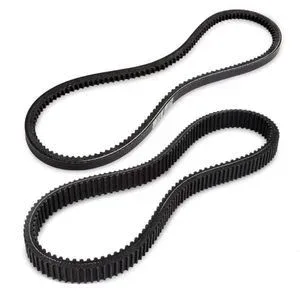
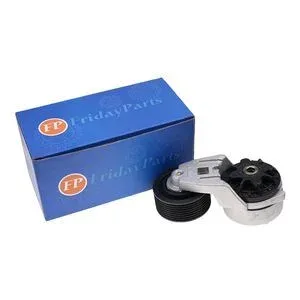
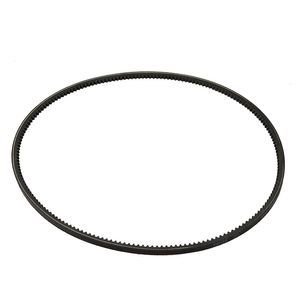
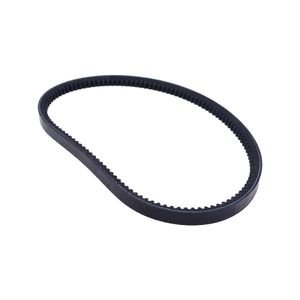
Matched Set Dispatch — Starter generator and drive belts ship together for EZGO 13HP Kawasaki engine overhauls, preventing split deliveries and mismatched wear patterns.
Technical Specifications
| Parameter |
Value |
| Part Number |
606136 606138 |
| Product Type |
Belt |
| Cross-Reference |
265-586, 265586, 606136, 606138, 16548G1 (reference only) |
| Machine Fitment |
EZGO RXV, TXT, Workhorse, ST (2008-up with 13 HP Kawasaki Engine) |
| Starter Generator Belt Width |
1/2" |
| Starter Generator Belt Outer Diameter |
35.5" |
| Drive Belt Width |
1" |
| Drive Belt Outer Diameter |
35" |
| Included Components |
1 x Starter Generator Belt, 1 x Drive Belt |
| Compatible Engine |
Kawasaki 13 HP |
| Condition |
New Aftermarket |
| Warranty |
3-12 months against manufacturing defects |
| Standards |
ISO factory certification |
Application Suitability
| Engine System |
Related Components |
| Starter / Charging Circuit |
Starter generator, voltage regulator, battery cables |
| Primary Drivetrain |
Drive clutch, driven clutch, torque converter sheaves |
| Accessory Drive |
Idler pulley, tensioner spring, pulley bearings |
| Engine Top End |
Cooling fan, flywheel, crankshaft keyway |
What a Rebuild Checklist Often Misses
The starter generator belt is frequently omitted from standard overhaul lists, leaving the charging system inoperative while the drivetrain runs.
In Shandong, working through warranty claims where parts fit the manual but not the actual engine, I have seen the same 606136 606138 Drive & Starter Belt engine rebuild replacement set ordered twice because the first shipment only covered the drive side. Rebuilds stall when the machine sits half-assembled on the bench waiting for the missing belt. Engine serial variants across EZGO model years mean pulley profiles change without the part number changing on the surface [NEED_CITE: engine serial variant documentation for Kawasaki 13HP in utility vehicles]. A matched set eliminates the mismatched lead time problem that splits a single repair into two freight cycles.

System Pairing: Why Both Belts Must Be Replaced Together
The starter generator belt maintains contact between the engine and the alternator to keep the battery charged, while the drive belt transmits engine torque to the drivetrain through the clutch system. When a Drive & Starter Belt engine rebuild replacement set arrives as a matched pair, both tension surfaces and power-transfer faces wear at the same rate. Installing a fresh drive belt against a glazed starter belt creates uneven load distribution across the crankshaft pulley, accelerating wear on the new component.
Engine Serial Variants and Dimensional Verification
Kawasaki 13HP engines installed in EZGO RXV, TXT, and Workhorse models may carry different pulley configurations depending on production batch and model year. The 1/2" width and 35.5" outer diameter of the starter belt, along with the 1" width and 35" outer diameter of the drive belt, must match the groove profiles currently on the engine — especially if pulleys were resurfaced or replaced during previous service. Confirming the exact engine serial number before ordering prevents receiving belts that are dimensionally close but functionally wrong [NEED_CITE: Kawasaki 13HP engine serial cross-reference for EZGO applications]. Belt failure often traces back to misaligned pulleys or seized idler bearings rather than the belt itself, making root-cause inspection essential before installation.
Dimensional Specifications and Their Functional Impact
The 1" drive belt width determines how much friction surface contacts the clutch sheave under load; a narrower belt slips earlier and generates excess heat. The 35" outer diameter must match the routing path defined by the idler and tensioner geometry — even a half-inch deviation causes improper tracking and edge fraying. The 1/2" starter generator belt width fits the alternator pulley groove precisely; too wide and it rides above the groove, too narrow and it bottoms out without sidewall grip. Both belts in this Drive & Starter Belt engine rebuild replacement set are manufactured to match the original equipment dimensional envelope for the specified Kawasaki 13HP applications. Material compound and cord construction are selected to handle the thermal and mechanical loads typical in golf cart fleet maintenance and resort utility vehicle operations.
The Cost of Wrong-Grade Belt Fitment
Ordering belts by machine model alone, without verifying the engine serial, leads to belts that seat loosely in the pulley grooves or fail to route around all idler points. The machine runs initially but throws the starter belt within hours of operation, returning the cart to the bench for a second teardown. Fleet operators running daily cycles absorb this as repeat downtime across multiple units, each incident requiring fresh labor and delayed revenue [NEED_CITE: fleet maintenance cost impact of repeat belt failures in utility vehicles]. A few minutes spent confirming the Kawasaki engine serial against the belt dimensions prevents the entire rework cycle.
Why Source This Belt Set Through XUNPO
XUNPO produces selected part lines in-house and sources the remainder from qualified ISO-certified manufacturing partners, so both channels carry the same quality control and warranty terms — whether you need one matched set or a bulk order for fleet stocking. Eight product categories under one account means tensioner springs, idler bearings, and pulley hardware ship in the same consignment as the belts. Minimum order starts from one piece for emergency single-unit repairs. The Guangzhou warehouse holds stock on common items for fast dispatch. Part identification works from a part number, machine model, photograph, or nameplate image, and cross-reference verification covers superseded and alternate numbers like 265-586, 265586, and 16548G1. A technical team is available for compatibility and grade confirmation before you commit to bulk.
Documentation & Verification
- Commercial invoice and packing list with line-item belt dimensions and quantities
- Part compatibility and cross-reference sheet marked reference only for 265-586, 606136, 606138, 16548G1
- Quality inspection record showing width and outer diameter measurement for both belts
- Warranty terms covering manufacturing defects for 3-12 months from dispatch
- Packing photographs documenting belt markings and condition before crate closure
- HS code and customs documentation support for international freight clearance
Installation & Rebuild Sequence
- Inspect all pulley grooves for glazing, nicks, or wear that would alter the effective belt seating depth before installing new belts.
- Verify idler bearing rotation and tensioner spring force, replacing any seized or weakened components in the same service event.
- Route the 35.5" starter generator belt first, confirming full engagement in the alternator and crankshaft pulley grooves before applying tension.
- Install the 35" drive belt second, checking that the clutch sheave movement is smooth and the belt tracks without lateral wander.
- Run the engine at idle for several minutes, then re-check belt tension and alignment after initial heat cycling and seating.
Request a Fitment-Verified Quote
Provide your EZGO model designation, the Kawasaki 13HP engine serial number, and any prior rebuild history so the correct belt dimensions are confirmed before dispatch. If pulley replacements or resurfacing occurred during earlier service, share those details to rule out dimensional mismatch. This ensures the Drive & Starter Belt engine rebuild replacement set you receive matches the engine as it currently sits, not just as it left the factory.
Frequently Asked Questions
Q: What other components should be inspected or replaced when changing these belts?
A: Beyond the belts themselves, check the idler pulley bearings for smooth rotation, the tensioner spring for adequate force, and all pulley grooves for wear or damage. Worn idler bearings or a fatigued tensioner spring will cause premature belt failure regardless of belt quality. Including these adjacent components in the same order prevents a second teardown within weeks.
Q: Do different EZGO model years with the same 13HP engine use identical belts?
A: Not necessarily. Kawasaki 13HP engines across EZGO RXV, TXT, Workhorse, and ST models may carry different pulley configurations depending on production year and engine serial. The belt dimensions — 1/2" by 35.5" for the starter and 1" by 35" for the drive — must be verified against the specific engine serial, not just the cart model badge.
Q: How can I tell if a prior rebuild changed the pulley sizes?
A: Compare the installed pulleys against factory service manual specifications for your engine serial. Resurfaced or aftermarket pulleys may have altered groove profiles that change effective belt seating. If the removed belts show unusual wear patterns — such as edge-only contact or bottoming out — the pulleys likely deviate from original dimensions and belt selection must account for that.
Q: Is it acceptable to replace only the drive belt and reuse the starter belt?
A: Technically possible but not recommended. A worn starter belt with hardened surfaces and reduced grip will place uneven load on the new drive belt through shared crankshaft pulley dynamics. Replacing both as a matched set ensures uniform wear progression and avoids returning to the bench for the second belt shortly after the first replacement.
Q: How do I confirm the correct belt set when the old belts have no readable markings?
A: Measure the removed belts for width and outer diameter, then cross-reference against the engine serial number rather than relying on faded print. A photograph of the routing path and pulley arrangement also helps the technical team verify whether your engine variant uses the standard 1/2" by 35.5" and 1" by 35" configuration or a different dimensional set.