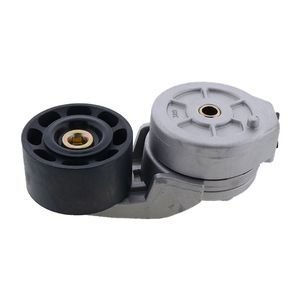
Matched Assembly — Belt and tensioner shipped as a verified set eliminates cross-component tolerance mismatch during Bobcat loader engine rebuilds.
Technical Specifications
| Parameter |
Value |
| Part Number |
7257359 |
| Product Type |
Belt & Belt Tensioner Assembly |
| Cross-Reference |
7257359, 3GM12110, 59CM835, 7CM12140, 7273503, 7196910, 7201887, 7273604, 6564692, 7152658, 53DM12, 7167165, 7274780, 7145358 (reference only) |
| Machine Fitment |
S510, S530, S550, S560, S570, S590, S595, T550, T590, T595 |
| Brand Compatibility |
Bobcat |
| Material |
EPDM with Aramid Fiber Reinforcement |
| Assembly State |
Belt & Tensioner Assembly (complete replacement set) |
| Condition |
New Aftermarket |
| Temperature Resistance |
up to 120°C |
| Standards |
ISO 9001 |
| Warranty |
3-12 months against manufacturing defects |
| MOQ |
1 piece |
Application Suitability
| Engine System |
Related Components |
| Belt drive and accessory drive |
Crankshaft pulley, idler pulleys, drive belt routing hardware |
| Cooling system drive |
Water pump pulley alignment, coolant hose clearance near belt path |
| Hydraulic pump drive |
Pump coupling condition, pump mount bolt torque verification |
| Alternator and charging circuit |
Alternator bracket integrity, wiring harness clearance from belt path |
| Engine auxiliary systems |
Fan shroud positioning, debris guard installation around belt compartment |
Why a Drive Belt & Tensioner Assembly Engine Replacement Demands System-Level Verification
Replacing the belt without its matched tensioner — or fitting components sourced from separate batches — is the leading cause of repeat belt drive failure within weeks of a rebuild.
In my years running parts supply across North American and Central Asian distributor channels, I have seen engine rebuilds compromised not by the major rotating assemblies but by belt drive components that arrived with mismatched tolerances. One Bobcat S550 overhaul returned to the shop twice because separately procured belt and tensioner units had incompatible spring rates, producing harmonic vibration that shredded the belt within operating hours. The cross-reference numbers associated with this assembly — including 7273503 and 7274780 — map to specific tensioner calibrations that must align with the belt compound and routing geometry [NEED_CITE: belt drive system harmonic resonance thresholds in compact diesel engines].
A Drive Belt & Tensioner Assembly engine replacement addresses this by supplying both elements as a factory-matched pair, so the spring force, pulley bearing preload, and belt tooth profile are verified together before dispatch.

The Belt Drive System Within the Engine Ecosystem
The belt drive system sits at the intersection of several critical engine auxiliary circuits. On Bobcat S-series and T-series loaders, this single belt path typically drives the water pump, alternator, and hydraulic pump coupling. When any one of these driven components develops bearing play or pulley runout, the resulting misalignment transfers load unevenly across the belt span, accelerating wear on both the belt cords and the tensioner spring. A Drive Belt & Tensioner Assembly engine replacement must therefore be evaluated alongside the condition of every pulley and bracket in the accessory drive circuit, not treated as an isolated wear item swap.
Engine Serial Variants and Tensioner Calibration Differences
Bobcat loaders within the S510 through S595 and T550 through T595 range have been produced across multiple engine serial generations, and the belt routing geometry can shift between production runs. A tensioner calibrated for an earlier engine build may apply insufficient damping force on a later variant with revised pulley spacing, resulting in belt flutter under hydraulic load. This is why confirming the engine serial number — not just the loader model — is essential before committing to a specific assembly [NEED_CITE: engine serial variant impact on accessory drive belt routing]. Rebuild shops that stock this assembly should cross-check the OEM reference list against the specific engine tag to avoid variant mismatch.
EPDM Compound and Aramid Reinforcement Under Thermal Load
The EPDM rubber compound used in this belt resists heat aging and ozone cracking far better than older chloroprene formulations, which is significant given the confined engine compartments of skid steer loaders where ambient temperatures regularly exceed standard passenger vehicle underhood levels. Aramid fiber reinforcement within the belt carcass provides tensile stability under the cyclic loading produced by hydraulic pump engagement — each time the loader lifts a bucket or drives into a pile, the hydraulic pump torque spike transmits a shock load through the belt span. The tensioner spring must absorb and release this energy without allowing the belt to slip or jump teeth on the driven pulleys [NEED_CITE: aramid reinforced EPDM belt performance in high-cycle hydraulic drive applications].
The Hidden Cost of Separately Sourced Belt Drive Components
When belt and tensioner are procured independently, the risk is not simply that one component fails early — it is that the interaction between mismatched components creates a failure mode that is difficult to diagnose. A tensioner with slightly higher spring pressure than the belt was designed for will overload the belt cord packages, producing internal delamination that shows no external symptom until catastrophic rupture. Conversely, an underspecified tensioner allows belt flutter that generates heat at the pulley contact surfaces, degrading the EPDM compound from the inside outward. In either scenario, the machine returns to the shop with a belt drive failure that the technician attributes to belt quality rather than system mismatch, triggering a warranty claim that does not address the root cause [NEED_CITE: belt drive failure root cause analysis methodology for mobile equipment].
Supply Chain Built Around Engine System Completeness
Our production and sourcing model covers selected part lines manufactured in-house alongside components from qualified ISO-certified partners, all carrying identical warranty terms — so this assembly ships under one accountability chain regardless of which facility produced each element. Eight product categories under a single account mean the belt drive assembly can dispatch alongside overhaul gasket sets, piston ring kits, and seal kits for the same engine rebuild, eliminating split freight and second orders. Minimum order from one piece supports both single-unit emergency repairs and distributor stocking programs. Cross-reference verification covers superseded and alternate numbers in the OEM reference list, catching cases where a parts catalog still lists a discontinued number that maps to this updated assembly. Technical confirmation of compatibility and tensioner grade is available against engine serial number before purchase commitment.
Documentation & Verification
- Commercial invoice listing matched belt and tensioner as single assembly line item
- Cross-reference sheet mapping all alternate part numbers with reference only designation
- Inspection record covering tensioner spring rate and belt dimensional compliance
- Warranty terms addressing both components as integrated assembly
- Packing photographs showing assembly condition before crate closure
- HS code classification support for customs clearance in destination market
Installation & Rebuild Sequence
- Verify crankshaft and idler pulley runout before fitting the new tensioner to prevent inherited misalignment
- Route belt per engine-specific diagram — routing errors on multi-pulley Bobcat engines cause immediate accessory drive failure
- Confirm tensioner arm travel and spring engagement before releasing the tensioning mechanism onto the belt
- Run engine at idle for initial break-in period, then recheck belt tracking and tensioner position under no-load condition
- Inspect belt alignment after first loaded operating cycle to confirm hydraulic pump engagement does not induce lateral drift
Requesting a Compatibility Confirmation
Provide the engine serial number from the identification tag, the loader model designation, and any previous rebuild documentation noting oversize grades or variant substitutions. If the existing belt or tensioner carries a legible part number, include a photograph of the stamping or label. This information allows our technical team to confirm which cross-reference in the OEM list applies to your specific engine build and verify the tensioner calibration matches your belt routing configuration.
Frequently Asked Questions
Q: Should the tensioner always be replaced with the belt, or can one be reused?
A: The tensioner spring loses damping force over service cycles, and reusing it with a new belt creates the same mismatch risk as separately sourced components. This assembly ships as a matched pair specifically because spring calibration and belt compound are selected together. Replacing both simultaneously eliminates the variable of worn tensioner preload from the failure equation.
Q: What adjacent belt drive components should be inspected during this repair?
A: Every idler pulley, the crankshaft pulley, and all mounting brackets in the belt path should be checked for bearing play and runout before the new assembly is installed. Misaligned or worn pulleys transfer uneven loading to the new belt and tensioner, producing premature failure that appears to be a parts quality issue but originates from adjacent component condition.
Q: How do engine serial variants affect belt routing and tensioner specification?
A: Production changes across Bobcat loader engine generations can alter pulley spacing, belt length requirements, and tensioner mounting geometry. Confirming the engine serial number — not just the machine model — ensures the correct variant is supplied. The cross-reference list for this assembly covers multiple OEM numbers that correspond to different engine build configurations.
Q: What failure symptoms indicate the tensioner rather than the belt is the root cause?
A: Belt flutter at idle, rhythmic chirping that changes with hydraulic load engagement, and uneven wear patterns across the belt width all point to tensioner damping deficiency rather than belt material failure. A belt that fails within weeks of installation without visible contamination or misalignment damage typically indicates the tensioner spring was no longer maintaining correct span tension.