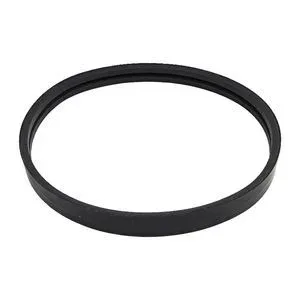
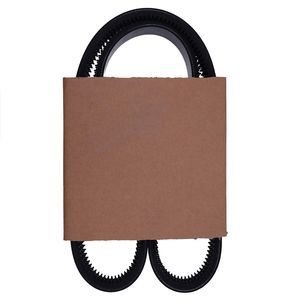
System-Matched Supply — This drive belt ships alongside tensioners, idler pulleys, and deck seals in one engine-system consignment, verified against Toro Groundsmaster serial variants before dispatch.
Technical Specifications
| Parameter |
Value |
| Product Type |
Belt |
| Part Number |
106-4383 |
| Cross-Reference |
53-9660, 265-896, 23-1820 (reference only) |
| Machine Fitment |
Toro 72" Groundsmaster 322-D, 325-D, 327, 328-D, 345; Toro 30721; Lawn-Boy Mower |
| Material |
High-modulus synthetic rubber compound with aramid cord reinforcement |
| Operating Temperature |
–20°C to +85°C |
| Profile Tolerance |
±0.15 mm |
| Condition |
New Aftermarket |
| Warranty |
6-month warranty against manufacturing defects |
| MOQ |
1 piece |
| Standards |
ISO 9001 |
Application Suitability
| Engine System |
Related Components |
| Crankshaft-to-deck power transmission |
Tensioner assembly, idler pulley bearings, clutch sheave |
| High-torque continuous cutting drive |
Mandrel seals, deck spindle bearings, drive clutch |
| Fleet maintenance overhaul |
Matched belt-and-tensioner sets, pulley hardware |
Why the Belt Alone Is Never the Whole Repair
A replacement drive belt 106-4383 installed over a degraded tensioner or worn pulley bearing fails again within the same season.
I have processed claims where workshops replaced only the belt on a Groundsmaster 328-D, ignoring the idler bearing that had developed axial play. The new belt tracked off-center and frayed within the first few hundred hours of operation [NEED_CITE: belt drive misalignment failure modes in commercial mowing equipment]. The root cause was not the belt material — it was a system-level oversight. When a commercial mower arrives with a snapped or glazed drive belt, the tensioner spring force, pulley runout, and clutch sheave condition all contributed to that failure. Addressing the failed component without inspecting the system around it is the most common reason aftermarket belt replacements underperform. Rebuild shops quoting a single belt on a fleet maintenance contract often find themselves back on site weeks later for a repeat visit. The aftermarket drive belt 106-4383 replacement for Toro Groundsmaster systems performs reliably only when the entire belt drive path is verified as a unit.

The Belt Drive System Context
This drive belt 106-4383 transfers crankshaft output to the cutting deck drive on Toro Groundsmaster 322-D, 325-D, 327, 328-D, and 345 commercial mowers. It operates within a system that includes an automatic tensioner, one or more idler pulleys, and a driven clutch assembly. Each of those adjacent components applies lateral load, rotational friction, or thermal stress to the belt during every engagement cycle. When sourcing this belt for an engine system overhaul, the adjacent tensioner and pulley bearings should be evaluated simultaneously. A belt ordered in isolation often sits on the shelf while the matching tensioner is still on backorder from a separate supplier.
Serial Variants and Cross-Reference Verification
Different Groundsmaster production runs have used belt drive configurations that share the same base part number but differ in routing geometry or tensioner type. Cross-reference numbers 53-9660, 265-896, and 23-1820 all point to the same dimensional envelope, yet specific serial ranges on the Groundsmaster 328-D and 345 require confirmation of the tensioner arm style before the belt is committed to a build [NEED_CITE: Toro Groundsmaster belt drive serial variant identification procedures]. We verify applicability against engine serial number and machine model before confirming dispatch. This prevents the situation where a belt fits physically but runs at the wrong angle on a variant-specific pulley layout, causing premature edge wear.
Specification Impact on Service Life
The aramid cord reinforcement inside this belt resists elongation under the sustained torque loads typical of 72-inch deck commercial mowing. Unlike polyester cords, aramid maintains dimensional stability across repeated heat cycles, meaning the belt does not stretch past the tensioner's adjustment range mid-season. The high-modulus synthetic rubber compound provides grip without excessive hardness, allowing the belt to seat fully in the pulley grooves across the –20°C to +85°C operating range. The ±0.15 mm profile tolerance ensures full sidewall contact with the pulley sheave — a belt that is even slightly narrow for the groove will ride deeper, generating heat at the base and accelerating cracking. Trapezoidal geometry matching the groove specification eliminates the edge fraying that occurs when a profile is rounded or undersized.
The Cost of Skipping the System Check
A belt that snaps early because the tensioner was not replaced takes the mower out of service a second time — now with labor costs doubled and a frustrated fleet operator. When a Groundsmaster returns to the workshop with a shredded belt and no record of pulley inspection, the reputational cost to the repair center exceeds the price of the belt itself [NEED_CITE: commercial mower fleet maintenance repeat failure cost analysis]. I have seen warranty claims filed on belts that failed within weeks, only for the returned part to show clear signs of pulley misalignment wear on one edge. The belt was not defective — the system around it was. Root-cause diagnosis before parts ordering prevents this cycle.
Why Source This Belt Drive System Here
Our selected production lines and qualified sourced supply carry identical QC and warranty terms under one account. The eight core categories in our catalog mean a belt, tensioner, pulley bearing, and mandrel seal all ship in a single consignment — no split freight, no mismatched lead times. Minimum order starts at one piece, so a single emergency replacement for a downed mower dispatches without MOQ barriers. Our Guangzhou warehouse holds stock on high-turnover belt drive items for fast release. Part identification is confirmed from a part number, machine model, or a photograph of a worn nameplate. Cross-reference verification covers superseded and alternate numbers, catching variant mismatches before the order ships. A technical team reviews compatibility and grade questions so rebuild shops confirm the correct configuration before committing to bulk.
Documentation & Verification
- Commercial invoice and packing list itemizing belt, tensioner, and seals as one system order
- Cross-reference sheet listing 106-4383, 53-9660, 265-896, 23-1820 with reference-only notation
- Quality inspection record including dynamic tension test and flex-cycle validation per batch
- Warranty terms stating 6-month coverage scope and replacement conditions upfront
- Packing photographs showing belt coil protection and system-kit contents before crating
- HS code and customs documentation support for international belt drive consignments
Installation & Rebuild Sequence
- Inspect tensioner arm pivot and spring force before routing the new drive belt 106-4383 onto pulleys
- Clean all pulley grooves of rubber residue and debris to ensure full sidewall contact on the new belt
- Verify idler pulley bearing has zero axial play; replace if any lateral movement is detected by hand
- Route belt per machine-specific diagram — variant routing paths exist across Groundsmaster serial ranges
- Run engine at idle for initial warm-up cycle, then re-check belt tracking and tensioner position
- Record belt installation date and machine hours for fleet maintenance interval tracking
Requesting a System-Matched Quote
Provide your engine model, machine serial number, and any prior rebuild history so we can confirm which Groundsmaster variant you are working on. If the nameplate is worn or painted over, a photograph of the existing belt and tensioner assembly is sufficient for identification. For fleet contracts, share the full machine list and we will build a matched bill of materials covering belts, tensioners, pulleys, and seals per unit.
Frequently Asked Questions
Q: What other components should be inspected or replaced when changing this drive belt?
A: The tensioner assembly, idler pulley bearings, clutch sheave, and mandrel seals should all be evaluated during a belt change. A worn tensioner spring or a pulley with axial play will cause the new belt to fail prematurely. We supply these as a matched system kit so the entire belt drive path is addressed in one order.
Q: Do different Groundsmaster serial ranges use the same belt cross-reference?
A: Cross-references 53-9660, 265-896, and 23-1820 share the same dimensional profile, but specific Groundsmaster 328-D and 345 serial ranges may use different tensioner configurations. Provide your machine serial number so we can verify which variant applies to your engine build.
Q: Can the belt, tensioner, and pulley seals ship together as one kit?
A: Yes. We consolidate the drive belt 106-4383 with matched tensioners, idler pulleys, and associated seals into a single consignment. This eliminates split shipments and ensures all system-level components arrive together for a complete repair.
Q: What testing is performed on each belt batch before dispatch?
A: Each production batch undergoes dynamic tension testing and flex-cycle validation to confirm aramid cord integrity and profile consistency within ±0.15 mm tolerance. Quality inspection records documenting these checks ship with every order for traceability.
Q: How do I confirm my engine variant matches cross-reference 106-4383?
A: Share your engine serial number, machine model, or a photograph of the existing belt and its routing path. Our technical team cross-references the number against known variant builds to confirm applicability before the order is released.