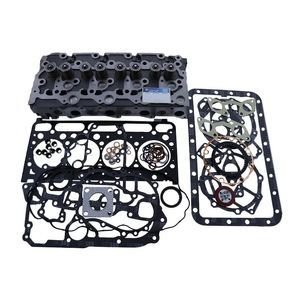
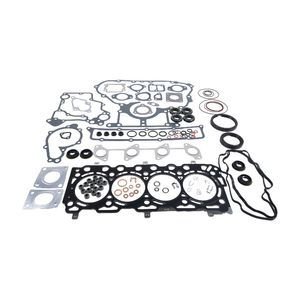
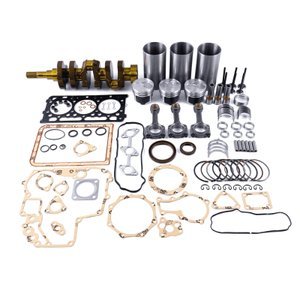
Matched Cylinder Head — Each D1305 variant confirmed by engine serial suffix before the head leaves our Guangzhou warehouse, preventing combustion chamber volume mismatches during Kubota D1305 engine rebuild projects.
Technical Specifications
| Parameter |
Value |
| Part Number |
KEACK-1G900, 1G188-03028, 1G188-03040, 1G188-03042, 1G188-03044, 1G700-03040, 1G700-03043, 1G700-03044, 1G700-03045, 1G900-03028, 1G900-03042, 1J062-03020 |
| Product Type |
Cylinder Head |
| Cross-Reference |
1G188-03028, 1G188-03040, 1G700-03040, 1G900-03028, 1J062-03020 (reference only) |
| Machine Fitment |
B7610, B2100, B26, B2620, B2410, F2400, F2560E, F2680E, F2880E, FZ2400, RTV1100, RTV1140CPX, ZD28, ZD326HL, ZD331 |
| Engine Compatibility |
D1305, D1305-B, D1305-3B, D1305-E3B, D1305-E4B and specific application suffixes |
| Material |
High-silicon aluminum alloy (A380 equivalent) |
| Dimensional Stability |
Up to 220°C |
| Valve Seat Insert Hardness |
45–48 HRC |
| Combustion Chamber Surface Finish |
Ra ≤ 1.6 μm |
| Bolt-hole Thread Tolerance |
ISO 5211 standards with ±0.05 mm pitch tolerance |
| Hydrostatic Pressure Test |
1.5× rated system pressure (12 bar) |
| Condition |
New Aftermarket |
| Warranty |
6 months against manufacturing defects |
| MOQ |
1 piece |
| Standards |
ISO 9001, ISO 8502-3, ISO 5211 |
Application Suitability
| Engine System |
Related Components |
| Cylinder Assembly & Valve Train |
Head gasket set, valve stem seals, valve seat inserts, head bolts |
| Cooling & Thermal Management |
Thermostat, coolant passages, water pump interface gasket |
| Fuel Delivery & Injection |
Injector sleeves, return line fittings, combustion chamber geometry |
| Emission & Exhaust |
Exhaust manifold studs, port surface finish, gasket sealing face |
Why the Same Part Number Ships in Four Variants
A cylinder head for Kubota D1305 engine rebuild must be matched to the exact engine serial suffix, not just the base model designation.
I have pulled cylinder heads off D1305-3B engines where the combustion chamber volume differed measurably from a standard D1305 casting, even though both carried similar base identifiers. Ordering by the base number alone risks compression ratio anomalies, poor cold-start behavior, or excessive cylinder pressure that damages the bottom end within hours. [NEED_CITE: Kubota D1305 engine serial variant identification and combustion chamber geometry differences] The D1305 family spans industrial, turf, and utility vehicle applications, each with specific port layouts, valve sizes, and bolt patterns that are not interchangeable despite sharing a common block architecture.

Identifying Your Exact D1305 Variant Before Ordering
The D1305 family includes the base D1305, D1305-B, D1305-3B, D1305-E3B, and D1305-E4B, plus application-specific suffixes like HQV-1, JLG-1, and MRG-1. Each variant may use a different cylinder head for Kubota D1305 engine rebuild due to changes in valve train geometry, cooling passage routing, or emission compliance requirements. A head that physically bolts on can still produce incorrect compression or fail to seal if the internal port dimensions do not match the block's deck configuration.
Rebuild History and Dimensional Grade Verification
Engines that have been rebuilt previously may require oversize or undersize components, and the head gasket thickness must match the current deck height and piston protrusion. If the block was surfaced during a prior overhaul, a standard-thickness gasket may no longer provide correct compression. We verify the required grade against your rebuild history before shipping the cylinder head and matched gasket set together. [NEED_CITE: engine rebuild oversize component selection and head gasket thickness grading standards]
Reading the Specifications That Matter
The high-silicon aluminum alloy construction maintains structural integrity at sustained operating temperatures, resisting the thermal cycling fatigue that cracks conventional castings near the injector bore or between valve seats. The Ra ≤ 1.6 μm combustion chamber surface finish ensures proper head gasket sealing without relying on excessive clamp load, which can distort the deck on aluminum blocks. Valve seat inserts at 45–48 HRC resist recession under sustained load, a common failure point when softer materials are used in high-duty-cycle applications like commercial mowers and utility vehicles.
The Hidden Cost of Skipping Variant Verification
Installing a cylinder head that matches the base engine family but not the specific suffix variant leads to compression loss, misfires, or coolant seepage at the deck joint. The machine may run well enough for a few hours before the symptoms appear, forcing a second teardown that doubles labor cost and extends downtime well beyond the original repair window. [NEED_CITE: cylinder head mismatch consequences in small diesel engine rebuilds] Root-cause analysis often reveals that the original head failed due to a cooling system fault or sustained overload, and replacing the head without addressing the underlying thermal issue invites a repeat failure on the new casting.
Why Source This Cylinder Head Here
Our technical team verifies the D1305 variant against your engine serial number and rebuild documentation before the head ships, catching mismatches that generic cross-reference tables miss. We supply the matched head gasket, valve seals, and fasteners in the same consignment so the top-end rebuild proceeds without waiting on a second delivery. Guangzhou warehouse stock on common D1305 variants allows fast dispatch for urgent overhaul schedules. Quality inspection records include hydrostatic pressure test results and surface flatness measurements for every head. Samples are available for fitment confirmation before you commit to a bulk overhaul kit order.
Documentation & Verification
- Commercial invoice listing exact D1305 variant suffix and matched component part numbers
- Cross-reference sheet confirming interchange with Kubota reference numbers (reference only)
- Quality inspection record with hydrostatic test data and deck flatness measurement
- Warranty documentation covering manufacturing defects for six months from delivery
- Packing photographs showing head protected against transit damage and port contamination
- HS code and customs documentation for international overhaul kit shipments
Installation & Rebuild Sequence
- Clean deck surface thoroughly; verify flatness before placing the new cylinder head
- Install matched head gasket at correct thickness grade; do not reuse prior gasket
- Torque head bolts in sequence to specification; re-torque after initial heat cycle
- Verify valve train geometry and injector protrusion before installing intake and exhaust manifolds
- Run initial break-in at moderate load; monitor coolant temperature and compression readings
Request a Matched Overhaul Quote
Provide your engine serial number, the specific D1305 suffix from the nameplate, and any prior rebuild documentation so we can confirm the correct cylinder head variant and matched gasket grade. If the nameplate is worn, send a photograph of the block casting number and we will cross-reference the build variant.
Frequently Asked Questions
Q: What does a complete D1305 overhaul kit include alongside the cylinder head?
A: A complete top-end kit typically includes the cylinder head, matched head gasket at the correct thickness grade, valve stem seals, valve seat inserts if required, head bolts, and intake/exhaust gaskets. We verify kit contents against your specific D1305 variant to ensure no components are missing for your engine build.
Q: How do I identify which D1305 variant my engine is when the nameplate is unreadable?
A: Send photographs of the block casting number, the injector pump mounting configuration, and any visible serial stamps on the block or flywheel housing. Our team cross-references these details against known D1305 variant production records to confirm the correct cylinder head and gasket configuration.
Q: My engine was rebuilt before — how do I know if I need a different gasket thickness?
A: Provide the rebuild documentation or photographs showing the current piston protrusion and deck surface condition. If the block was machined during a prior overhaul, a non-standard gasket thickness may be required to maintain correct compression ratio and valve clearance.
Q: What system fault should I check to prevent the new cylinder head from failing the same way?
A: Common root causes include restricted coolant flow from a failing water pump or clogged radiator, sustained overload beyond the engine's rated duty cycle, or injector spray pattern degradation causing localized hot spots. Address these before installing the new head to avoid repeat thermal fatigue cracking.