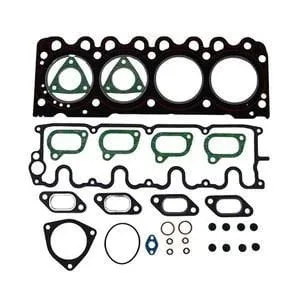
Matched Set Dispatch — Four-piece bolt kits ship alongside head gaskets and valve seals in a single verified consignment for Deutz top-end rebuilds.
Technical Specifications
| Parameter |
Value |
| Part Number |
04151904 |
| Product Type |
Cylinder Head Bolt |
| Cross-Reference |
04151904, 4151904, 2101681 (reference only) |
| Machine Fitment |
BF4L913, BF6L913, F3L912, F3L912W, F4L912, F5L912, F6L912 |
| Brand Compatibility |
Designed to replace Deutz fasteners |
| Quantity per Package |
4 PCS |
| Material Grade |
High-strength alloy steel |
| Warranty |
3-12 months against manufacturing defects |
| Minimum Order |
1 piece |
| Certification |
ISO-Certified manufacturing |
Application Suitability
| Engine System |
Related Components |
| Top-end overhaul assembly |
Head gasket set, valve stem seals, injector sleeves |
| Cylinder head removal service |
Valve cover gasket, thermostat housing seal, rocker arm shaft |
| Mid-life engine inspection |
Head bolt torque check, deck surface flatness verification |
| Complete engine rebuild |
Main bearing set, piston ring kit, crankshaft seal kit |
Why Head Bolt Grade Matters in a Deutz Rebuild
The wrong fastener grade undoes every other precision step in a top-end job.
When a Deutz 912 or 913 series engine comes in for its second or third rebuild, the block deck may have been machined previously, changing the clamp load geometry. Ordering cylinder head bolts without confirming the engine serial variant and prior rebuild history leads to torque-to-yield fasteners that either stretch beyond specification or fail to achieve adequate clamping force. The result is a head gasket that weeps combustion gases within the first hundred hours — not because the gasket was defective, but because the bolt specification did not match the actual assembled stack-up [NEED_CITE: Deutz 912/913 cylinder head torque sequence and bolt reuse policy].

Where Head Bolts Sit in the Top-End System
A cylinder head bolt engine rebuild depends on every interface in the clamped joint: the block deck surface, the head gasket type, the cylinder head casting, and the fastener itself. These bolts are the single component that holds the entire combustion seal together under thermal cycling. On Deutz air-cooled and liquid-cooled 912/913 variants, the thermal expansion rates differ between the cast iron block and the aluminum or iron head, placing cyclic shear loads on each fastener every time the engine reaches operating temperature and cools back down. Replacing them as a matched set — not reusing stretched originals — is the only way to guarantee uniform clamp load across all cylinders.
Serial Variants and Prior Rebuild History
The same base engine model can ship with different bolt specifications depending on production year and whether the block has been decked in a previous overhaul. A BF6L913 that has already been through one rebuild may require a different head bolt length or torque specification than a first-time teardown. This is where providing the engine serial number and any known rebuild history becomes essential before the fastener kit ships. Cross-reference verification across superseded numbers — 04151904, 4151904, and 2101681 (reference only) — ensures the correct variant reaches the bench, rather than a generic substitute that may not achieve the required clamp load on a machined deck surface [NEED_CITE: engine rebuild fastener specification after block deck machining].
Reading the Specifications That Matter
The high-strength alloy steel construction of these fasteners is specified to withstand the tensile loads generated during torque-to-yield installation. The four-piece packaging aligns with per-cylinder fastener counts on certain Deutz configurations, though complete top-end jobs typically require multiple sets depending on cylinder count. Material grade directly governs the torque angle specification: a bolt with insufficient tensile rating will yield before reaching the target clamp load, while an over-specified fastener may strip threads in an aluminum head. The 3-12 month warranty covers manufacturing defects in dimensional accuracy and material integrity, which are verified during quality inspection before dispatch.
The Cost of a Mismatched Fastener Set
A cylinder head bolt that is dimensionally correct but graded for a different rebuild condition creates a hidden failure point. The head gasket seals initially, passes a cold pressure test, and then begins to leak under thermal load because one or more bolts cannot sustain the required clamp force. The engine comes back to the shop with a misdiagnosed gasket failure, the head is pulled again, and the actual root cause — the fastener — is overlooked. This cycle of repeat teardowns is the most expensive outcome in engine rebuild work, because the labor cost of a second head removal far exceeds the cost of verifying the bolt specification before the first assembly [NEED_CITE: cylinder head gasket failure root cause analysis in diesel engines].
What This Supply Channel Delivers
Production on selected fastener lines and qualified sourced supply operate under one account with identical quality control and warranty terms, so a head bolt kit ordered alongside a piston ring set carries the same verification standard. Eight product categories mean the head bolts, gasket set, valve stem seals, and injector sleeves for a complete top-end job ship in one consignment — no second order waiting on a different supplier's lead time. Minimum order from one piece covers the emergency single-engine repair as well as the fleet overhaul program. Part identification works from the number, the engine model, or a photograph of the nameplate when the stamped markings are worn. Cross-reference verification covers superseded and alternate numbers so the correct variant ships even when the original part number has been updated. Sample supply is available for fitment confirmation before a bulk commitment on a multi-engine rebuild contract.
Documentation & Verification
- Commercial invoice and packing list referencing each bolt set by part number and engine application
- Compatibility and cross-reference sheet for 04151904, 4151904, 2101681 marked as interchange reference only
- Dimensional inspection record covering thread pitch, underhead radius, and overall length
- Warranty terms specifying coverage period against manufacturing defects
- Packing photographs showing bolt sets sealed and labeled before crate closure
- HS code and customs documentation support for international fastener shipments
Installation & Rebuild Sequence
- Clean block deck and head bolt holes thoroughly before installation to ensure accurate torque readings on the 04151904 fasteners
- Apply specified thread lubricant to bolt threads and underhead contact surface per Deutz service manual procedure
- Follow the manufacturer's staged torque sequence — initial torque, then angle turn — to achieve uniform clamp load across all cylinders
- Verify bolt stretch or final torque angle against specification; replace any fastener that exceeds yield limit during tightening
- Document installed bolt set part number and engine serial in rebuild record for future service reference
Requesting the Correct Fastener Kit
Provide the Deutz engine model designation and serial number so the correct bolt variant can be confirmed against the build record. If the engine has been rebuilt before, share any known history of block decking or head machining so the fastener length and grade can be adjusted accordingly. For complete top-end overhaul planning, include the full component list so the bolt kit ships matched with the corresponding gasket set and adjacent hardware.
Frequently Asked Questions
Q: What other components should be replaced together with cylinder head bolts during an overhaul?
A: A complete top-end job typically includes the head gasket set, valve stem seals, valve cover gasket, and injector sleeves or copper washers. On Deutz 912 and 913 series engines, the thermostat housing seal and any fuel line sealing washers disturbed during head removal should also ship in the same consignment to avoid a second order delay.
Q: How do I confirm the correct bolt specification if my engine has been rebuilt before?
A: Provide the engine serial number and any available rebuild records. A previously decked block changes the required clamp geometry, and the fastener specification must account for that material removal. Our technical team cross-references the serial against build variants to confirm the correct length and grade before dispatch.
Q: Are these bolts compatible with both 912 and 913 series Deutz engines?
A: The 04151904 fastener is listed for both 912 and 913 series applications including F3L912, F4L912, F6L912, BF4L913, and BF6L913. However, serial-level verification is recommended because production variants within the same model family may require a different specification depending on the head casting and block configuration.
Q: What is included in a complete top-end overhaul kit alongside head bolts?
A: Beyond the cylinder head bolts, a matched top-end kit covers the head gasket, valve cover gasket, valve stem seals, and any O-rings or sealing washers for components removed during head disassembly. We consolidate these items into one shipment under a single part compatibility sheet for traceability.
Q: How do I verify my Deutz engine serial number for accurate part matching?
A: The serial number is typically stamped on the engine nameplate or directly on the block. If the nameplate is worn or painted over, a clear photograph of the stamping area allows our team to read the number and cross-reference it against the correct fastener specification for your specific build variant.