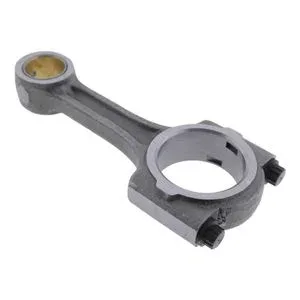
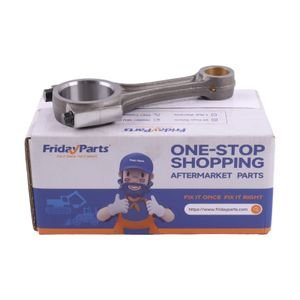
Matched Set Dispatch — every connecting rod ships with cross-reference verification against your specific Kubota engine serial number, ensuring oversize grade and bearing compatibility before the crate leaves Guangzhou.
Technical Specifications
| Parameter |
Value |
| Part Number |
17311-22014 |
| Product Type |
Connecting Rod |
| Cross-Reference (reference only) |
1731122014, 17311-22012, 17311-22013, 17331-22010 |
| Machine Fitment |
Kubota D1403, D1703, D1803, V1903, V2003, V2203 series engines and associated excavators, tractors, generators |
| Condition |
New Aftermarket |
| Warranty |
3-12 months against manufacturing defects |
| Production Standard |
ISO (sourced from ISO-certified factories) |
| Oversize Availability |
STD, 0.25, 0.50 (confirm based on crankshaft journal condition) |
Application Suitability
| Engine System |
Related Components |
| Kubota D1403 / D1703 / D1803 bottom end |
Con rod bearings, main bearings, piston assemblies, overhaul gasket kit |
| Kubota V1903 / V2003 / V2203 rotating assembly |
Thrust washers, crankshaft seals, oil pump, cylinder liner if scored |
| Single-cylinder repair on multi-cylinder blocks |
Matched piston pin, circlips, rod bolt set, bearing shells in correct grade |
| Engine rebuild shop stock for D/V-series platforms |
Complete overhaul kits, valve train components, fuel system seals |
Why the Same Part Number Ships in Different Variants Across Kubota Serial Ranges
A single Connecting Rod engine rebuild order can fail fitment if the superseded number or engine serial variant is not verified before dispatch.
I have seen overhaul kits arrive at a workshop only for the technician to find the connecting rod bushing bore is slightly off for that specific D1803 build, or the crankshaft journal had been reground to 0.50 on a previous rebuild but the new rod bearings were ordered in STD. These mismatches are not supplier errors in the traditional sense — they are the result of copied cross-reference tables that do not account for production splits within the same engine family. A Connecting Rod overhaul replacement for a D1703 built in one year range may share the base number 17311-22014 with a V2003 variant, yet the big-end bore tolerance or bolt specification differs enough to cause premature bearing distress [NEED_CITE: Kubota D/V-series engine serial number variant identification procedures].
System-Level Matching: The Rod Does Not Work Alone
This connecting rod sits at the heart of the Kubota D/V-series bottom end. When one rod shows fatigue, scoring on the big-end journal, or a bent beam, the root cause often traces back to lubrication starvation, a failing oil pump, or debris ingestion through a breached air filter. Supplying the rod without reviewing the adjacent system components means the new part enters the same hostile environment that destroyed the previous one. We pair each Connecting Rod engine rebuild order with the correct con rod bearing shells, matched piston assemblies, and a full overhaul gasket kit so the entire bottom-end job goes together with verified clearances.
Oversize Grade and Previous Rebuild History
Crankshaft journals on Kubota D1703 and V2203 engines are frequently reground during a second or third overhaul cycle. If the crankshaft is now at 0.25 undersize but the Connecting Rod overhaul replacement arrives with STD bearings, assembly clearance will be excessive and the engine will knock within hours of startup. Our process requires the buyer to confirm crankshaft journal measurements — or at minimum, the oversize grade stamped on the old bearing shells — so the correct grade ships with the rod [NEED_CITE: engine crankshaft journal regrind standards and oversize bearing selection]. We also verify whether your engine serial falls within a range where the rod bolt thread specification changed, preventing a torque-angle mismatch during reassembly.
Dimensional Verification and Tolerance Stack-Up
The big-end bore diameter, small-end bushing inner diameter, and center distance between bore axes are the three critical dimensions on any connecting rod. On Kubota D1403 through V2203 platforms, these dimensions determine oil film thickness at the crankpin and piston-to-valve clearance at top dead center. Our quality inspection record includes actual measured values for these three parameters, not just pass/fail stamps. The connecting rod must also be checked for bend and twist — a rod that is marginally bent will load one side of the bearing shell, causing localized wear that mimics a lubrication fault. ISO-certified sourcing ensures the forging grain flow aligns with the rod beam axis, giving predictable fatigue life under the cyclic compression and tension loads of diesel combustion.

The Cost of a Grade Mismatch Discovered After Teardown
Shipping a STD-grade connecting rod and bearing set to an engine whose crankshaft was previously ground to 0.50 means the workshop discovers the error only after the sump is off, the pistons are out, and the block is on the stand. The machine remains down while the correct parts are sourced, and the labor already spent on teardown and cleaning is wasted. In fleet operations where multiple Kubota-powered excavators or tractors are being overhauled in sequence, one mismatched rod can shift the entire rebuild schedule [NEED_CITE: heavy equipment engine overhaul labor cost and downtime impact]. This is why we treat oversize grade confirmation as a hard gate before any Connecting Rod engine rebuild order leaves the warehouse.
Why Rebuild Shops Source the Full Bottom-End Set From One Account
Our Guangzhou warehouse stocks connecting rods for the Kubota D and V series alongside matched bearing shells, piston sets with rings and pins, thrust washers, and complete overhaul gasket kits. Selected lines are produced in our own facility; the remainder is sourced from qualified ISO-certified manufacturing partners, and both carry identical QC and warranty terms. We confirm engine serial numbers against cross-reference tables that include superseded numbers like 17311-22012, 17311-22013, and 17331-22010, so variant differences are resolved before packing. Minimum order is one piece, so a single emergency rod for a downed excavator ships with the same verification as a bulk set for an engine rebuild shop. Our technical team reviews the fault that caused the original failure — not just the failed part — and recommends system-level checks such as oil pump pressure, cooler condition, and injector leak-back before the new rod goes in.
Documentation & Verification
- Commercial invoice and packing list itemizing each connecting rod and matched bearing set by engine serial
- Part compatibility and cross-reference sheet showing 17311-22014 interchange with 17311-22012, 17311-22013, 17331-22010 (reference only)
- Quality inspection record with measured big-end bore, small-end bushing ID, and center distance
- Warranty terms covering manufacturing defects for 3-12 months from dispatch date
- Packing photographs showing rod protection and bearing grade labels before crate closure
- HS code and customs documentation support for international engine parts shipment
Installation & Rebuild Sequence
- Clean cylinder block and crankshaft thoroughly; verify journal measurements match the oversize grade of the new connecting rod bearings
- Install new bushing in the small end if supplied separately; ream to piston pin clearance specified for your Kubota engine serial
- Assemble piston to connecting rod with correct orientation marks aligned; install piston pin and circlips
- Fit bearing shells to rod and cap; check oil hole alignment with crankshaft drill passage before torquing rod bolts to specification
- Rotate crankshaft by hand after each rod is installed to confirm free movement without binding
- Prime lubrication system before first start; monitor oil pressure and listen for knock during initial run-in period
Requesting a Matched Quote for Your Overhaul
Provide your Kubota engine model, serial number, and any previous crankshaft regrind information so we can confirm the correct oversize grade and variant-specific fitment for this Connecting Rod engine rebuild. If the nameplate is unreadable, a photograph of the old rod, the bearing shell stamping, or the engine block casting number allows our technical team to cross-reference the correct set. Include the full list of components you need for the overhaul — rods, bearings, pistons, gaskets, seals — and we will quote the entire bottom-end job as one consignment with consolidated documentation.
Frequently Asked Questions
Q: What else does a complete Kubota D1703 overhaul kit include?
A: Beyond the connecting rod, a complete kit typically covers con rod bearing shells, main bearings, thrust washers, piston assemblies with rings and pins, cylinder liners if required, a full gasket set, crankshaft seals, and an oil pump kit. We match every item to your engine serial number so all components arrive in the correct oversize grade and variant specification.
Q: How do I confirm the correct oversize grade after a previous crankshaft regrind?
A: Measure the crankshaft journal diameter with a micrometer, or check the oversize stamp on the old bearing shells — common grades are STD, 0.25, and 0.50. Share these measurements with our technical team when ordering, and we will supply the connecting rod and bearing set in the matching grade to restore correct oil film clearance.
Q: Are connecting rods interchangeable between D1703, D1803, V1903, V2003, and V2203 variants?
A: The base number 17311-22014 appears across several Kubota engine families, but variant differences in big-end bore tolerance, bolt thread specification, or rod beam weight can exist between production runs. We verify your specific engine serial number against our cross-reference table before dispatch to confirm the rod is correct for your build.
Q: What system conditions should I check to prevent the new rod from failing prematurely?
A: Investigate oil pump pressure and flow, oil cooler integrity for signs of coolant ingress, air filter and intake tract condition, and injector leak-back rates. Lubrication starvation or coolant contamination in the oil are common root causes of connecting rod bearing distress that will recur if not corrected during the rebuild.
Q: How do I verify my engine serial number when the nameplate is unreadable?
A: Locate the serial stamp on the engine block — typically on the side of the block near the flywheel housing or on a machined pad near the injection pump. A clear photograph of this stamp, along with any casting numbers on the old connecting rod or bearing shell, allows us to confirm the correct variant for your order.