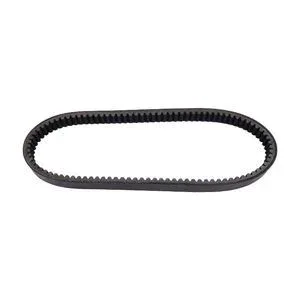
Matched Set Dispatch — Clutch drive belt ships with verified tensioner and pulley cross-references so the Yanmar 3TNV70 system goes back together without missing hardware.
Technical Specifications
| Parameter |
Value |
| Part Number |
M174096 |
| Product Type |
Belt |
| Cross-Reference |
M158189, M173005, UC33933, 31C4573 (reference only) |
| Machine Fitment |
825i, 825i S4, 825E, 825M, 835E, 835M, 835R, 855D, 855D S4, 855M, 855M S4, 865E, 865M, 865R |
| Brand Compatibility |
John Deere Gator XUV |
| Compatible Engine |
Yanmar 3TNV70 |
| Part Name |
Clutch Drive Belt |
| Condition |
New Aftermarket |
| Warranty |
3–12 month warranty against manufacturing defects |
| Quality Standard |
ISO 9001 |
Application Suitability
| Engine System |
Related Components |
| Clutch drive circuit — primary power transfer between Yanmar 3TNV70 output shaft and transmission input |
Drive clutch sheave, driven clutch assembly, tensioner spring, idler pulley bearing |
| CVT belt-drive loop — variable-ratio power delivery under load |
Moveable and fixed sheave halves, slider blocks, ramp buttons |
| Engine accessory drive — ancillary loads on the same crankshaft output |
Alternator pulley alignment, water pump drive, cooling fan belt routing |
What Fails First When the Belt Goes Down
A torn belt is rarely the root cause — it is the last component to surrender in a degraded drive circuit.
In my years sourcing for mining fleet operations across Southeast Asia, I watched crews replace belt after belt on utility vehicles without ever pulling the tensioner or checking pulley run-out. The new belt would last a few hundred hours before the same failure repeated. A clutch drive belt engine rebuild replacement must be approached as a system event, not a single-line-item fix. When the belt on a Gator XUV 825i splits along the cord line, the tensioner spring has usually lost its rate, and the sheave faces show scoring that accelerates the next belt's wear [NEED_CITE: CVT belt failure root cause analysis for utility vehicle powertrains]. Skipping the adjacent inspection means the next clutch drive belt engine rebuild replacement will arrive sooner than expected, with the machine down again in the field.

The Belt's Position Inside the 3TNV70 Power-Transfer Loop
The Yanmar 3TNV70 sits at the heart of the Gator XUV range, and its crankshaft output feeds directly into the drive clutch sheave. This clutch drive belt engine rebuild replacement transfers torque across a continuously variable ratio, meaning belt tension and alignment change constantly during operation. Every acceleration cycle, every load shift on uneven terrain, flexes the belt across the sheave faces. Treating this component in isolation misses the system context that determines its service life.
Why Matched Replacement Protects the Rebuild Interval
Pairing the belt with a refreshed tensioner spring and inspecting sheave face condition addresses the wear pattern rather than the symptom. I once ordered belts and tensioners separately for a fleet of utility vehicles in Kalimantan — the belt batch arrived on time, but the tensioners came from a different production run with a slightly different spring rate. The mismatch caused early edge wear on the M174096 equivalent belts, forcing a second round of teardowns within weeks [NEED_CITE: belt and tensioner matched-set tolerance requirements for CVT systems]. Sourcing both from one verified supply under one QC record eliminates that tolerance gap.
Reading the Specifications That Matter
Belt cord construction determines how the component handles peak torque pulses from the 3TNV70 diesel output. The tensile member must resist elongation under cyclic loading so the clutch sheaves maintain correct ratio positioning. Rubber compound selection governs heat resistance at the sheave contact face, where friction generates sustained thermal load during heavy hauling on construction sites. Width and profile must match the sheave groove geometry precisely — even marginal deviation causes the belt to ride at the wrong depth, altering the effective ratio range and creating slip that accelerates surface degradation.
The Hidden Cost of Mismatched Drive Components
Fitting a belt without verifying the tensioner rate and sheave condition invites repeat failure that compounds field downtime. On mining support vehicles and agricultural Gator units, a second teardown means pulling the clutch housing again, draining fluid a second time, and losing the machine for another full shift. I have seen operations cycle through multiple belts before someone finally measured the tensioner spring free length and found it out of specification [NEED_CITE: CVT tensioner spring degradation and belt service life correlation]. The cost of that missed diagnosis is never just the price of one belt — it is measured in labor hours, missed production windows, and eroded confidence in the parts supply chain.
Why Source This Clutch Drive Belt Through XUNPO
Own production lines and qualified sourced supply sit under one account with one warranty scope, so the belt, tensioner, and sheave components all carry the same QC terms. Eight product categories mean a complete clutch drive service kit — belt, seals, gaskets, fasteners — consolidates into one shipment. Minimum order starts at one piece, which matters when a single Gator XUV 855D is down on site. Guangzhou warehouse stock enables fast dispatch on common drive-system items. Part identification works from the OEM reference number, the machine model plate, or a photograph of the worn belt when the printed marking is illegible. Cross-reference verification covers superseded and alternate numbers including M158189, M173005, UC33933, and 31C4573 for identification purposes, so older machines and updated variants both resolve correctly.
Documentation & Verification
- Commercial invoice listing M174096 with full cross-reference numbers and machine fitment range
- Compatibility sheet mapping Yanmar 3TNV70 serial variants to correct belt specification
- Dimensional inspection record covering belt width, cord pitch, and profile geometry before dispatch
- Warranty terms document stating 3–12 month coverage against manufacturing defects
- Packing photographs showing belt condition and protective wrapping at point of shipment
- HS code and customs documentation support for international drive-system component shipments
Installation & Rebuild Sequence
- Clean clutch sheave faces and inspect for scoring before routing the new belt onto the drive clutch assembly
- Verify tensioner spring free length and rate against Yanmar 3TNV70 service specification before reassembly
- Route the belt following the correct path diagram — incorrect routing on the idler pulley causes immediate tracking failure
- Confirm sheave movement through full ratio range by hand before starting the engine for the first run-in cycle
What to Send With Your Inquiry
Provide the engine serial number from the Yanmar 3TNV70 nameplate along with the Gator XUV machine model and build year so we can confirm the correct belt variant and matched tensioner specification. If the old belt is still available, a photograph of any remaining markings and the worn surface pattern helps us diagnose whether the failure originated from misalignment, tension loss, or sheave wear. Share your full service list if this belt is part of a broader engine-system refresh so we can consolidate all related components into one dispatch.
Frequently Asked Questions
Q: What other components should be inspected or replaced when changing this belt?
A: The tensioner spring, idler pulley bearing, and both clutch sheave faces should be checked every time the belt comes off. Scoring on sheave surfaces or a tensioner spring that has lost its free length will cause the replacement belt to wear prematurely. We supply matched tensioner hardware alongside the belt so the entire drive circuit goes back together with verified components.
Q: Does my Gator XUV's Yanmar 3TNV70 serial variant affect belt fitment?
A: Yes. The 3TNV70 platform has been updated across Gator XUV generations, and some serial ranges carry different belt routing paths or tension specifications. Confirming your engine serial number allows us to verify the correct variant and supply the matching belt along with any routing-specific guidance needed for correct installation.
Q: How do I cross-reference M158189 or M173005 to confirm they map to my machine?
A: Send us the part number from your machine's service manual or the number printed on the old belt. We verify each cross-reference against the official parts database and confirm whether M158189, M173005, UC33933, or 31C4573 resolves to the correct specification for your specific Gator XUV model and engine serial range.
Q: Is a matched tensioner or pulley kit available alongside the belt?
A: Yes. We stock tensioner springs, idler pulleys, and sheave service components that match the M174096 belt specification. Supplying these together under one quality inspection record ensures dimensional compatibility across the drive circuit and prevents tolerance mismatches that cause early belt failure in the field.
Q: What engine-side fault should be diagnosed before fitting a new belt?
A: Pulley misalignment, degraded tensioner spring rate, and sheave face scoring are the most common root causes behind repeat belt failure. Before installing the replacement, measure tensioner free length and check sheave run-out. Addressing these faults during the same service event prevents the new belt from following the same failure pattern within a short operating window.