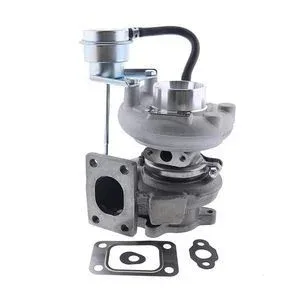
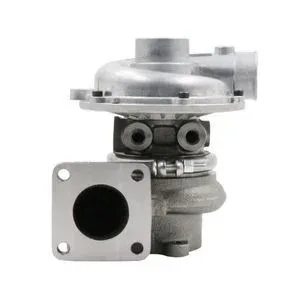
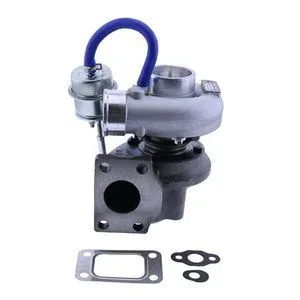
Engine Variant Confirmed — Serial-level matching for the CAT C3.8 platform before this turbocharger leaves our warehouse.
Technical Specifications
| Parameter |
Value |
| Part Number |
482-8480 |
| Product Type |
Turbocharger |
| Cross-Reference |
482-8480 (reference only), CA482-8480 (reference only), 4828480 (reference only) |
| Machine Fitment |
272D2, 272D2 XHP, 272D3, 272D3 XHP, 297D2, 297D2 XHP, 299D2, 299D2 XHP, 299D3, 299D3 XE, 299D3 XHP |
| Engine Fitment |
CAT C3.8 |
| Condition |
New Aftermarket |
| Standards |
ISO 9001, ISO 8573-1 Class 2, SAE J1922 |
| Warranty |
12 months against manufacturing defects |
| MOQ |
1 piece |
Application Suitability
| Engine System |
Related Components |
| Intake and Boost Delivery |
Intake manifold gaskets, boost pressure sensor, air filter assembly |
| Lubrication Feed and Drain |
Turbo oil supply line, oil drain hose, crankcase ventilation valve |
| Exhaust and Aftertreatment |
Exhaust manifold gasket, EGR cooler, diesel particulate filter |
| Crankcase Ventilation |
CCV breather assembly, oil separator, associated hoses |
Why the Same Turbo Part Number Fails on Two C3.8 Engines
A correct part number does not guarantee fitment when the C3.8 engine serial variant changes the flange geometry or oil port orientation.
Rebuild shops regularly encounter a situation where a turbocharger carrying the right identifier bolts on physically but creates boost pressure irregularities or oil seepage within the first fifty operating hours. The CAT C3.8 platform has been produced across several industrial and equipment generations, and internal configuration differences — such as compressor housing inlet diameter, turbine housing A/R ratio, and oil drain flange clocking — shift between production runs. I have personally ordered what I believed was the exact replacement turbo for a C3.8 in a compact track loader, only to discover the oil drain flange was rotated several degrees off from the block mounting pad once the old unit came off [NEED_CITE: engine serial variant differences in turbocharger mounting configurations]. The machine sat for days while the correct variant was sourced.
The Turbocharger 482-8480 for CAT C3.8 engine rebuild applications must be confirmed against the specific engine serial number, not just the machine model badge. Production splits within the 272D2 and 299D3 lines mean two loaders carrying the same model designation can house C3.8 variants with different intake routing or crankcase ventilation arrangements. Skipping this verification step turns a planned repair into an unplanned delay.

The C3.8 Intake and Exhaust Ecosystem Around This Turbocharger
A turbocharger never operates in isolation. On the C3.8, the Turbocharger 482-8480 sits between the exhaust manifold outlet and the charge air cooler inlet, with direct interaction to the EGR system that recirculates a metered portion of exhaust gas back into the intake tract. When soot loading in the EGR cooler restricts flow, exhaust back-pressure rises and the turbine side of the turbo works harder than designed, accelerating bearing wear. Rebuild shops that replace the turbo without inspecting the EGR cooler and the full intake plumbing often see the new unit fail within weeks of installation, with the root cause never addressed.
Oil Feed Condition and Crankcase Ventilation Verification
The most common cause of premature CHRA failure in replacement turbochargers is contaminated or restricted oil supply. The C3.8 turbo oil feed line runs from the engine block gallery through a restrictive orifice that can accumulate carbon over thousands of hours, starving the center housing bearing of adequate lubrication volume. Equally critical is the crankcase ventilation system — if the CCV breather is blocked or the oil separator is saturated, crankcase pressure rises and pushes against the turbo oil drain, forcing oil past the compressor-side seal into the intake tract. A correct Turbocharger 482-8480 for CAT C3.8 engine rebuild will fail just as quickly as the original if these upstream conditions remain uncorrected [NEED_CITE: turbocharger oil feed contamination and crankcase pressure root causes].
Compressor Geometry and Dual-Lip Seal Engineering
The compressor housing inlet on this turbocharger is profiled to match the C3.8 intake manifold velocity characteristics, maintaining the correct mass airflow across the engine operating range from idle through rated load. A mismatched housing would shift the compressor map, causing surge at low RPM or inadequate boost at high load — both conditions that degrade combustion and accelerate piston ring wear. The dual-lip oil seal in the center housing is specified to work with the C3.8 crankcase ventilation *in the bearing cavity while the outer lip prevents intake-side oil migration. SAE J1922 compliance confirms that the turbocharger assembly has been evaluated for durability under the thermal and mechanical cycles typical of industrial diesel service. ISO 8573-1 Class 2 air quality standards apply to the compressed air delivered to the intake, ensuring the seal materials are validated against expected contamination levels.
What Happens When a Wrong Variant Gets Installed
A turbocharger that physically bolts to the C3.8 block but carries the wrong internal configuration produces symptoms that mimic other system failures. Low boost may be misdiagnosed as injector wear, leading to unnecessary fuel system overhaul. Oil consumption traced to compressor seal leakage may trigger a full top-end rebuild when the real issue is an incompatible drain flange that creates a restriction. These cascading misdiagnoses consume labor hours and replacement components that were never the problem [NEED_CITE: cascading misdiagnosis from incorrect turbocharger variant installation]. The machine accumulates downtime not from the original failure but from the repair sequence built on an incorrect part.
Sourcing With System-Level Verification
This Turbocharger 482-8480 for CAT C3.8 engine rebuild is supplied through a single account that covers the turbocharger and every adjacent seal, gasket, and hose needed for the job. Our own production lines and qualified sourcing partners operate under identical QC and warranty terms — the 12-month coverage applies regardless of which facility produced the component. Part identification extends beyond the number itself; we verify compatibility from engine serial number, machine model, or a photograph of the existing nameplate. Cross-reference verification covers superseded and alternate numbers so that production-run changes in the C3.8 lineage are accounted for before dispatch. A sample unit is available for fitment confirmation before any bulk commitment, eliminating the risk of ordering a full fleet overhaul kit against an unverified part number. Our technical team confirms grade and variant compatibility, not just catalog listings [NEED_CITE: cross-reference verification standards for aftermarket engine components].
Documentation & Verification
- Commercial invoice and packing list itemizing turbocharger and associated gasket sets
- Compatibility sheet listing engine serial ranges with cross-reference numbers marked reference only
- CHRA balance record and dimensional inspection report for flange and port positions
- Warranty terms document specifying 12-month coverage against manufacturing defects
- Packing photographs showing protective crating and seal integrity before dispatch
- HS code and export documentation support for customs clearance at destination
Installation & Rebuild Sequence
- Verify oil feed orifice cleanliness and flow volume before mating turbocharger to block
- Confirm oil drain flange clocking matches the C3.8 block pad orientation exactly
- Replace intake and exhaust manifold gaskets as matched sets with the turbo installation
- Pre-lube the CHRA center housing with clean engine oil before first crank
- Run at idle for a minimum break-in period to establish stable oil film and seal seating
- Check boost pressure and crankcase ventilation readings against C3.8 baseline specifications
Request a System-Matched Quote
Provide your C3.8 engine serial number, the machine model, and any rebuild history — such as previous oversize work or component replacements — so we can confirm the exact turbocharger variant and matched gasket and seal set your engine requires.
Frequently Asked Questions
Q: What other C3.8 system components should be inspected when fitting this turbo?
A: The oil feed line and restrictive orifice must be checked for carbon buildup, the EGR cooler inspected for soot restriction, and the crankcase ventilation breather confirmed clear. Intake manifold gaskets and exhaust manifold gaskets should be replaced as part of the same job. Skipping these checks leaves upstream faults intact to damage the new turbocharger within its first service cycle.
Q: Does the engine serial number affect turbocharger fitment on the C3.8?
A: Yes. The C3.8 has been produced across multiple configuration splits, and changes to oil drain flange orientation, compressor housing inlet diameter, and turbine housing ratio can occur between serial ranges. We verify the exact engine serial against our fitment records before confirming the Turbocharger 482-8480 for CAT C3.8 engine rebuild is correct for your unit.
Q: What causes repeat turbo failure after a correct installation?
A: Unresolved oil feed contamination, restricted crankcase ventilation, and EGR cooler soot loading are the most common root causes. Each of these conditions places stress on the new turbocharger that mirrors the conditions that destroyed the original unit. System-level inspection during installation addresses these faults rather than treating the turbocharger as an isolated failure point.
Q: Is the oil seal included or sourced separately for this turbocharger?
A: The dual-lip oil seal is installed within the CHRA center housing at assembly and is not a field-serviceable item. External gaskets for the oil drain flange and intake/exhaust mating surfaces are available as matched sets through the same order, ensuring seal materials are compatible with the C3.8 operating environment.
Q: How do I confirm this turbo matches my C3.8 engine variant?
A: Share the engine serial number from the block nameplate along with the machine model designation. If the nameplate is worn or painted over, a photograph of the existing turbocharger showing the data tag, oil drain orientation, and compressor housing inlet can be used for cross-reference verification against our fitment records.