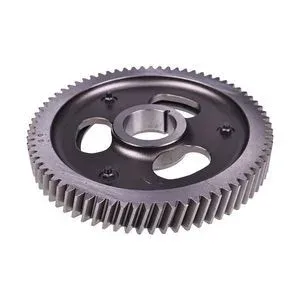
System-Level Match Confirmed — Camshaft gear 3946436 (cross-reference only) verified against timing train interface profiles for Cummins 4B3.9, 6B5.9, and QSB5.9 engine families.
Technical Specifications
| Parameter |
Value |
| Part Number |
3946436 |
| Product Type |
Camshaft Gear |
| Cross-Reference |
3946436, J946436, K3946436 (reference only) |
| Machine Fitment |
Hyundai HL757-7, HL757TM-7, 100D-7, 120D-7, 135D-7, 160D-7 |
| Brand Compatibility |
Fits Cummins, Hyundai applications |
| Material |
SAE 1045 forged steel |
| Surface Treatment |
Black oxide (ISO 9223 Class C3) |
| Tooth Hardness |
HRC 52–56 |
| Tooth Tolerance |
AGMA Class 12 |
| Condition |
New Aftermarket |
| Warranty |
6-month standard warranty against manufacturing defects |
| MOQ |
1 piece |
| Standards |
ISO 9001, ISO 9223, ISO 8573-1, AGMA Class 12 |
Application Suitability
| Engine System |
Related Components |
| Valve Timing Drive |
Crankshaft timing gear, idler gear, timing chain tensioner |
| Fuel Injection Synchronization |
Injection pump drive gear, fuel pump coupling |
| Upper Valve Train |
Camshaft bearings, thrust plate, cam followers |
| Engine Overhaul Kit |
Gasket set, seal kit, timing cover gasket, front crank seal |
Why Timing Gears Fail Again Within Months of a Rebuild
Replacing a single worn gear without auditing the entire timing train invites repeat failure.
When a Cummins 4B3.9 or 6B5.9 comes in for timing gear noise or visible pitting on the tooth flanks, the worn gear is often a symptom rather than the root cause. Adjacent idler bearings with excessive radial play, oil gallery starvation at the front cover, or a crankshaft gear with accumulated runout will all transfer abnormal loading onto the new camshaft gear. In our overhaul planning experience, the engines that return with repeat camshaft gear damage almost always trace back to an unchecked neighboring component or a lubrication path that was never cleaned during assembly. Camshaft Gear 3946436 Cummins engine rebuild replacement requires a system-level inspection before the timing cover goes back on. [NEED_CITE: Cummins B series timing gear train inspection procedures]

The Timing Train as a Matched Assembly
This camshaft gear sits at the center of a multi-gear timing drive that governs valve events and injection pump phase. Any accumulated backlash across the crankshaft gear, idler, and camshaft gear compounds into measurable valve timing drift at operating temperature. When quoting an overhaul, we recommend treating the timing gear set as a matched assembly rather than isolating a single failed component. The Camshaft Gear 3946436 Cummins engine rebuild replacement should be evaluated alongside its mating gears for tooth contact pattern before the engine leaves the bench.
Engine Serial Variants and Installation Interface Differences
Cummins ISB CM2150, ISB CM550, and QSB variants share a common base block architecture but differ in camshaft journal diameter, thrust plate configuration, and gear retention method. A gear ordered against a generic B-series listing may physically mount but produce incorrect axial preload or misalign the timing mark window. We cross-check the engine serial prefix and CPL number to confirm which camshaft gear variant your specific build requires. Misidentification here shows up as accelerated thrust face wear rather than an immediate no-fit condition. [NEED_CITE: Cummins ISB and QSB timing gear variant identification by engine serial prefix]
Material and Tooth Profile Under Load
SAE 1045 forged steel provides the core toughness needed to absorb torsional shock during cold cranking, while the HRC 52–56 tooth surface hardness resists pitting under sustained load. AGMA Class 12 tooth tolerance controls involute profile deviation and lead error, which directly govern how evenly load distributes across the face width during mesh. Black oxide treatment per ISO 9223 Class C3 offers short-term corrosion protection during storage and initial run-in without altering critical gear dimensions. Together, these specifications maintain timing accuracy across the full service interval between overhauls.
The Hidden Cost of Skipping the Root Cause Audit
A new camshaft gear pressed into an engine with an unchecked idler shaft or restricted oil feed to the front gear train will show early-stage pitting within the first few hundred hours. The machine goes back into the shop, the timing cover comes off again, and now the rebuild cost doubles while the equipment owner loses confidence in the workshop. We have reviewed enough return cores to know that timing gear repeat failures almost never originate from the replacement part itself when the surrounding system was properly audited. [NEED_CITE: diesel engine timing gear premature failure root cause analysis]
What We Bring to Your Rebuild Planning
Our production lines and qualified sourced supply operate under one account with one warranty, so a timing gear set and its associated seals ship from a single point of accountability. The eight product categories in our catalog mean a complete overhaul kit — gaskets, bearings, pistons, and timing components — consolidates into one consignment rather than arriving on staggered schedules. Minimum order is one piece, so a single emergency camshaft gear is never blocked by volume requirements. Our technical team confirms serial variant compatibility and dimensional grade before anything leaves the Guangzhou warehouse. Cross-reference verification covers superseded numbers so older engine builds are not left without support.
Documentation & Verification
- Commercial invoice listing camshaft gear part number, variant, and engine serial cross-reference
- Timing gear compatibility sheet with mating gear tooth count and pitch confirmed (reference only)
- Dimensional inspection record covering bore diameter, tooth runout, and face width
- Warranty terms covering manufacturing defects for six months from delivery
- Packing photographs showing gear protective wrapping and timing mark protection
- HS code and customs documentation for cross-border engine parts clearance
Installation & Rebuild Sequence
- Clean timing gear cavity and verify oil gallery flow to front gear train before assembly
- Check camshaft journal diameter and thrust face condition to confirm gear retention method
- Verify timing mark alignment with crankshaft at TDC before torquing gear retention hardware
- Measure gear backlash against idler and crankshaft gears per service manual specification
- Rotate engine two full revolutions by hand to confirm smooth mesh and recheck all timing marks
- Fill with specified oil grade and run initial break-in at governed low idle before loading
Preparing Your Inquiry for an Accurate Match
Send the full engine model designation, serial number prefix, and CPL number so we can confirm which camshaft gear variant your specific Cummins build requires. If the engine has prior rebuild history, note any oversize bearings or non-standard components already installed. A photograph of the existing gear tooth face and timing mark helps us verify the correct configuration before we quote the matched timing set and associated overhaul components.
Frequently Asked Questions
Q: Does a standard Cummins overhaul kit include the camshaft timing gear?
A: Most standard overhaul gasket and bearing kits do not include timing gears, as these are replaced based on inspection rather than at every rebuild. We supply the camshaft gear as a separate line item so you can add it to your kit order based on your teardown findings. Confirm your engine serial variant before ordering.
Q: Are timing gears interchangeable between ISB CM2150 and QSB5.9 variants?
A: These variants share base architecture but differ in camshaft retention and gear thrust configuration. A gear that physically mounts may still produce incorrect axial preload. We verify compatibility against your specific engine serial prefix and CPL number before confirming fitment.
Q: What adjacent components should I inspect when replacing the camshaft gear?
A: Inspect the idler gear shaft for radial play, the crankshaft timing gear for tooth wear and runout, and the front cover oil gallery for blockage. Camshaft bearing condition and thrust plate wear should also be evaluated, as these affect gear alignment and mesh pattern.
Q: How do I confirm tooth pitting is a gear defect versus a system issue?
A: Pitting concentrated on one side of the tooth face or localized to specific teeth often indicates misalignment or shaft deflection rather than a material defect. Uniform pitting across all teeth suggests lubrication starvation or contamination. Document the wear pattern before removing the gear for accurate diagnosis.