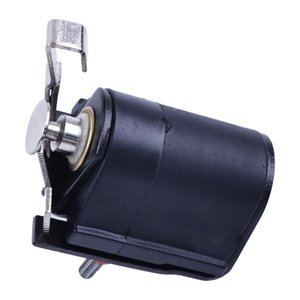
System Match Verified — RE62240 solenoid validated against Perkins 1004/1006 and John Deere 4239/6466 injection pump variants before dispatch.
Technical Specifications
| Parameter |
Value |
| Part Number |
RE62240 |
| Product Type |
Stop Solenoid |
| Cross-Reference |
RE37089, AR48219, AR51796, AR90340, 8094900, 14067411, 15577535, 26435149 (reference only) |
| Machine Fitment |
John Deere 1020, 2020, 2030, 2520, 3010, 3020, 4000, 4020, 4320, 4520, 4620, 5020, 6030, 3300, 9400, 5200, 5400, 7445, 9900, 9910, 9920, 9930, 210C, 300B, 300D, 310D, 315D, 2250, 2270, 2280, 2320, 2420, 3430, 3830 |
| Voltage |
12V |
| Coil Insulation Class |
Class H (180°C) |
| Plunger Rod Material |
Stainless Steel |
| Pull-in Force Tolerance |
±3% |
| O-Ring Standard |
SAE J2044 (diesel fuel resistant) |
| Dimensional Tolerance (Mounting Face & Bore ID) |
±0.05 mm |
| Engine Fitment |
Perkins 1004-4, 1004-40, 1004-40T, 1004-42, 1004-4T, 1006-6, 1006-6T; John Deere 4239, 4239D, 4239T, 4329A, 6404, 6466, 6466A, 6466D, 6466T; GM/Ford/Stanadyne 4.3L, 5.7L, 6.2L, 6.5L, 6.9L, 7.3L mechanical injection pumps |
| Condition |
New Aftermarket |
| Warranty |
3–12 months against manufacturing defects |
| Assembly State |
Complete solenoid unit (coil + armature + plunger rod + O-ring seal) |
| Standards |
ISO 9001, SAE J2044, SAE J1171 |
Application Suitability
| Engine System |
Related Components |
| Fuel cutoff system |
Injection pump seal kit, fuel line gaskets, governor linkage |
| Injection pump assembly |
Pump overhaul kit, delivery valves, transfer pump seals |
| Engine shutdown circuit |
Wiring harness terminals, relay, ignition switch contacts |
| Fuel delivery system |
Fuel filters, water separator, supply pump diaphragm |
When a Stop Solenoid Fails, the Real Fault May Be Elsewhere
Replacing the solenoid without diagnosing upstream fuel contamination or pump wear means the new unit inherits the same failure mode.
In the repair bays around the Pearl River Delta, I watched a Perkins 1004-4T come back three times with the same shutdown symptom. Each time a new 12V stop solenoid was fitted, and each time it stuck within weeks. The root cause turned out to be fine metallic debris from a failing injection pump transfer stage lodging between the plunger rod and bore. Once the pump was rebuilt and the fuel lines flushed, the solenoid survived through its full service life. That pattern repeats across John Deere 6466 and GM 6.5L mechanical pumps more often than most rebuild sheets acknowledge [NEED_CITE: diesel injection pump contamination sources and component wear patterns]. A stop solenoid engine rebuild must therefore address the fuel system as a whole, not just the failed component in isolation.

The Solenoid's Position Within the Fuel Cutoff Subsystem
The stop solenoid sits at the boundary between the electrical shutdown command and the mechanical fuel rack inside the injection pump. When 12V is applied, the coil energizes and retracts the stainless steel plunger rod against spring pressure, allowing fuel to flow. On shutdown, de-energizing the coil lets the spring push the plunger home, cutting fuel delivery. In a complete stop solenoid engine rebuild, this component should be evaluated alongside the governor spring assembly and the fuel rack return spring, because fatigue in either can alter the force the solenoid must overcome during engagement.
Matching the Solenoid to Injection Pump Variants and Rebuild History
Perkins 1004 and John Deere 6466 series engines were produced across multiple generations with internal pump differences that affect solenoid bore diameter and mounting face geometry. A pump that has been rebuilt previously may have had its bore sleeved or its mounting face re-machined, shifting the dimensional baseline away from factory specification. The ±0.05 mm tolerance on this solenoid's mounting face and bore ID is designed to accommodate standard pump bodies, but any prior machining must be measured before confirming fitment. Engine serial number and pump variant should always be cross-checked against the specific OEM reference number applicable to that build [NEED_CITE: injection pump variant identification by engine serial range].
Why Class H Insulation and SAE J2044 Seals Matter in This Location
The coil insulation is rated to 180°C (Class H), which is necessary because the solenoid mounts directly on the injection pump body — a surface that can exceed 120°C during sustained high-load operation in combines or tractors working summer harvests. Standard Class B (130°C) insulation degrades prematurely in this thermal environment, leading to intermittent coil opens that mimic electrical faults. The O-ring seal conforms to SAE J2044, specifically formulated to resist swelling and hardening when exposed to diesel fuel and biodiesel blends over extended periods. A mismatched seal material here causes either fuel weeping past the plunger bore or excessive friction that slows plunger response. The stainless steel plunger rod resists galling against the pump bore, which is critical because even minor surface scoring creates a path for fuel leakage or contamination ingress into the coil cavity.
The Cost of Skipping the Fuel System Diagnosis
Fitting a new solenoid onto a pump that still contains debris from upstream wear means the plunger rod scores within weeks, creating an intermittent shutdown fault that is difficult to reproduce on the bench. The machine goes back into service, fails again under load, and the solenoid gets blamed. This cycle repeats until someone opens the pump and finds the real contamination source. For a John Deere 4020 or a Perkins 1006-6T working in dusty agricultural conditions, the cost of a misdiagnosis is not just the second solenoid — it is the second teardown, the second round of downtime during a narrow harvest window, and the erosion of trust between the rebuild shop and the equipment owner [NEED_CITE: agricultural equipment downtime costs during harvest season].
What Makes This Supply Route Work for Rebuild Shops
Self-produced and qualified sourced lines carry identical QC and warranty terms, so a stop solenoid engine rebuild order ships with the same inspection standard as the piston sets and bearing shells in the same consignment. Eight product categories under one account means the injection pump seal kit, fuel line gaskets, governor linkage components, and this solenoid move together rather than arriving from separate suppliers on mismatched schedules. Guangzhou warehouse stock on common references like RE62240 and RE37089 allows fast dispatch when a machine is already down. Cross-reference verification covers superseded numbers across John Deere and Perkins production runs, catching the cases where a parts book shows an old number that no longer matches the pump variant in front of you. Sample supply is available for bench fitment testing before bulk commitment, so the rebuild shop can confirm bore fit and electrical response before ordering for the full fleet.
Documentation & Verification
- Commercial invoice listing RE62240 and cross-reference numbers applied to each line item
- Part compatibility sheet confirming engine serial range and pump variant match
- Quality inspection record covering voltage response, pull-in force, and cycle durability
- Warranty terms specifying coverage period and replacement procedure for manufacturing defects
- Packing photographs showing solenoid protective wrapping and coil terminal protection
Installation & Rebuild Sequence
- Flush injection pump cavity and fuel lines before solenoid installation to remove residual metallic debris
- Verify pump bore ID with bore gauge against the solenoid's ±0.05 mm tolerance before pressing in
- Inspect governor linkage and fuel rack return spring for fatigue that could overload the plunger rod
- Apply dielectric grease to electrical terminals to prevent corrosion in high-vibration agricultural environments
- Perform bench cycle test at 12V before final assembly to confirm plunger retraction and spring return timing
Requesting a Fitment-Confirmed Quote
Provide the engine model, engine serial number, and any prior rebuild history for the injection pump so the correct cross-reference and dimensional variant can be confirmed. If the pump nameplate is worn, a photograph of the mounting face and bore area allows identification. For fleet orders, share the engine list to receive matched auxiliary component sets covering solenoids, seal kits, and governor hardware in a single consignment.
Frequently Asked Questions
Q: What other fuel system components should be replaced together with the stop solenoid during an engine rebuild?
A: The injection pump seal kit, fuel line gaskets, and delivery valve seals should be renewed alongside the solenoid. The governor linkage and fuel rack return spring should be inspected for fatigue. Replacing only the solenoid leaves aged seals in place, and residual leakage past those seals can cause the same shutdown symptom the rebuild was meant to resolve.
Q: How do I confirm which cross-reference number applies to my specific injection pump variant?
A: Provide the engine serial number and, if available, the injection pump data plate number. Cross-reference numbers such as RE62240, RE37089, and AR48219 cover different production runs and pump body configurations. The applicable number depends on the specific build variant, not just the engine family name.
Q: What root causes in the fuel system lead to premature stop solenoid failure?
A: Fine metallic debris from upstream pump wear lodging between the plunger rod and bore is the most common cause. Fuel contamination, water ingress causing bore corrosion, and excessive thermal loading from degraded insulation also contribute. Diagnosing and correcting these upstream faults before fitting a new solenoid prevents repeat failures within weeks.
Q: Are the Perkins 1004-4 and 1004-4T variants interchangeable for this solenoid?
A: Both variants are listed within the fitment range, but the injection pump body configuration may differ between naturally aspirated and turbocharged builds. Confirm the pump data plate or engine serial number to verify that the bore ID and mounting face geometry match the solenoid's dimensional tolerance before installation.
Q: Can I get a sample for bench fitment testing before committing to bulk?
A: Sample units are available for fitment and electrical response testing on your bench. This allows you to confirm bore fit, plunger travel, and coil energization characteristics against your specific pump variant before placing a fleet or distributor order.