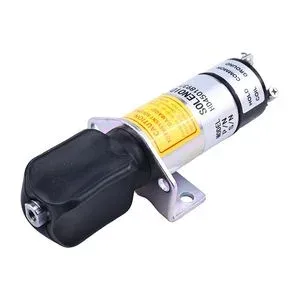
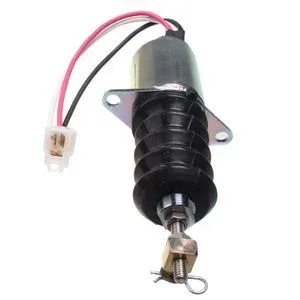
Engine Serial Variants Confirmed — Fuel shut-off solenoid specifications verified against CAT 3013C/3024C engine build sheets before dispatch.
Technical Specifications
| Parameter |
Value |
| Product Type |
Stop Solenoid |
| Part Number |
365-3339, 217-5204, 419-7640, 271-2117 |
| Cross-Reference (reference only) |
CA3653339, CA2175204, CA4197640, CA2712117 |
| Voltage |
12V DC |
| Pull-in Torque |
12.5 N·m ±5% |
| Hold Current |
≤0.8 A |
| Operating Temperature Range |
–20°C to +120°C |
| Cycle Life |
>500,000 cycles |
| Armature Material |
Copper-clad steel |
| Coil Winding |
High-temp epoxy-coated |
| Plunger Material |
Stainless steel |
| Seat Material |
Hardened brass |
| Dimensional Tolerance |
±0.05 mm |
| Machine Fitment |
Loader: 216, 226, 228, 232, 242, 216B, 226B, 232B, 242B, 216B2, 232B2, 247B, 257B; Vibratory Compactor: CB-334E, CB-334E XW, CB-335E, CB14, CB-214E, CB-224E, CB-225E |
| Condition |
New Aftermarket |
| Warranty |
3–12 months against manufacturing defects |
| MOQ |
1 piece |
Application Suitability
| Engine System |
Related Components |
| Fuel Shut-Off Circuit |
Injection pump, fuel lines, ECM wiring harness |
| Engine Electrical System |
Starter motor, alternator, relay bank |
| Engine Overhaul Package |
Gasket set, seal kit, fuel filter |
| Fuel Delivery Assembly |
Lift pump, fuel transfer pump, primary/secondary filters |
Why the Same Part Number Fails Repeatedly After Replacement
A 12V fuel shut-off solenoid replacement that ignores the underlying electrical fault will burn out within days. The coil draws excessive current when upstream wiring shows degraded insulation or a partial short to ground, and the new solenoid absorbs that excess thermal load until the winding fails again [NEED_CITE: electrical fault diagnosis standards for mobile diesel engines].
Diagnosing the root system cause matters more than the swap itself.
I once watched a loader on a Chilean mining site go through two shutdown solenoids in a week. The wiring harness had chafed against the engine mount, creating an intermittent short. Each replacement carried the same 12V rating, but the circuit condition exceeded the hold current specification, overheating the coil winding within hours. Checking circuit resistance and connector integrity before installation prevents this pattern.

Fuel Shut-Off System Role in Engine Start and Stop Sequences
The stop solenoid controls fuel flow at the injection pump, receiving an energize signal during start-up and de-energizing for shutdown. When the 12V fuel shut-off solenoid operates outside its pull-in torque range, the plunger either fails to seat fully or slams into the hardened brass seat with excessive force. Both conditions compromise the fuel cut-off function, leaving the engine unable to stop cleanly or unable to start at all. This interaction with the injection pump timing and ECM logic means that solenoid failure often presents as a no-start or runaway condition rather than a simple electrical fault.
Engine Serial Variants and Electrical Specification Matching
Across the 3013C, 3024C, C1.5, C1.6, and C2.2 engine families, the connector pinout and pull-in torque requirement shift between serial ranges. An engine built in an earlier production run may carry a different harness connector than a later revision of the same model designation. Confirming the engine serial number against the solenoid specification sheet prevents installing a unit with the wrong pin configuration or current draw profile [NEED_CITE: engine serial variant identification practices for fuel system components]. The dimensional tolerance of ±0.05 mm ensures the mounting footprint matches the injection pump interface, but the electrical interface must be verified separately.
Parameter Interpretation for Fuel System Service
The pull-in torque of 12.5 N·m ±5% defines the magnetic force available to overcome fuel pressure and spring resistance during energization. If the available torque drops below the minimum threshold due to voltage sag or coil degradation, the plunger cannot fully retract from the fuel passage, causing intermittent shut-off behavior. The hold current of ≤0.8 A represents the steady-state draw once the plunger seats; exceeding this value indicates either a winding insulation breakdown or an external circuit fault. The stainless steel plunger and hardened brass seat combination resists the corrosive effect of modern low-sulfur diesel fuels while maintaining sealing integrity through 500,000 operating cycles. High-temp epoxy coating on the coil winding protects against under-hood temperatures reaching 120°C during sustained loader operation in quarry loading cycles.
The Cost of Skipping System-Level Diagnosis
Replacing a failed solenoid without tracing the fault upstream leads to a repeating failure cycle. A shorted relay, a chafed harness, or a failing ECM output channel can push current beyond the solenoid's rated capacity, destroying the replacement unit before the root cause becomes visible. Each repeat failure costs the machine another day of downtime while the same diagnostic step gets postponed. Repair centres that bench-test the replacement solenoid alongside a wiring continuity check catch these conditions before the unit goes back into service [NEED_CITE: diesel fuel system diagnostic sequence for shutdown faults].
Why Procurement from This Source Works for Engine Rebuilds
Production lines for selected solenoid ranges run in-house, while remaining variants come from ISO 9001 qualified partners under the same warranty terms. Eight product categories mean a complete fuel system overhaul kit ships in one consignment rather than across multiple suppliers. Orders from one piece upward remove the minimum-order barrier for single-machine emergency repairs. Guangzhou warehouse stock on common part numbers enables fast dispatch for loader and compactor fleets operating on tight maintenance schedules. The technical team verifies engine serial variants and cross-reference numbers including superseded references before confirming compatibility. A sample unit can ship for bench fitment testing before a fleet-level commitment locks in bulk volume.
Documentation & Verification
- Commercial invoice listing each solenoid variant with corresponding engine serial range
- Cross-reference sheet mapping OEM numbers (reference only) to superseded and alternate references
- Coil resistance and functional test record at rated 12V DC voltage
- Warranty terms document specifying coverage period and replacement conditions
- Packing photographs showing connector protection and individual unit wrapping
- HS code classification and customs documentation for destination-country import clearance
Installation & Rebuild Sequence
- Verify wiring harness continuity and connector pin condition before solenoid installation
- Torque mounting fasteners to injection pump specification, observing ±0.05 mm seat alignment
- Bench-test coil resistance against rated hold current before energizing on the engine
- Confirm fuel cut-off function at idle before returning the machine to full-load operation
- Inspect adjacent fuel lines and filter connections for age-related degradation during access
Requesting Compatibility Confirmation
Provide the engine model designation, serial number, and any previous rebuild history to confirm the correct electrical specification and connector type. If the original solenoid nameplate is unreadable, a photograph of the connector and mounting face enables cross-reference verification. Include the machine model and operating application so the technical team can flag any serial-range-specific variants that affect fitment.
Frequently Asked Questions
Q: What other fuel system components should be inspected when the shut-off solenoid fails?
A: The injection pump internal passages, fuel filter elements, and wiring harness connector should all be checked for contamination or degradation. A solenoid failure often accompanies fuel system contamination that affects adjacent components. Inspect the ECM output channel and relay bank for signs of overcurrent that may have contributed to coil failure.
Q: How do engine serial variants affect solenoid specification across the 3013C and 3024C series?
A: Different serial ranges within the same engine family may carry distinct connector pinouts and hold current requirements. An earlier production engine might use a different harness plug than a later revision. Confirming the engine serial number ensures the replacement matches the electrical interface specification, not just the mechanical footprint.
Q: What electrical parameters must match the original engine specification?
A: The pull-in torque must meet 12.5 N·m ±5% and hold current must stay at or below 0.8 A. Voltage must match the machine electrical system at 12V DC. Deviations in any of these parameters cause either failure to actuate or premature coil burnout under sustained operation.
Q: Can a sample unit be supplied for bench testing before a bulk order?
A: Sample supply is available for fitment and functional confirmation before committing to fleet-level volume. Bench testing allows verification of connector type, pull-in function, and mounting alignment against the specific engine build variant in your workshop. This step prevents bulk procurement of an incorrect variant.