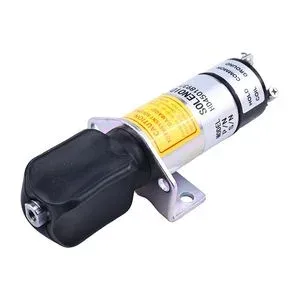
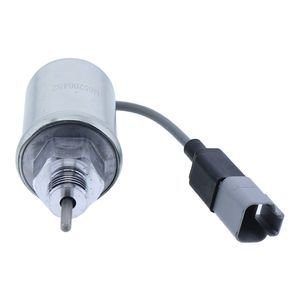
Engine serial variants confirmed — Cross-reference chain from 365-3339 through 217-5204, 419-7640, and 271-2117 validated against specific CAT C1.5, C2.2, 3013C, and 3024C engine build codes before dispatch.
Technical Specifications
| Parameter |
Value |
| Part Number |
365-3339 |
| Product Type |
Stop Solenoid |
| Cross-Reference |
217-5204, 419-7640, 271-2117, CA3653339, CA2175204, CA4197640, CA2712117 (reference only) |
| Machine Fitment |
216, 216B, 216B2, 226, 226B, 228, 232, 232B, 232B2, 242, 242B, 247B, 257B, CB-334E, CB-334E XW, CB-335E, CB14, CB-214E, CB-224E, CB-225E |
| Engine Model Fitment |
3011C, 3013C, 3024C, C1.5, C1.6, C2.2, 3034 |
| Voltage |
12V |
| Condition |
New Aftermarket |
| Warranty |
3–12 months against manufacturing defects |
| Standards |
ISO 9001 |
Application Suitability
| Engine System |
Related Components |
| Fuel shut-off control |
Injection pump linkage, ECU shutdown relay, fuel solenoid wiring harness |
| Engine shutdown sequencing |
Ignition switch circuit, battery isolation relay, alternator feedback loop |
| Fuel delivery system |
Fuel transfer pump, primary and secondary fuel filters, fuel lines and fittings |
| Engine management interface |
Engine controller connector, diagnostic port, throttle position sensor |
| Cold-start and idle control |
Glow plug module, idle speed actuator, intake heater relay |
Why a 12V Fuel Shut-Off Solenoid Fails After a Rebuild — and How to Prevent It
Most post-rebuild solenoid failures trace back to a wiring-side fault or an unmatched connector, not the solenoid itself.
I spent years moving between repair bays in Brazil and Chile, and the pattern was always the same: a freshly overhauled CAT 3024C would refuse to shut down cleanly, and the first instinct was to blame the new 12V fuel shut-off solenoid engine rebuild shops had just installed. In reality, the connector pin layout on the harness had shifted between engine serial ranges, or the coil resistance on the replacement did not match the ECU expectation. One skid steer in Santiago sat idle for days because a 217-5204 variant was fitted to a harness expecting a 419-7640 pin configuration [NEED_CITE: fuel shut-off solenoid connector pinout variations across CAT C-series engine serial ranges]. The lesson is straightforward — verifying the electrical interface before installation prevents a teardown that was never about the solenoid in the first place.

The Solenoid's Role Inside the Fuel Control Loop
This stop solenoid sits at the boundary between the electrical shutdown command and the mechanical fuel cutoff. When the operator turns the key off, the ECU de-energizes the coil, and the plunger retracts to block fuel flow to the injection pump. On engines like the 3013C and C2.2, this actuation must complete within a tight timing window — any delay causes residual combustion and rough shutdown. A 12V fuel shut-off solenoid that responds sluggishly or sticks open forces the operator to stall the engine mechanically, which introduces unnecessary stress on the drivetrain and flywheel. During an engine rebuild, this component should be evaluated as part of the matched fuel system set, not as an isolated electrical spare.
Engine Serial Variants That Change the Fitment Picture
Within the CAT C1.5, C1.6, C2.2, 3011C, 3013C, and 3024C families, the base solenoid function remains constant, but the physical and electrical interfaces diverge across serial ranges. Connector shell shape, pin count, and locking tab position can differ between an early-build 3024C and a later production run. Cross-reference numbers such as 365-3339 and 217-5204 cover overlapping but not identical engine builds. Some serial ranges require a specific coil winding resistance to match the ECU driver circuit [NEED_CITE: CAT C-series engine ECU driver circuit specifications for fuel shutoff solenoid variants]. Rebuild shops that stock a single variant without mapping it to the applicable engine serial range will eventually encounter a machine where the connector mates but the ECU throws a shutdown circuit fault.
Reading the Specification Sheet for Real-World Impact
The 12V rating defines the operating envelope, but the coil resistance value determines whether the ECU recognizes the solenoid as present and functional. A coil reading significantly outside the expected range triggers an open-circuit or short-circuit diagnostic code, even if the plunger actuates normally on the bench. The new aftermarket condition means the unit ships with factory-fresh coil windings and plunger surfaces, free from the carbon buildup and spring fatigue that degrade shutdown response on a used pull. ISO 9001 manufacturing standards govern the production process, ensuring dimensional consistency across the mounting flange and plunger bore. For engines operating in quarry loading or vibratory compaction applications, where shock and vibration are constant, the solenoid's internal spring rate and plunger seal must maintain consistent actuation force throughout its service life.
The Hidden Cost of Skipping Root-Cause Verification
Replacing the stop solenoid without investigating why the previous unit failed leads to repeat failures on a predictable cycle. If the original failure stemmed from a voltage drop in the harness — corroded terminals, undersized wiring, or a failing relay — the new 12V fuel shut-off solenoid will experience the same degraded electrical supply and fail prematurely. In a Brazilian mining contractor's fleet, three skid steer loaders cycled through replacement solenoids within a single season because the common failure point was a shared ground splice in the engine harness, not the solenoids themselves [NEED_CITE: electrical ground fault diagnosis in compact track loader engine circuits]. Engine rebuild shops that document the failure mode of the removed solenoid — coil burn pattern, plunger scoring, spring collapse — build a diagnostic history that prevents the next machine from repeating the same expensive cycle.
What This Supplier Brings to the Rebuild Bay
Own production on selected lines and qualified sourced supply sit under one account and one warranty, so a solenoid ordered alongside a full overhaul gasket kit carries identical QC terms. Eight product categories mean the fuel cutoff solenoid, filter set, seal kit, and injection pump service parts ship as a single consignment rather than split deliveries. A minimum order of one piece supports the emergency single-engine repair without forcing a stock commitment. The Guangzhou warehouse maintains inventory on fast-moving engine auxiliary components for quick dispatch on common configurations. Cross-reference verification covers superseded numbers across the 365-3339, 217-5204, 419-7640, and 271-2117 families, reducing the risk of a variant mismatch. A sample unit can ship ahead of a bulk order so the rebuild shop validates connector fit and coil resistance against the target engine serial range before committing to fleet quantities.
Documentation & Verification
- Commercial invoice and packing list itemizing each solenoid variant and applicable engine serial range
- Part compatibility and cross-reference sheet mapping 365-3339 to alternate numbers (reference only)
- Quality inspection record documenting coil resistance measurement and plunger actuation test
- Warranty terms covering manufacturing defects for the stated coverage period
- Packing photographs showing anti-static bag sealing and foam cushioning before carton closure
- HS code and customs documentation support for cross-border engine parts shipments
Installation & Rebuild Sequence
- Verify coil resistance against the engine service manual specification before connecting the harness
- Inspect the solenoid connector and mating harness terminals for corrosion or pin deformation
- Confirm plunger travel is unobstructed after mounting to the injection pump housing
- Torque mounting fasteners to the engine manufacturer specification to prevent flange distortion
- Perform a key-off shutdown test before reassembling engine covers and guarding
- Run the engine through a warm-up cycle and verify clean shutdown response at operating temperature
Confirm Fitment Before You Order
Provide the engine model, engine serial number, and any prior rebuild history so the correct solenoid variant can be confirmed against your specific build. If the nameplate is unreadable, a photograph of the existing connector and mounting flange allows identification. Share the full overhaul parts list to consolidate the solenoid with related fuel system components in a single shipment.
Frequently Asked Questions
Q: Which solenoid variant matches my specific engine serial number?
A: The correct variant depends on the engine serial prefix and production sequence. Numbers like 365-3339 and 217-5204 cover overlapping but distinct serial ranges within the C1.5, C2.2, 3013C, and 3024C families. Provide your full engine serial number so the applicable variant can be confirmed against the cross-reference database before shipment.
Q: Are 365-3339 and 217-5204 interchangeable on the same engine build?
A: Not always. While both numbers serve the fuel shut-off function on compatible CAT C-series engines, connector configuration and coil specifications can differ between serial ranges. A cross-reference check (reference only) against your exact engine build code determines interchangeability. Installing the wrong variant risks a connector mismatch or ECU fault code.
Q: What other fuel system components should be inspected when replacing the shut-off solenoid?
A: Inspect the fuel transfer pump output pressure, primary and secondary filter condition, fuel line integrity, and the injection pump linkage for binding or wear. The wiring harness connector and ground circuit should also be verified. Addressing the root cause of the original solenoid failure prevents premature repeat failure on the replacement unit.
Q: How do I confirm the connector type matches my engine harness?
A: Compare the pin count, shell shape, and locking tab position on the new solenoid connector against the existing harness plug. Photograph both connectors if the original is damaged or missing. Connector configurations vary across engine serial ranges even within the same model family, so visual confirmation is essential before installation.
Q: Can I order a sample to validate fitment before committing to a fleet order?
A: Yes. A single sample unit ships under the same warranty and QC terms as bulk orders. Rebuild shops and fleet maintenance teams use samples to confirm connector fit, coil resistance, and plunger actuation on the target engine serial range before releasing a quantity purchase order.