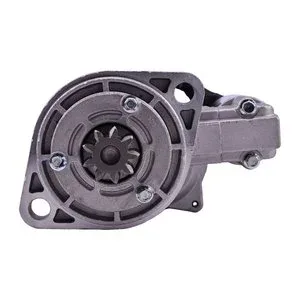
Matched sets confirmed — every 12V 2.0kW starter motor ships with verified winding resistance and solenoid pull-in voltage records aligned to the Thermo King engine auxiliary system.
Technical Specifications
| Parameter |
Value |
| Part Number |
45-2323 |
| Product Type |
Starter Motor |
| Cross-Reference |
45-2323 (reference only), 452323 (reference only), 20-45-2323 (reference only), 10-45-2323 (reference only), S13-207A (reference only), 126486-77010 (reference only) |
| Machine Fitment |
Thermo King SB-200, SB-210, SB-300, SB-310, SB-II SR, SB-III SR, SL100, SL200, SL300, SL400; Carrier Transicold SB/SL series units; Hitachi S13-207A, S13-207C; Yanmar 126486-77010, 126486-77011, 129486-77011 |
| Voltage |
12V |
| Power |
2.0kW |
| Teeth Count |
9T |
| Condition |
New Aftermarket |
| Warranty |
3–12 months against manufacturing defects |
| Pinion Gear Module |
1.5 module |
| Armature Insulation Class |
Class H (180°C thermal rating) |
| Solenoid Housing Plating |
Zinc-nickel, ≥15μm thickness |
| Dimensional Tolerance Standard |
ISO 2768-mK |
| Standards |
ISO 9001, ISO 2768-mK, ISO 16750-2 |
Application Suitability
| Engine System |
Related Components |
| Thermo King SB/SL engine auxiliary |
Flywheel ring gear (9T meshing), battery cables, solenoid wiring harness, alternator |
| Cold-chain unit cranking circuit |
Digital control module EMI shielding, engine ground strap, starter relay |
| Refrigeration unit preventive overhaul |
Engine seals, gasket sets, fuel system filters, belt drive components |
Why a New Starter Often Fails Within Weeks of Installation
The failed starter was usually the symptom, not the root cause.
In the Guangzhou warehouse, I have processed warranty returns where the replacement starter motor burned out within a single season. The pattern is consistent: the flywheel ring gear teeth were already worn or chipped from the previous starter's engagement, creating uneven meshing that overloaded the new pinion gear. Battery circuit degradation — corroded terminals, undersized cables, weak alternator output — forces the starter to draw excessive current during cranking. Addressing the starter motor engine rebuild replacement without diagnosing these upstream faults guarantees a repeat failure. [NEED_CITE: engine auxiliary system diagnostic sequence for cranking circuit faults]

The Starter's Position in the Engine Auxiliary System
The starter motor sits at the intersection of three subsystems: the battery circuit delivers current, the solenoid engages the pinion into the flywheel ring gear, and the digital control module monitors cranking sequence. A failure in any upstream node manifests as starter damage. This is why a proper starter motor engine rebuild replacement requires inspecting the entire cranking circuit, not just swapping the unit. Engine rebuild shops that treat the starter as an isolated component miss the systemic faults that caused the original failure.
Matching the Rebuild to the Engine's Service History
Units operating in marine container yards face salt-laden humidity that accelerates solenoid housing corrosion and brush wear. The zinc-nickel plating specification on this starter addresses that specific degradation path. For units with prior rebuilds, the engine serial variant determines whether the flange mounting pattern aligns — Thermo King SL series units produced across different generations carry subtle dimensional shifts that affect fitment. Verifying the unit model and serial range before ordering prevents receiving a starter that physically fits but misaligns the pinion engagement depth. [NEED_CITE: Thermo King SB/SL engine serial variant identification procedures]
Reading the Specifications That Matter in the Field
Class H armature insulation withstands 180°C thermal stress, which becomes critical when refrigeration units idle in high-ambient environments where underhood temperatures exceed normal ranges. The 1.5 module pinion gear must mesh precisely with the flywheel ring gear — a mismatch in module causes tooth stripping within the first cranking cycles. The ISO 2768-mK dimensional tolerance standard governs flange face perpendicularity and pinion shaft runout, ensuring the starter mounts square to the bell housing. When these tolerances drift, the pinion engages at an angle, producing uneven tooth wear that shortens both the starter and ring gear service life. The 9-tooth configuration must match the ring gear tooth count exactly; substituting a different tooth count will not physically engage.
The Cost of Skipping Root-Cause Verification
A fleet operator replaced starters across multiple SL400 units without checking alternator output. The weak alternators left batteries undercharged, forcing each new starter into high-current cranking that exceeded its thermal limits. The starter motor engine rebuild replacement cycle repeated until the electrical system was properly diagnosed. In another case, a repair centre installed a starter without verifying the flywheel ring gear condition; the worn teeth caused the new pinion to skip during engagement, damaging the drive mechanism within weeks. These patterns show that treating starter failure as an isolated event generates recurring downtime and compounding parts consumption. [NEED_CITE: cranking system failure mode analysis for transport refrigeration units]
What This Supply Chain Delivers for Engine Rebuilds
Selected part lines are produced in our own facility, while the remainder is sourced from qualified ISO-certified manufacturing partners — both carry identical quality control and warranty terms. The eight product categories allow a complete engine overhaul list to ship as one consignment, eliminating split freight across multiple suppliers. Orders start from one piece for emergency single-unit repairs, and sample units are available for fitment confirmation before bulk fleet commitments. Part identification works from the part number, machine model, photograph, or nameplate image, with cross-reference verification covering superseded and alternate numbers. The technical team confirms compatibility and grade against the specific engine build documentation you provide.
Documentation & Verification
- Commercial invoice and packing list referencing 45-2323 and engine auxiliary system application
- Cross-reference sheet mapping 452323, 20-45-2323, S13-207A, and 126486-77010 for identification purposes only
- Quality inspection record covering winding resistance, brush spring pressure, and solenoid pull-in voltage
- Warranty terms specifying coverage period and manufacturing defect scope
- Packing photographs showing crate condition before dispatch
- HS code and customs documentation support for cross-border freight
Installation & Rebuild Sequence
- Inspect flywheel ring gear tooth condition for chipping or wear before mounting the new starter motor
- Verify battery terminal cleanliness and cable gauge meets the current draw requirements of this 2.0kW unit
- Confirm alternator output voltage under load to rule out undercharging as a root cause of prior failure
- Torque mounting bolts to specification, checking flange face sits flush against the bell housing surface
- Perform no-load cranking test to verify engagement cycle completes without abnormal noise or hesitation
Inquiry Guidance for Engine Rebuild Planning
Provide the engine model, unit serial number, and any known rebuild history so we can confirm variant-specific fitment and identify superseded cross-reference numbers that may apply to your configuration. If the existing nameplate is worn or painted over, a photograph of the engine block casting numbers and the current starter mounting flange allows identification without relying on legible labels. For fleet-level overhauls, share the unit count and operating environment so the technical team can confirm whether the zinc-nickel plating specification matches your deployment conditions.
Frequently Asked Questions
Q: What other engine auxiliary components should I inspect when replacing the starter motor?
A: Check the flywheel ring gear teeth for wear or chipping, verify battery cable condition and terminal cleanliness, test alternator output under load, and inspect the solenoid wiring harness for corrosion or insulation damage. These upstream faults are the most common root causes of repeat starter failure in Thermo King SB and SL refrigeration units.
Q: Does the same starter part number apply across all SB and SL engine serial variants?
A: Not always. Thermo King produced these units across multiple generations with subtle flange and engagement depth changes. Provide the complete unit model and serial number — for example, SL400-18E-XXXXX — so we can verify the specific variant fitment and identify any superseded cross-reference numbers that apply.
Q: What electrical tests confirm the root cause was the starter and not the battery or alternator?
A: Measure battery voltage during cranking — a drop below the threshold indicates battery degradation rather than starter fault. Test alternator output at idle and under load to confirm it maintains charge. Check voltage drop across the battery cables and solenoid connections to identify high-resistance points that force the starter to overwork.
Q: Can I get a sample unit for fitment testing before ordering for the fleet?
A: Yes. Sample supply is available for fitment and functional validation before you commit to a bulk order. This allows your workshop to confirm mounting alignment, pinion engagement depth, and solenoid terminal configuration against the specific engine builds in your fleet.
Q: How do I identify the correct cross-reference number if my unit has been previously rebuilt?
A: Previous rebuilds may have introduced components from different production runs or alternate suppliers. Send a photograph of the existing starter label and the engine nameplate. We cross-verify against superseded numbers including 452323, 20-45-2323, S13-207A, and 126486-77010, marking each as reference only for identification purposes.