System-Matched Overhaul Supply — Every Connecting Rod 103-9680 leaves our Guangzhou facility with dimensional records matched to the specific rebuild grade your CAT 3044C or 3046 engine requires.
Technical Specifications
| Parameter |
Value |
| Part Number |
103-9680 |
| Product Type |
Connecting Rod |
| Cross-Reference |
1039680, CA1039680 (reference only) |
| Engine Compatibility |
CAT 3044C, CAT C3.4, CAT 3046 |
| Machine Fitment |
315, 315B, 315C, 317B LN, 318B, 257B3, 267B, 277C, 277C2, 279C, 279C2, 287C, 287C2, 289C, 289C2, 297C, 299C, 236B, 236B3, 242B3, 246C, 252B, 252B3, 256C, 262C, 262C2, 268B, 272C, 906, 906H, 907H, 908H, 933, 933C, 939, 939C, D3C III, D3G, D4C III, D4G, D5C III, D5G |
| Material |
High-strength forged steel |
| Condition |
New aftermarket |
| Heat Treatment |
HRC 32–36 |
| Surface Finish |
Ra ≤ 0.8 μm |
| Big-end Bore Tolerance |
±0.02 mm |
| Pin Bore Tolerance |
±0.015 mm |
| Warranty |
3–12 months against manufacturing defects |
| Standards |
ISO 9001, SAE J429 Grade 8.2 |
| MOQ |
1 piece |
Application Suitability
| Engine System |
Related Components |
| Cranktrain – CAT 3044C / 3046 |
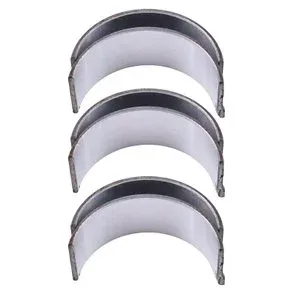
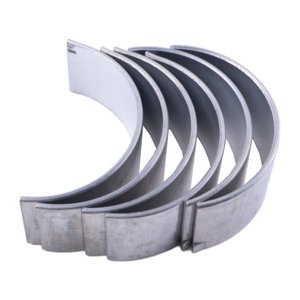
Pistons, piston pins, connecting rod bearings, crankshaft |
| Cranktrain – CAT C3.4 variant |
Matched-grade piston assemblies, rod bolts, circlips |
| Lubrication feed path |
Oil pump, main bearings, rod journal oil passages |
| Cylinder sealing system |
Cylinder liners, piston ring sets, liner seals |
Why the Same Connecting Rod 103-9680 Fails Again After a Fresh Rebuild
A replacement rod that ignores the crankshaft journal history and bearing grade will repeat the original failure within a short operating window.
I have walked into workshops where the Connecting Rod 103-9680 was swapped after a rod bearing seizure, only to find the crankshaft journal had been ground to an oversize dimension during a previous overhaul. The new rod received a standard-thickness bearing shell, and within the first few hundred hours the clearance opened up enough to starve the bearing of oil film. The rod was blamed; the mismatched grade was the real cause [NEED_CITE: engine rebuild bearing grade matching procedures for ground crankshafts]. Rebuild shops that skip the journal measurement step are effectively rebuilding blind.

How This Rod Sits Inside the Cranktrain System
The Connecting Rod 103-9680 transfers combustion force from the piston crown through the pin bore to the big-end journal, cycling thousands of times per minute under load. Every adjacent component — piston, pin, bearing shell, crankshaft journal — must be in a compatible dimensional grade. If a previous overhaul used an oversize piston or a reground crankshaft, the rod must accept a bearing shell whose thickness closes the gap back to the design clearance range. This is why system-level matching matters more than the rod itself.
Rebuild History Dictates the Grade You Actually Need
Engines that have been through one or more overhauls often carry ground journals, sleeved bores, or mixed-grade pistons from prior work. When you order a Connecting Rod 103-9680 for a CAT 3044C that has seen a crankshaft regrind, you need to confirm whether STD, 0.25, or 0.50 oversize bearing shells are required — and whether the rod big-end bore still falls within tolerance to accept that shell thickness. I have seen rebuilds stall because the shop ordered standard shells for a crankshaft that was already cut 0.25 under [NEED_CITE: crankshaft undersize journal identification for diesel engine overhaul]. Always pull the micrometer readings before you finalize the parts list.
Reading the Specifications That Matter in the Shop
High-strength forged steel gives the rod the fatigue strength to handle peak cylinder pressure without bending, but forging alone does not guarantee dimensional accuracy. The big-end bore tolerance of ±0.02 mm and pin bore tolerance of ±0.015 mm define how well the bearing shells seat and how the piston pin floats. Surface finish at Ra ≤ 0.8 μm on the bore surfaces supports oil film stability during the critical boundary-lubrication phase at top and bottom dead centre. Heat treatment to HRC 32–36 provides the core hardness needed to resist crack propagation under reversing loads, while still allowing enough toughness to absorb shock without brittle fracture.
The Hidden Cost of Skipping the Root-Cause Check
Replacing a failed rod without investigating why it failed is the most common path to a second teardown. If the oil pump was delivering marginal pressure, or if a blocked spray jet starved the piston crown of cooling, the new rod will face the same thermal and lubrication deficit. Shops that swap the Connecting Rod 103-9680 and reassemble without checking oil gallery condition, journal roundness, and spray nozzle flow routinely see repeat bearing failures [NEED_CITE: root cause analysis for connecting rod bearing failure in medium diesel engines]. The rod is the symptom; the system condition is the disease.
Why Source This Rod From XUNPO
Our production lines and qualified sourcing partners operate under one warranty account, so whether the Connecting Rod 103-9680 comes from our own forging line or a partner facility, QC coverage is identical. Eight product categories mean the piston sets, bearing shells, gasket kits, and seal kits your overhaul requires ship in one consignment — no split freight, no mismatched arrival dates. Minimum order is one piece, so a single-cylinder repair or a fitment sample is never blocked by volume thresholds. Guangzhou warehouse stock on fast-moving items keeps dispatch times short for common engine families. Our technical team verifies cross-references including superseded numbers before shipment, reducing the risk of a wrong-grade rod reaching the bench.
Documentation & Verification
- Commercial invoice listing each rod with its matched grade and bore measurement record
- Cross-reference sheet marking 1039680 and CA1039680 as interchange reference only
- Dimensional inspection report covering big-end bore, pin bore, and weight per rod
- Warranty terms document specifying coverage period for manufacturing defects
- Packing photographs showing rod protection and crate condition before dispatch
- HS code guidance and customs documentation support for engine parts export
Installation & Rebuild Sequence
- Clean the rod big-end bore and pin bore with lint-free cloth before bearing shell fitment
- Verify bearing shell grade matches the measured crankshaft journal diameter before assembly
- Install rod bolts and torque to the engine manual specification in the correct sequence
- Check side clearance between adjacent rods on the crankshaft journal after assembly
- Confirm oil spray jet alignment with the piston cooling gallery before final closure
- Run a low-load break-in cycle and monitor oil pressure and crankcase blow-by readings
Get the Right Grade Before You Order
Provide your engine model, serial number, and any known crankshaft regrind history so we can confirm whether your Connecting Rod 103-9680 order needs standard or oversize bearing shells. If the nameplate is worn or painted over, send a photograph of the engine block casting number and we will identify the variant.
Frequently Asked Questions
Q: Does a standard overhaul kit include the connecting rod and rod bolts?
A: Most overhaul gasket and seal kits do not include the rod or bolts unless specifically listed as a full rebuild package. Confirm your kit contents line by line. If the rod shows scoring or the bolts have been stretched beyond specification, order them separately with the correct grade for your crankshaft journal size.
Q: My crankshaft was ground to 0.25 undersize — what bearing shell do I need with this rod?
A: A 0.25 undersize journal requires a 0.25 oversize bearing shell. Measure the actual journal diameter with a micrometer before ordering, because some regrinds go beyond the nominal grade. The Connecting Rod 103-9680 big-end bore must still accept the thicker shell while maintaining correct oil clearance.
Q: Are the rods identical across CAT 3044C and C3.4 engine serial ranges?
A: These engine families share a common architecture, but internal dimensions and bolt specifications can differ across production batches. Always confirm by engine serial number rather than model alone. Send the serial plate image and we will cross-verify the exact rod specification your engine requires.
Q: A rod failed — should I replace only that one or inspect the entire set?
A: A single rod failure often points to a system-wide issue such as oil starvation or crankshaft journal damage. Inspect all rods for bend, all bearings for wipe patterns, and the crankshaft for scoring or out-of-round conditions. Replacing only the failed rod without correcting the root cause risks repeat failure.
Q: How do I confirm whether my engine is a 3044C or a C3.4?
A: The engine serial number plate is the definitive identifier. The 3044C and C3.4 share displacement but differ in emission configuration and some internal component specifications. Photograph the serial plate and send it along with your inquiry so we can confirm the correct connecting rod variant for your build.