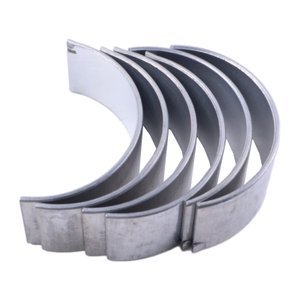
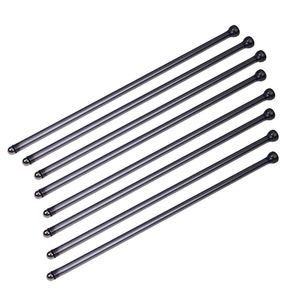
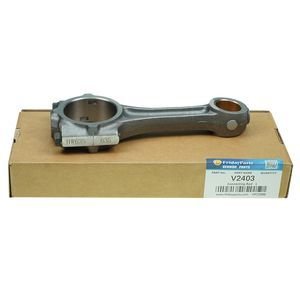
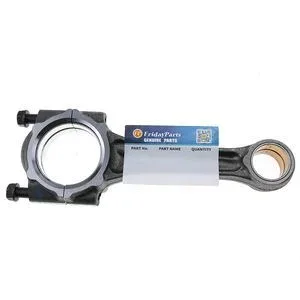
Matched Bottom-End Set — Crankshaft journal grade verified against engine serial and prior regrind history before this con rod bearing kit ships.
Technical Specifications
| Parameter |
Value |
| Part Number |
17311-22310 |
| Product Type |
Con Rod Bearing |
| Cross-Reference |
17311-22310, 17311-22312 (reference only) |
| Machine Fitment |
Kubota KX, U, R, L, M, MX series; Hyundai HDF, HSL series |
| Material Construction |
Tri-metal: steel backing, copper-lead intermediate, Sn-Sb-Cu Babbitt top layer |
| Surface Finish |
Ra ≤ 0.2 μm |
| Hardness |
20–25 HB |
| Inner Diameter Tolerance |
±0.005 mm |
| Width Tolerance |
±0.01 mm |
| Corrosion Resistance |
Salt-spray tested per ASTM B117, 96 hrs |
| Certification |
ISO 9001, SAE J301 |
| Condition |
New Aftermarket |
| Warranty |
6 months against manufacturing defects |
| MOQ |
1 piece |
Application Suitability
| Engine System |
Related Components |
| Kubota D1803 / D1803MDI / D1803-CR bottom end |
Main bearings, thrust washers, crankshaft seals |
| Compact excavator powertrain (KX, U series) |
Overhaul gasket set, oil pump, con rod bolts |
| Agricultural tractor engine (L, M, MX series) |
Piston rings, cylinder liners, engine mount hardware |
| Forklift power unit (Hyundai HDF, HSL) |
Connecting rod assemblies, crankshaft key, flywheel bolts |
Why the Right Con Rod Bearing Grade Matters More Than the Part Number
Ordering by part number alone ignores what the last rebuild did to your crankshaft.
A Kubota D1803 that has been through one regrind already needs oversize bearings, yet the part number on the old shell still reads STD. I have opened D1803 sumps in Shandong workshops where the previous mechanic fitted standard shells onto a 0.25-ground journal — the con rod bearing kit seized before the engine reached operating temperature. The oil film simply cannot form when the clearance is that far out of specification [NEED_CITE: crankshaft journal bearing clearance requirements for small-bore diesel engines]. Skipping the micrometer check costs a full second teardown, new gaskets, and another set of bearings.

The Bottom-End System This Bearing Belongs To
The con rod bearing sits inside a load chain that starts at the piston crown and ends at the main bearing cap. When one con rod bearing kit fails from oil starvation, the adjacent main bearings have usually been running under the same starved condition. Replacing only the damaged rod shells without inspecting the mains, the oil pump pickup, and the crankshaft journal roundness invites a repeat failure within the first hundred hours. A complete bottom-end approach — matched main bearings, thrust washers, and a fresh overhaul gasket set — addresses the system rather than the symptom.
Oversize Grades and What Your Engine's Rebuild History Dictates
Every time a crankshaft goes to the grinder, the journal diameter drops and the required bearing shell gets thicker. The D1803 crankshaft can typically accept STD, 0.25 mm, or 0.50 mm oversize shells, but the correct grade lives in the rebuild history, not in the parts catalogue [NEED_CITE: diesel engine crankshaft regrind limits and bearing oversize selection]. An engine serial number tells you the original specification; only a micrometer reading on each journal confirms what the machine shop actually removed. We ask for those measurements or the last machine shop invoice before confirming which con rod bearing kit grade to ship.
Reading the Specs That Separate a Rebuild-Grade Bearing From a Shelf Filler
The tri-metal construction — steel back for load transfer, copper-lead intermediate for fatigue strength, and a thin Babbitt surface for conformability — addresses three different failure modes at once. The Ra ≤ 0.2 μm surface finish matters during the first seconds of cranking when hydrodynamic film has not yet formed; a rougher finish scours the journal before oil pressure builds. The ±0.005 mm inner diameter tolerance keeps oil clearance inside the window where the D1803's oil pump can maintain adequate film thickness at both idle and rated RPM. Salt-spray resistance over 96 hours per ASTM B117 ensures the Babbitt layer survives storage in humid coastal workshops without surface pitting that would later act as a fatigue crack origin [NEED_CITE: ASTM B117 salt-spray testing relevance to bearing storage and shelf life].
What Happens When the Grade Is Wrong or the Root Cause Is Ignored
Fitting STD shells on a reground journal produces excessive clearance, which shows up first as low oil pressure at idle and then as a deepening knock under load. The knock means the bearing is hammering the journal on every power stroke, accelerating wear on both surfaces. Conversely, fitting an oversize shell on an unground journal squeezes the oil film to near zero, generating enough friction heat to melt the Babbitt layer within minutes. Neither failure mode is a bearing defect — both are selection errors that a ten-minute micrometer check would have prevented [NEED_CITE: connecting rod bearing failure analysis and root cause identification in mobile diesel engines]. The hidden cost is never just the bearing set; it is the second teardown, the second gasket kit, the second oil change, and the machine revenue lost across both downtime windows.
Why Sourcing This Con Rod Bearing Kit Through XUNPO Works
Our own production lines and qualified sourced partners carry the same QC protocol and the same six-month warranty, so a mixed-order of engine bearings and hydraulic seals arrives under one accountability. Eight product categories mean the overhaul gasket set, main bearings, and con rod bolts ship in the same carton as the con rod bearing kit, eliminating the split-shipment delays that leave a half-assembled engine sitting on the bench. Minimum order is one piece, which matters when a single emergency rebuild cannot wait to fill a pallet. Guangzhou warehouse stock on fast-moving D1803 grades allows same-day dispatch on common sizes. Our technical team cross-checks engine serial variants and superseded part numbers before confirming fitment, catching the situations where a mid-production serial break changed the journal diameter.
Documentation & Verification
- Commercial invoice listing each bearing grade and quantity per engine serial
- Cross-reference sheet mapping 17311-22310 and 17311-22312 as reference only
- Dimensional inspection record showing inner diameter and width per batch
- Warranty terms covering manufacturing defects for six months from dispatch
- Packing photographs documenting bearing shell condition before carton closure
- HS code and customs classification support for international bearing shipments
Installation & Rebuild Sequence
- Clean block oil galleries thoroughly before installing new con rod bearing kit shells
- Verify crankshaft journal roundness and size with a micrometer at four clock positions
- Plastigauge each con rod after torquing to confirm oil clearance falls within D1803 specification
- Pair new con rod bolts with the bearing set — reused stretched bolts distort the cap and crush the shell unevenly
- Prime the oil system before first start to prevent dry-running the fresh Babbitt surface
- Run a thirty-minute break-in at varied RPM, then drain oil and inspect for Babbitt flakes
Requesting a Quote for Your Rebuild
Provide the engine model, serial number, and any known regrind history so we can confirm whether STD, 0.25, or 0.50 oversize shells are required. If the crankshaft is still installed, a photograph of the machine shop measurement or the last rebuild invoice is enough to lock the correct grade. Mention any adjacent components — main bearings, thrust washers, gasket sets — so the full bottom-end list ships as one consignment.
Frequently Asked Questions
Q: How do I determine whether my D1803 crankshaft has been ground and which oversize grade I need?
A: The only reliable method is measuring each journal with a micrometer. The engine serial number gives the original factory specification, but a prior regrind changes the required shell thickness. If the engine has been opened before, ask the previous workshop for their machining record or measure directly before ordering the con rod bearing kit.
Q: What other components should I replace alongside the con rod bearings during a D1803 overhaul?
A: Main bearings, thrust washers, con rod bolts, and the full overhaul gasket set should be replaced as a matched set. Inspect the oil pump and pickup screen for the contamination that likely caused the original bearing failure. Shipping these items together avoids a second teardown caused by a single forgotten component.
Q: Do different D1803 serial variants require different bearing sizes?
A: Yes. Mid-production serial breaks on the D1803, D1803MDI, and D1803-CR can change journal diameter specifications. Provide your full engine serial number so we cross-check against the correct variant table rather than assuming all D1803 engines share the same standard grade.
Q: Can I receive matched main bearings and an overhaul gasket set in the same shipment?
A: Yes. We consolidate engine bearings, gaskets, seals, and fasteners into a single consignment under one invoice and one warranty. This eliminates split-freight costs and ensures all bottom-end components arrive before the rebuild begins, preventing a half-assembled engine from sitting idle on the workshop floor.